Veeam Adds PrivacyOps AI Agents to DataAI Platform
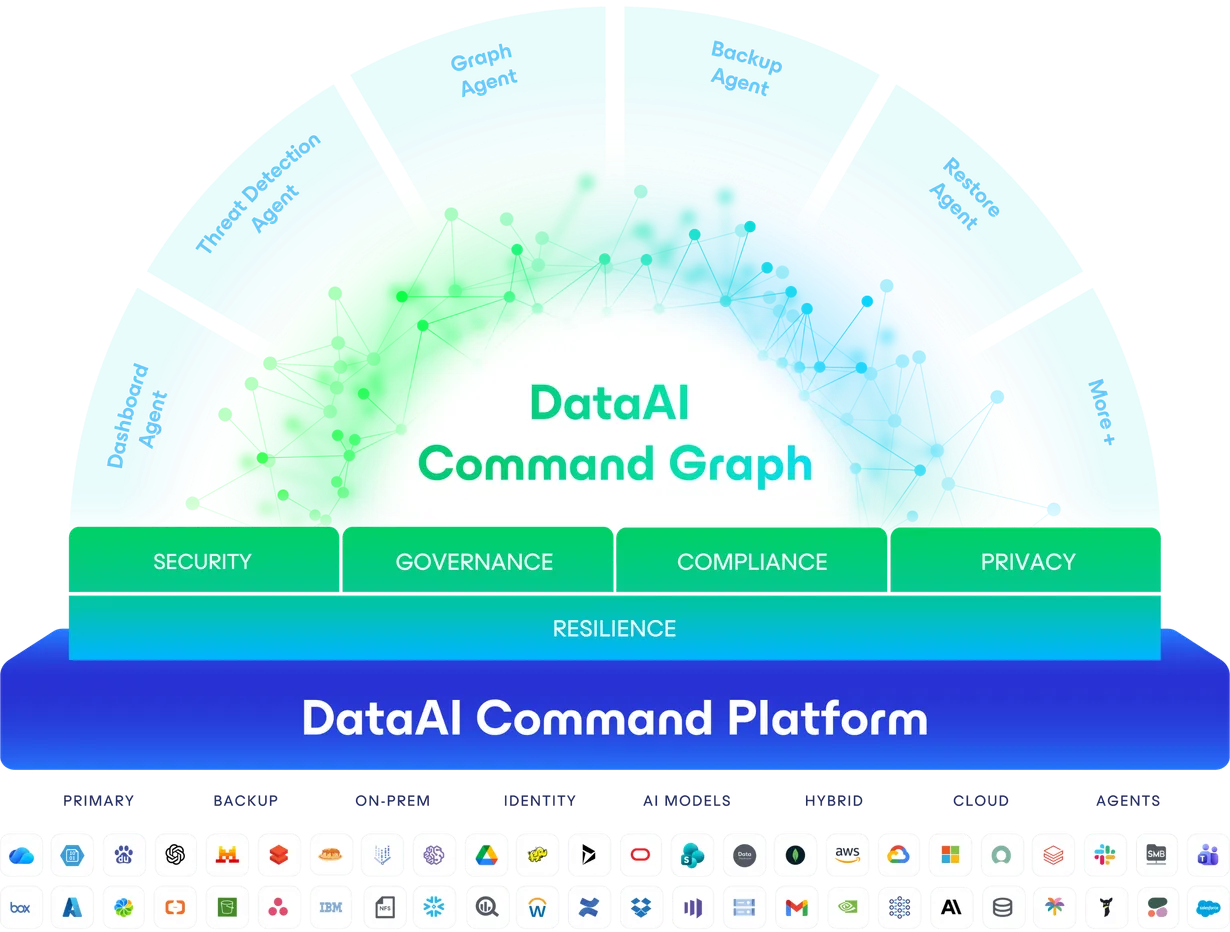
Veeam announced three new agentic AI "PrivacyOps" agents for the DataAI Command Platform, designed to automate consent, privacy, compliance, and AI governance across hybrid environments (Business Wire; StorageReview). The release includes a generally available Consent Agent today, while the Data Subject Request Agent and Assessment Agent are reported as scheduled for Q3 2026 (TechZine; StorageReview). The agents are reported to have been built on technology from Securiti AI, which Veeam acquired late in 2025 (TechZine). Companies face expanding obligations under frameworks such as GDPR, the EU AI Act, ePrivacy, and DORA, with fines cited up to 7% of global annual revenue (Business Wire). "Compliance is no longer a point-in-time exercise," said Cassandra Maldini, Head of Product Strategy for Privacy and AI Governance at Veeam (Business Wire).
What happened
Veeam announced three agentic AI PrivacyOps agents for the DataAI Command Platform, described in the company press release distributed via Business Wire and covered by StorageReview and TechZine. The three agents are the Consent Agent (reported as generally available), the Data Subject Request Agent (reported scheduled for Q3 2026), and the Assessment Agent (reported scheduled for Q3 2026) (Business Wire; TechZine; StorageReview). Multiple outlets note the product builds on technology from Securiti AI, a company Veeam acquired late in 2025 (TechZine).
Technical details
Per the announcement and press coverage, the Consent Agent is a full-stack consent compliance and remediation agent that manages the consent lifecycle: banner creation, automated testing, continuous monitoring, jurisdiction-aware risk scoring, propagation of consent signals to downstream systems, and audit-ready evidence generation (Business Wire; StorageReview; TechZine). The Data Subject Request Agent is reported to generate and maintain privacy request forms tailored to an organization's regulatory landscape and, according to TechZine, reduces time-to-deploy such forms by roughly 50%. The Assessment Agent is reported to analyze supporting evidence and produce one-click responses for Data Protection Impact Assessments, EU AI Act compliance assessments, and vendor risk lists (TechZine; StorageReview).
Industry context
What to watch
Quoted perspective from the announcement
Cassandra Maldini, Head of Product Strategy for Privacy and AI Governance at Veeam, said, "Compliance is no longer a point-in-time exercise. It has to be continuous, evidence-based, and built directly into how organizations operate" (Business Wire; StorageReview).
Bottom line
Editorial analysis
Companies operating in regulated environments face growing obligations that extend from data handling to model behavior and consent signals under frameworks like GDPR, the EU AI Act, ePrivacy, and DORA. Public reporting cites fines up to 7% of global annual revenue under these regimes, creating audit and evidentiary requirements that many manual privacy programs struggle to meet (Business Wire; StorageReview).
In the broader market, vendors are packaging automation, continuous monitoring, and evidentiary workflows into platforms that bridge privacy, security, and model governance. Veeam's announcement follows its late-2025 acquisition of Securiti AI technology and aligns with a broader supplier trend of embedding "agentic" automation into governance tooling (TechZine; HyperFRAME Research).
Observers should track real-world uptake and integration points: whether the consent signals from the Consent Agent are consistently enforceable across common analytics, advertising, and AI pipeline destinations; how the Data Subject Request Agent handles jurisdictional idiosyncrasies at scale; and whether the Assessment Agent produces defensible, audit-ready outputs for EU AI Act classifications. Also watch third-party validation or customer case studies showing how the agents reduce manual effort and evidentiary friction in audits.
For practitioners, the practical implications center on integration complexity and dataflow visibility. Organizations using multiple SaaS vendors, custom ML pipelines, and regional data stores typically need standardized signal propagation and reliable provenance to make automated remediation and assessments meaningful. Independent verification, logging, and chain-of-evidence practices will determine whether agent-generated artifacts meet auditors' expectations.
The release is a notable product-step in operationalizing privacy and AI governance automation. Its practical value for enterprises will depend on integration fidelity, audit defensibility of generated evidence, and the agents' ability to operate across heterogeneous data ecosystems as described in the vendor materials and press coverage.
Key Points
- 1Veeam released three PrivacyOps agents for the DataAI Command Platform; Consent Agent is GA, two others are scheduled for Q3 2026 (TechZine; StorageReview).
- 2The agents are reported to be built on Securiti AI technology acquired by Veeam in late 2025, reflecting consolidation of governance tooling (TechZine).
- 3Editorial analysis: Automated, continuous consent and assessment workflows address scaling limits of manual privacy programs but require strong integration and audit evidence to satisfy regulators.
Scoring Rationale
Notable product release for enterprise privacy and AI governance practitioners. The agents address scaling challenges in regulated environments but are primarily a commercial product update rather than a research breakthrough.
Sources
Public references used for this report.
View 5 more sources
- Veeam Advances Operational Privacy and AI Governance for the ...uk.finance.yahoo.com
- Veeam DataAI Command Platform krijgt AI-agents voor privacynalevingtechzine.nl
- Veeam Unveils AI Agents for Privacy Governance - TECHx Mediatechxmedia.com
- Veeam DataAI Command Platform: la nueva era de la confianza de datositwarelatam.com
- Veeam Extends Its DataAI Strategy as AI Accountability Reaches the Boardroomhyperframeresearch.com
Practice interview problems based on real data
1,625 SQL & Python problems across 15 industry datasets — the exact type of data you work with.
Try 250 free problems