
Valar Atomics Powers Nvidia Blackwell Chip With Ward 250 Reactor
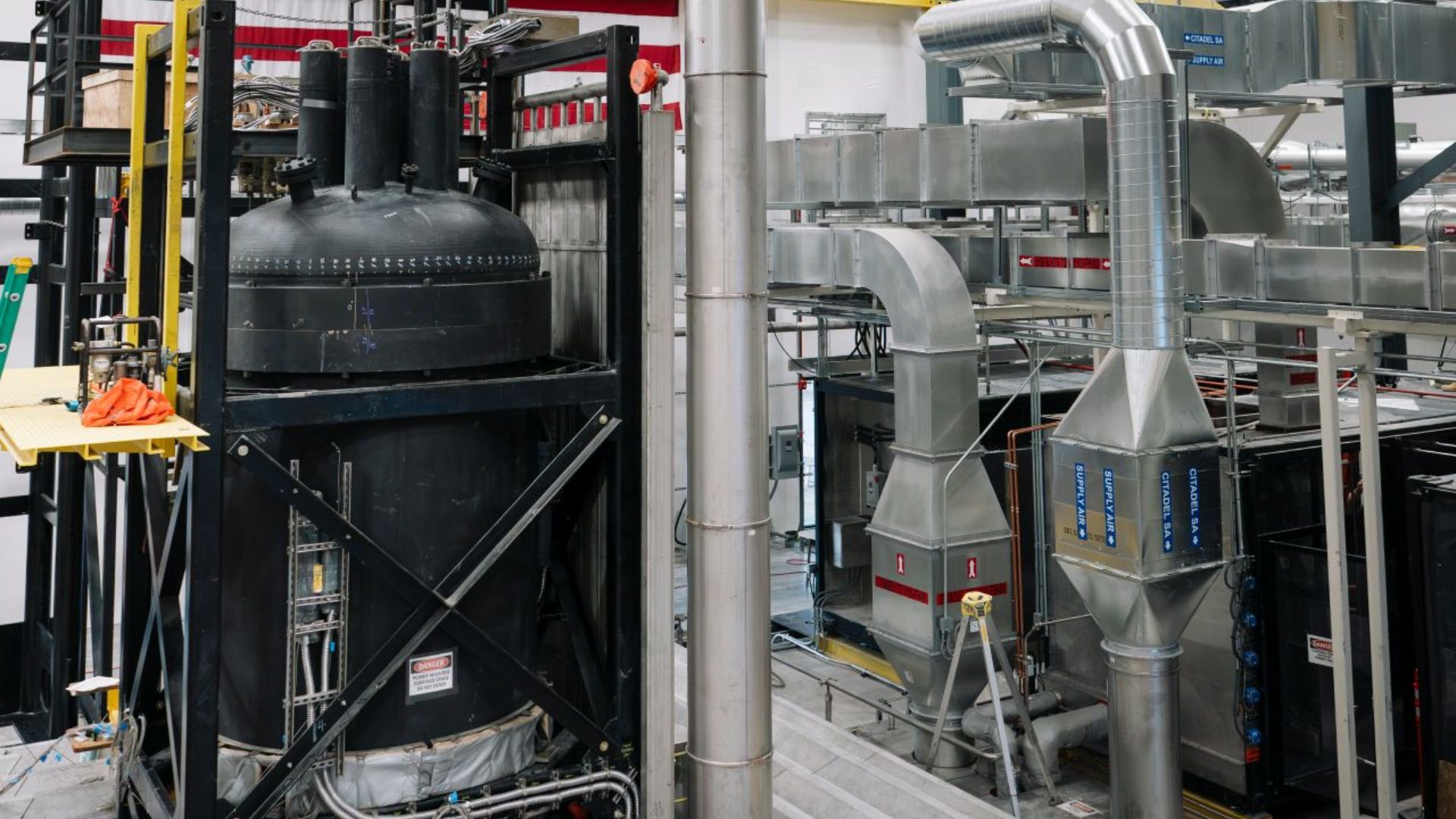
California nuclear startup Valar Atomics connected its Ward 250 test reactor to an Nvidia RTX Spark desktop PC built on Nvidia's Blackwell architecture during a July 1, 2026 demonstration in Utah, using reactor-generated electricity to briefly run a website. The reactor reached criticality on June 18, 2026, and by the demo had ramped to roughly 100 kilowatts of thermal output, converted to electricity via a thermal-electric generator, according to Bloomberg, Tom's Hardware, and the American Nuclear Society. Valar and Nvidia also announced a joint feasibility study for a 30-megawatt water-free AI computing facility using closed-loop cooling. It marks the first time a US advanced reactor has supplied power to run an AI chip, though the demo remains an early-stage proof of concept rather than a commercial deployment.
For AI infrastructure teams, the significance is not the wattage. A single test reactor producing roughly 100 kilowatts thermal is trivial next to hyperscale power demand. It is that the demonstrated pairing of an advanced reactor with closed-loop, water-free GPU cooling, which Valar and Nvidia say they will study at 30-megawatt scale, is a concrete signal that on-site nuclear generation for AI compute is moving from theoretical to physically demonstrated, years ahead of any commercial licensing.
What happened
Valar Atomics, a California-based nuclear startup, staged a live demonstration in Emery County, Utah, on July 1, 2026, connecting its Ward 250 test reactor to an Nvidia RTX Spark desktop PC built on Nvidia's Blackwell architecture, and used the reactor's electricity to briefly run a temporary website. Bloomberg and Tom's Hardware report the reactor's thermal output was converted to electric current via a thermal-electric generator. Separately, Valar and Nvidia announced a joint feasibility study to explore designs for a 30-megawatt computing facility that would use a closed-loop, water-free cooling system instead of drawing on local municipal water supplies, according to Tom's Hardware and InterestingEngineering.
Timeline
Valar Atomics' Ward 250 test reactor reached criticality in Utah, according to the American Nuclear Society and the U.S. Department of Energy.
Valar staged the live Nvidia demonstration in Utah and announced the joint 30-megawatt feasibility study.
Technical context
Ward 250 is a High-Temperature Gas-Cooled Reactor using TRISO-coated fuel particles and helium coolant, per InterestingEngineering and heise. Despite the name, "250" refers to a program or model designation rather than a capacity rating: the unit is built for an initial test-power target of around 100 kilowatts thermal, with a design intended to scale toward roughly 5 megawatts electric, per the American Nuclear Society's reporting. At the July 1 demo, Valar CEO Isaiah Taylor said the core was producing about 100 kilowatts of thermal energy, per Tom's Hardware; outlets differ slightly on how that figure relates to the reactor's full-scale rating, so treat exact percentage-of-capacity claims as approximate.
For practitioners
The demonstration combines three distinct subsystems relevant to data-center planning: an HTGR heat source, a thermal-to-electric conversion chain, and Nvidia's closed-loop liquid cooling for GPUs. Each has different maturity and monitoring needs, and integrating them raises systems-engineering and site-operations questions rather than purely algorithmic ones. For teams modeling long-term power and water constraints on AI infrastructure, this is an early but concrete data point that on-site advanced-reactor generation paired with water-free cooling is technically feasible at small scale, not that it is commercially available.
What to watch
Whether follow-up tests scale steady electrical output beyond the demo's kilowatt-level output, any finalized designs or site selection for the 30-megawatt facility, regulatory filings or licensing milestones with the Nuclear Regulatory Commission, and further technical disclosure on the heat-to-electric conversion chain.
Key Points
- 1Valar Atomics used its Ward 250 test reactor to power an Nvidia RTX Spark PC during a July 2026 Utah demonstration, a first for a US advanced reactor.
- 2Valar and Nvidia are jointly studying a 30-megawatt, water-free closed-loop cooling facility to address power and water constraints on AI data centers.
- 3The reactor's roughly 100-kilowatt thermal output remains far below hyperscale power needs, underscoring that on-site nuclear AI power is still an early proof of concept.
Scoring Rationale
A genuine first-of-its-kind milestone, US advanced-reactor electricity routed to AI compute, plus an announced Nvidia feasibility study for a 30MW water-free facility, held at the top of the notable tier; still demonstrative rather than commercial, and the reactor's actual output (roughly 100 kWt) is trivial next to hyperscale power needs.
Sources
Primary source and supporting public references used for this report.
View 9 more sources
- Valar's Ward 250 reaches criticality in Utahans.org
- Department of Energy Celebrates Second Advanced Reactor Achieving Criticalityenergy.gov
- Nuclear Firm First in US to Produce Power From Advanced Reactorbloomberg.com
- Startup activates nuclear microreactor live on stage to power an Nvidia RTX Spark desktop PCtomshardware.com
- US-Startup Valar Atomics demonstriert funktionierenden Atomreaktorheise.de
- Emery County takes center stage as Valar and Nvidia power historic breakthroughetvnews.com
- Nuclear Firm First in US to Produce Power From Advanced Reactorfinance.yahoo.com
- AI + Nuclear Energy Achieves Historic Breakthrough! Valar Atomics Powers Nvidianews.futunn.com
- Nuclear power for AI: Valar powers Nvidia Blackwell chips using advanced reactorithome.com
Practice interview problems based on real data
1,625 SQL & Python problems across 15 industry datasets — the exact type of data you work with.
Try 250 free problems

