
US Coast Guard deploys Saildrone USVs for Great Lakes patrols
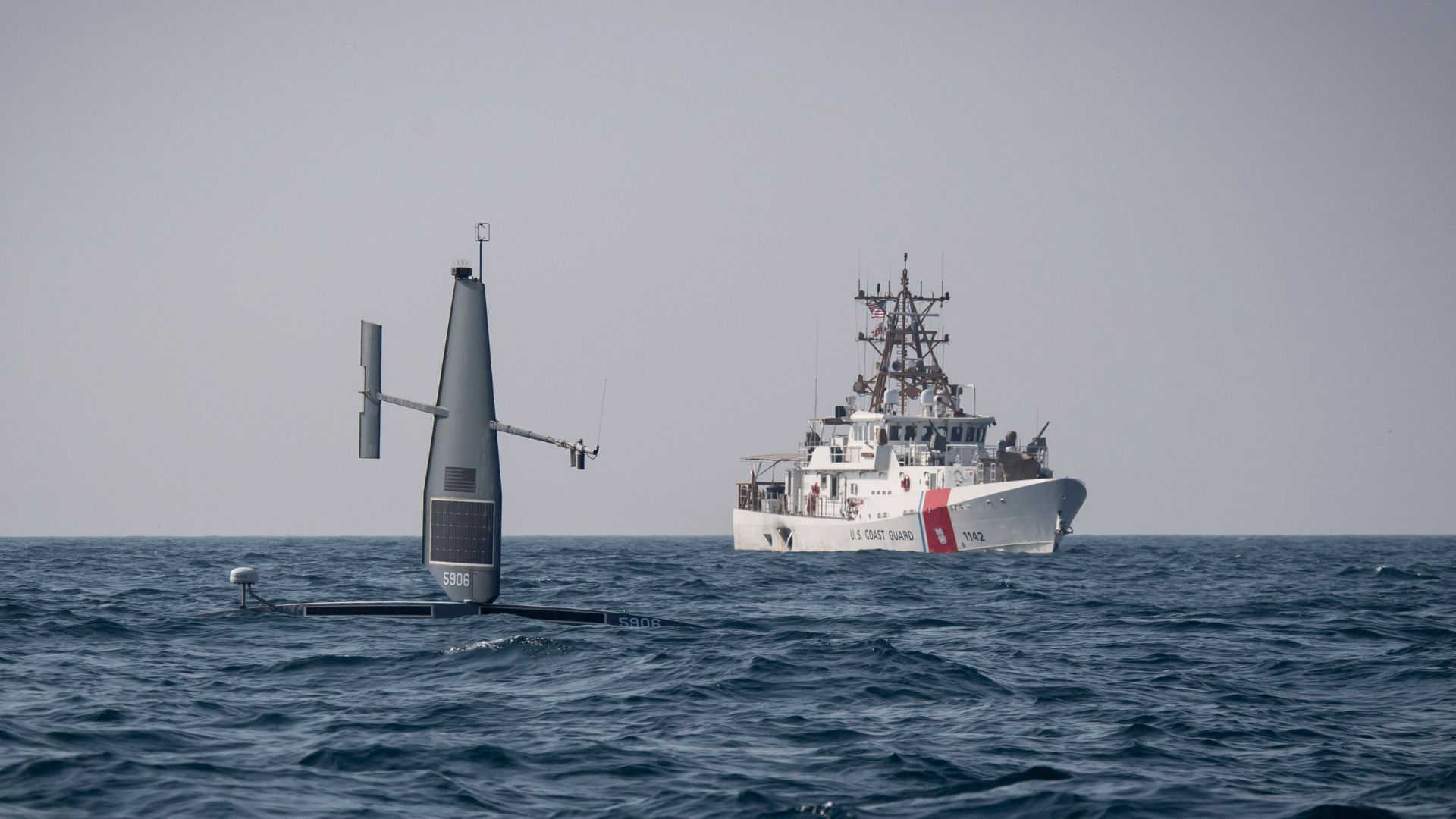
Reporting by AOL/Detroit News and Interesting Engineering states the U.S. Coast Guard will deploy autonomous, wind- and solar-powered Saildrone unmanned surface vessels across the Great Lakes from May through October. Interesting Engineering reports the vessels will patrol more than 90,000 square miles of interconnected waterways. Reporting by AOL/Detroit News and MyUpNow notes the drones carry radar, optical cameras, and a collision-avoidance artificial intelligence system, and that "human operators who can take manual control if needed" will monitor them. Reporting by AOL/Detroit News states the agency did not disclose how many drones would be deployed. Deployments of long-endurance, AI-equipped USVs typically extend surveillance coverage and produce new time-series sensor datasets that practitioners must integrate with shore-based command-and-control systems and verification workflows.
What happened
Reporting by AOL/Detroit News and Interesting Engineering states the U.S. Coast Guard will deploy autonomous, wind- and solar-powered Saildrone unmanned surface vessels on the Great Lakes from May through October. Interesting Engineering reports the vessels will patrol more than 90,000 square miles of interconnected waterways. Reporting by AOL/Detroit News and MyUpNow records that the platforms are intended to "gather critical weather data for emergency response planning, track illicit activity and keep maritime borders safe," quoting an official release. Reporting by AOL/Detroit News adds the agency did not disclose the total number of units deployed.
Technical details
The Saildrone website describes the vehicle family used in maritime domain awareness missions and highlights multi-year endurance metrics, citing "12+ years of operations, more than 2 million nautical miles sailed, and 60,000 days at sea" for the company fleet. Reporting by Interesting Engineering and AOL/Detroit News describes platform propulsion as a hybrid-electric architecture that combines Saildrone's wing-driven propulsion with solar-charged batteries. Reporting by those outlets and the USCG release states the vessels carry radar, optical cameras, and onboard collision-avoidance AI, and that human operators will monitor the systems and can assume manual control when necessary.
Industry context
Editorial analysis: Persistent, renewable-powered USVs built around onboard sensor fusion and edge ML are increasingly used to extend maritime domain awareness without continuous crew presence. Industry-pattern observations note these systems typically trade platform count for endurance, producing long, continuous sensor streams useful for weather modelling, traffic pattern analysis, and anomaly detection, while shifting verification and intercept tasks back to crewed assets.
For practitioners
Editorial analysis: The operational rollout highlights practical engineering priorities for fielded autonomy: reliable onboard perception (radar-optical fusion), robust collision-avoidance models tested in mixed-traffic inland waters, low-bandwidth telemetry strategies for long missions, and procedures for human-in-the-loop control handover. Observers integrating data from such trials should expect to evaluate sensor calibration drift over months, label scarcity for rare illicit behaviors, and the need for lightweight edge inference pipelines.
What to watch
Editorial analysis: Public after-action reports, disclosures of unit counts and patrol patterns, and any Coast Guard or Saildrone datasets released from the mission will determine the deployment's value to the research and practitioner community. Also watch for operational metrics, detection rates, false positives for AI-based alerts, and bandwidth usage patterns, that clarify how these USVs will complement shore-based and crewed assets.
Key Points
- 1Coast Guard to operate wind- and solar-powered Saildrone USVs on the Great Lakes from May through October, covering over 90,000 square miles.
- 2Platforms combine long-endurance propulsion with radar, optical sensors, and onboard collision-avoidance AI, with human operators able to assume control.
- 3For practitioners, persistent USV data raises sensor-fusion, edge-ML, calibration-drift, and low-bandwidth telemetry challenges to integrate with command-and-control.
Scoring Rationale
The deployment is a notable real-world rollout of long-endurance, AI-enabled USVs that matters for practitioners working on edge inference, sensor fusion, and operational data pipelines, but it is incremental rather than a frontier-shifting technical breakthrough.
Sources
Public references used for this report.
Practice interview problems based on real data
1,625 SQL & Python problems across 15 industry datasets — the exact type of data you work with.
Try 250 free problems

