Unitree debuts $650,000 GD01 personal mech
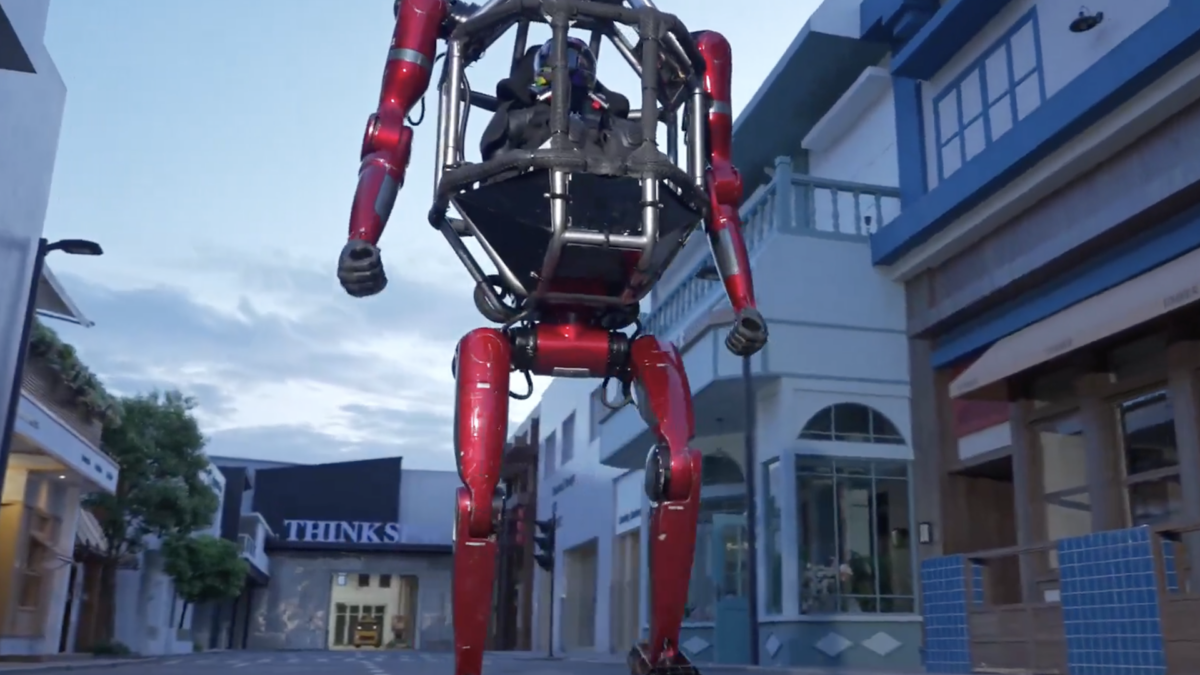
Gizmodo reports that Chinese robotics firm Unitree unveiled the GD01, a transforming personal mech priced at $650,000. Per Gizmodo, the GD01 stands about ten feet tall, weighs roughly a half-ton, and can switch between bipedal and quadrupedal modes; the published video shows the transformation beginning around 0:48. Gizmodo highlights a cramped cockpit, minimal weather protection, and an awkward pivot during transformation that could leave a seated operator reversed in the mech's quadrupedal posture. Gizmodo adds that rumors the "GD" stands for "Gundam" remain unconfirmed. The coverage frames the GD01 as a novelty device with unclear markets beyond high-net-worth hobbyists and stunt creators.
What happened
Gizmodo reports that Chinese robotics company Unitree unveiled the GD01, a transforming personal mech priced at $650,000. Per Gizmodo, the GD01 is roughly ten feet tall, weighs about a half-ton, and can switch between bipedal and quadrupedal configurations; the transformation sequence appears in Unitree's video beginning at about 0:48. Gizmodo notes cockpit ergonomics look cramped, weather sealing appears minimal, and the transformation pivots the frame nearly 90 degrees, raising questions about operator orientation. Gizmodo also reports that rumors the "GD" abbreviates "Gundam" are unconfirmed.
Editorial analysis - technical context
Companies building large, anthropomorphic robots regularly trade off mobility, stability, and operator ergonomics. Industry-pattern observations: bipedal robots offer showy mobility but typically require complex balance control, while quadrupedal designs prioritize static stability at the cost of a more utilitarian appearance. For practitioners, integrating safe human-in-the-loop controls, ingress/egress mechanics, and weatherproofing is often more engineering-intensive than headline specifications like height or weight.
Industry context
Industry observers have documented a niche market for high-cost, novelty mechs that serve marketing, entertainment, or collector demands rather than mass commercial deployment. Reporting on similar hardware releases highlights recurring buyer segments: hobbyist collectors, film and stunt production outfits, and promotional content creators. For robotics R&D, these projects can still push actuator packaging, powertrain scaling, and human-machine interface experiments that later diffuse into service and industrial robots.
What to watch
Monitor hands-on reviews or safety test results that verify load limits, ingress/egress procedures, and control latency. Watch for follow-up disclosures from Unitree or independent testers on certification, operational safety features, and real-world endurance. Observers should also track secondary use cases reported by purchasers, such as entertainment bookings or industrial adaptation attempts.
Key Points
- 1Unitree's GD01 is a high-cost, transforming personal mech priced at $650,000, per Gizmodo; it mixes spectacle with practical trade-offs.
- 2Industry pattern: large anthropomorphic robots prioritize mobility and novelty, often leaving ergonomics and weatherproofing as secondary concerns.
- 3For practitioners: mech projects can advance actuators, powertrains, and human-in-the-loop controls even when commercial demand remains niche.
Scoring Rationale
This is a notable product reveal in consumer and demonstration robotics but has limited immediate relevance for mainstream AI/ML workflows. The story is interesting for hardware engineers and robotics practitioners testing actuator and HMI techniques, but it does not introduce a broadly applicable model or platform change.
Sources
Public references used for this report.
Practice interview problems based on real data
1,625 SQL & Python problems across 15 industry datasets — the exact type of data you work with.
Try 250 free problems