UCSF Demonstrates Adaptive Deep Brain Stimulation Improves Gait
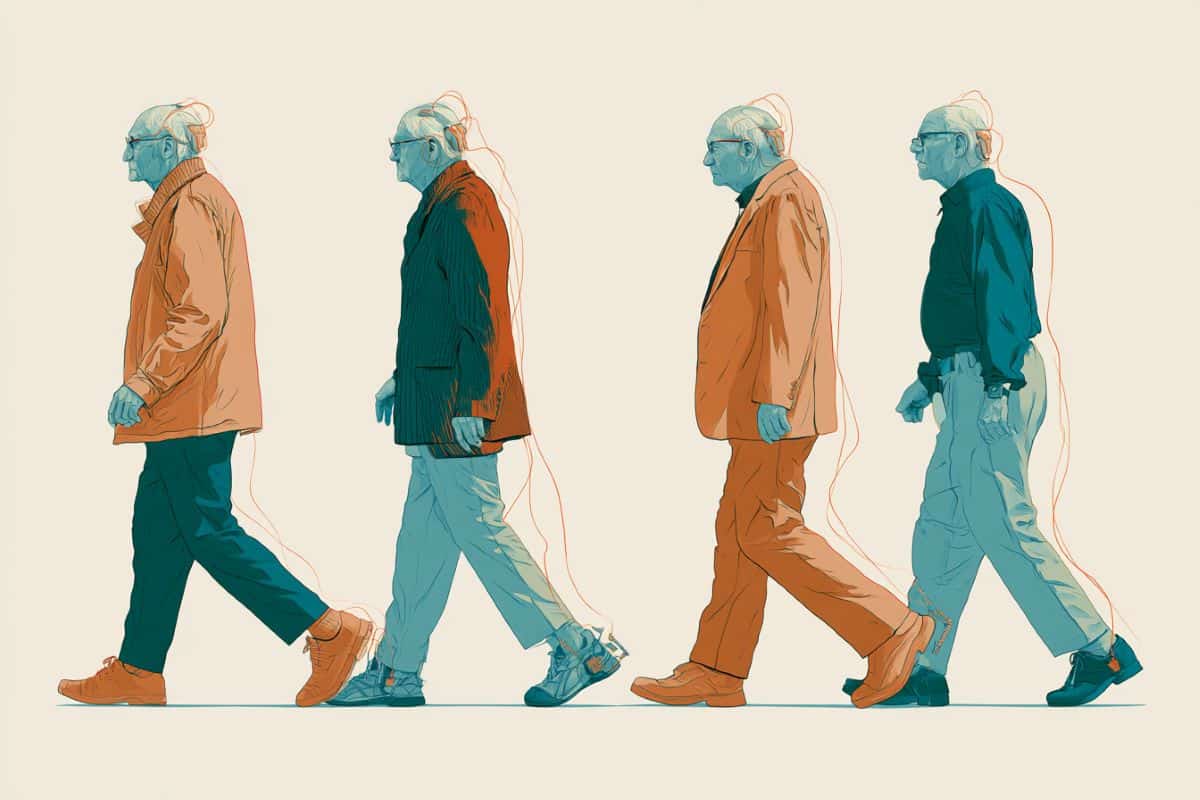
According to a UCSF news release published via EurekAlert and a paper in Nature Medicine (June 15, 2026), researchers at the University of California, San Francisco developed an adaptive deep brain stimulation (aDBS) system that senses step-related neural signals and adjusts stimulation within sub-second timescales. The implantable system embeds classifiers on-device so it operates without an external computer, detecting left-right leg neural signatures and switching stimulation during each phase of gait, per UCSF/EurekAlert and NeuroscienceNews. A randomized, blinded crossover feasibility trial reported in Nature Medicine tested the approach in five participants and found improvements in gait symmetry and a decrease in falls, according to the published study. Doris D. Wang, MD, PhD, is quoted describing walking as "one of the most disabling symptoms of Parkinson's disease and one of the hardest to treat," per UCSF materials.
What happened
According to a UCSF news release distributed on EurekAlert and a paper published in Nature Medicine on June 15, 2026, researchers at University of California, San Francisco (UCSF) developed an adaptive deep brain stimulation (aDBS) system that detects neural signals associated with individual steps and adjusts stimulation within sub-second timescales. The implantable device embeds movement classifiers and control logic on the neurostimulator so the system operates autonomously without an external computer, per the UCSF/EurekAlert coverage and NeuroscienceNews reporting. The Nature Medicine randomized, blinded crossover feasibility trial enrolled five participants and reported improved spatial gait symmetry and a reduction in falls when the aDBS protocol was active, according to the published trial report. Doris D. Wang, MD, PhD, associate professor of neurological surgery at UCSF and senior author, is quoted in UCSF materials: "Difficulty walking is one of the most disabling symptoms of Parkinson's disease and one of the hardest to treat."
Technical details
Per an IEEE conference paper describing earlier development work and the Nature Medicine report, the study pipeline combined synchronized cortical and pallidal recordings with detailed kinematics to identify left-right step biomarkers. The IEEE abstract describes using real-time-compatible power-band features and machine learning classifiers to detect walking onset across behaviors and to optimize temporal parameters including update rate, onset duration, and termination duration. The investigational hardware referenced in the IEEE work simulates an on-board signal processing stack and was evaluated during tasks involving gait, turning, upper-limb movement, and postural adjustments.
Editorial analysis - technical context
Industry-pattern observations: Closed-loop neuromodulation that uses behaviorally relevant neural biomarkers typically requires three components: reliable biomarker discovery across contexts, ultra-low-latency on-device inference, and engineered temporal filtering to avoid false triggers. The UCSF system, as described in the IEEE and Nature reporting, addresses these elements by selecting power-band features, refining update windows, and embedding the classifier on the implanted stimulator, which reduces dependence on external computation and wireless latency.
Context and significance
More than 10 million people worldwide live with Parkinson's disease, and gait impairment, freezing of gait, and falls are leading causes of disability, according to UCSF/EurekAlert reporting. The reported feasibility trial is small but clinically oriented: a randomized, blinded crossover in five participants reported improved gait symmetry and fewer falls when the aDBS protocol was active, per Nature Medicine. The combination of implant-side sensing and sub-second control marks a practical step toward translating movement-state-dependent neuromodulation from lab demonstrations to ambulatory use. That said, the evidence comes from a very small cohort and short-duration exposures reported in the study; the Nature Medicine paper frames the result as a feasibility demonstration.
What to watch
For practitioners
key open questions include reproducibility across larger, more diverse cohorts; durability of benefit over months to years; battery and thermal trade-offs from higher-frequency switching; regulatory considerations for firmware-based classifiers in implants; and how biomarkers generalize across Parkinson's phenotypes and comorbidities. Observers should also track whether next-stage trials increase participant numbers and report prespecified clinical endpoints (falls, freezing episodes, quality-of-life measures) and safety signals, per standard device trial expectations.
Bottom line
Editorial analysis
The UCSF work, as reported in Nature Medicine, NeuroscienceNews, EurekAlert, MedicalXpress, and contextualized by an IEEE development paper, demonstrates a functional, implant-resident closed-loop approach to targeting gait in Parkinson's disease. It advances the technical program for movement-state-dependent aDBS but remains an early clinical feasibility result that requires larger trials and longer follow-up before broader adoption can be assessed.
Key Points
- 1Adaptive, on-device neuromodulation that synchronizes stimulation to step-specific neural biomarkers can reduce gait variability and fall risk in early feasibility testing.
- 2Embedding classifiers on the implant avoids external-latency limits, making sub-second, stride-by-stride control feasible for dynamic behaviors like walking.
- 3Movement-state-dependent DBS requires robust biomarker selection, temporal filtering, and power trade-offs; larger trials must confirm reproducibility and durability.
Scoring Rationale
This is a notable clinical and technical advance: an implant-resident, stride-synchronized aDBS demonstrated gait and fall improvements in a randomized feasibility trial. The small sample size limits immediate practice impact until larger, longer trials validate efficacy and safety.
Sources
Public references used for this report.
Practice with real Ad Tech data
90 SQL & Python problems · 15 industry datasets
250 free problems · No credit card
See all Ad Tech problems