UC San Diego Demonstrates Hybrid Converter Boosting GPU Power Efficiency
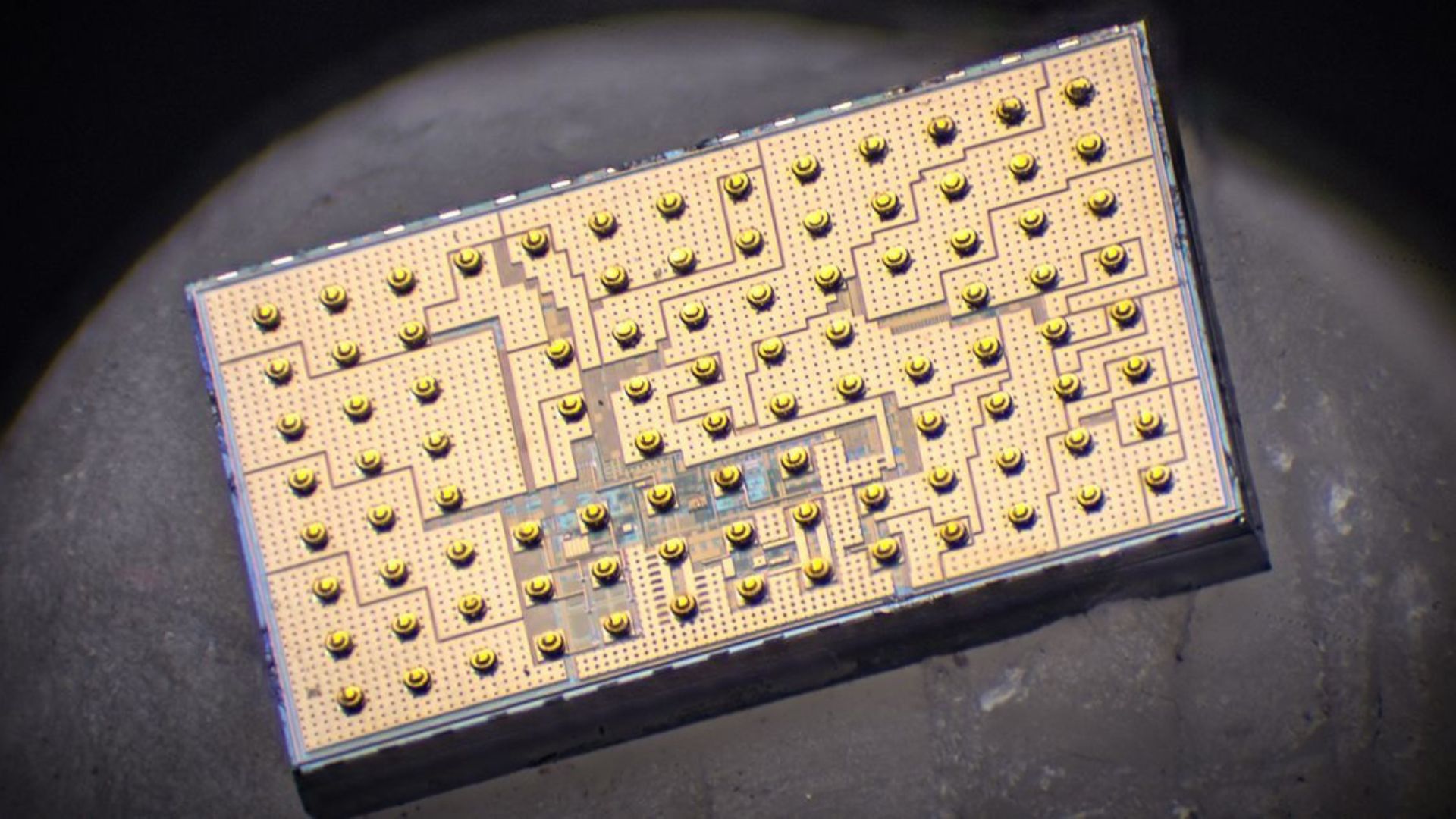
UC San Diego engineers developed a hybrid DC-DC step-down converter that combines piezoelectric resonators with capacitors to deliver roughly 4× more current while reaching 96.2% voltage-conversion efficiency. The design targets the growing gap between common 48 V distribution in data centers and GPUs' 1-5 V operating rails, addressing limits of traditional inductive converters. Early prototype results suggest smaller, higher-density power stages that scale more easily in manufacturing and could reduce conversion losses and thermal constraints in GPU-dense racks. Lead researcher Patrick Mercier frames the work as a practical path beyond inductors' physical limits, with implications for power-architecture choices in future AI infrastructure.
What happened
Engineers at the University of California San Diego created a hybrid DC-DC step-down converter that pairs a piezoelectric resonator with commercial capacitors and related circuitry to convert high distribution voltages into GPU-usable rails. The prototype achieves 96.2% conversion efficiency and, importantly, delivers approximately four times the current of prior piezoelectric-based converters.
Technical context
Modern data centers commonly distribute power at 48 volts, while GPUs operate between roughly 1 and 5 volts. Converting from these higher distribution voltages down to GPU rails with high efficiency and high current density is a core challenge for data-center power design. Conventional solutions rely on inductive converters (magnetics), which have improved incrementally but face practical limits on size, heat dissipation, and scaling as per-rack and per-server power demands rise.
Key details
The UCSD team substituted mechanical energy transfer via piezoelectric resonators for magnetic energy storage and combined that resonator with capacitive elements to overcome prior piezoelectric designs' weaknesses: insufficient current and efficiency under large voltage gaps. The result is a hybrid topology that maintains high conversion efficiency (96.2% cited) while boosting current output roughly fourfold. Patrick Mercier, the study's senior author and professor of electrical and computer engineering, positioned the work as a way to move beyond the incremental headroom left in inductive converter design: "We've gotten so good at designing inductive converters that there's not really much room left to improve them to meet future needs."
Why practitioners should care
Power conversion efficiency and current density are direct constraints on rack density, cooling, and total cost of ownership in AI deployments. A converter topology that reduces losses and increases current without proportionally increasing size or thermal load changes tradeoffs in board layout, VRM architecture, and power-distribution strategies for GPU servers. For hardware architects and data-center engineers, this approach promises smaller, higher-energy-density power stages that could ease thermal headroom and permit higher compute density per rack.
What to watch
Validation beyond lab prototypes: sustained reliability tests, switching/transient behavior under real GPU loads, EMC/EMI characteristics, thermal and mechanical coupling in production form factors, and manufacturability at scale. Also watch for follow-on work that integrates the hybrid modules into server VRMs or modular rack PDUs and any partnerships with power-electronics vendors.
Key Points
- 1Hybrid piezoelectric-capacitor converter achieves 96.2% efficiency and ~4× current, addressing power conversion losses between 48 V distribution and GPU rails.
- 2Replacing inductive energy transfer with piezoelectric resonators enables smaller, higher energy-density converters, reducing thermal and size constraints in GPU-dense racks.
- 3Prototype-level gains matter for hardware architects; reliability, EMI, transient response, and manufacturability will determine real data-center impact.
Scoring Rationale
This hardware advance directly targets a core infrastructure pain point for AI deployments-efficient high-current conversion from 48 V distribution to low-voltage GPU rails. The prototype's efficiency and current improvements are technically significant but must clear reliability and manufacturability barriers before wide industry impact.
Sources
Public references used for this report.
Practice interview problems based on real data
1,625 SQL & Python problems across 15 industry datasets — the exact type of data you work with.
Try 250 free problems