Ubisoft Discusses AI Use In Anvil Engine
In a July 2026 Gamereactor interview, Ubisoft Anvil architect Nicolas Lopez said AI fits naturally into computer-graphics work because rendering already relies on stochastic sampling, including Monte Carlo integration. He also cautioned that AI is less natural outside graphics, making this a focused engine-tech story rather than a blanket claim about game development automation. For practitioners, the useful takeaway is where ML can be evaluated with existing graphics metrics: denoising, learned sampling, lighting approximation and on-GPU inference budgets, with separate validation needed for animation, gameplay logic or design tools.
The strongest reading of Lopez's comments is narrow and technical: ML is promising where game engines already rely on probabilistic sampling and denoising. That is useful for rendering teams, but it is not evidence that AI cleanly generalizes to every part of game development.
What happened
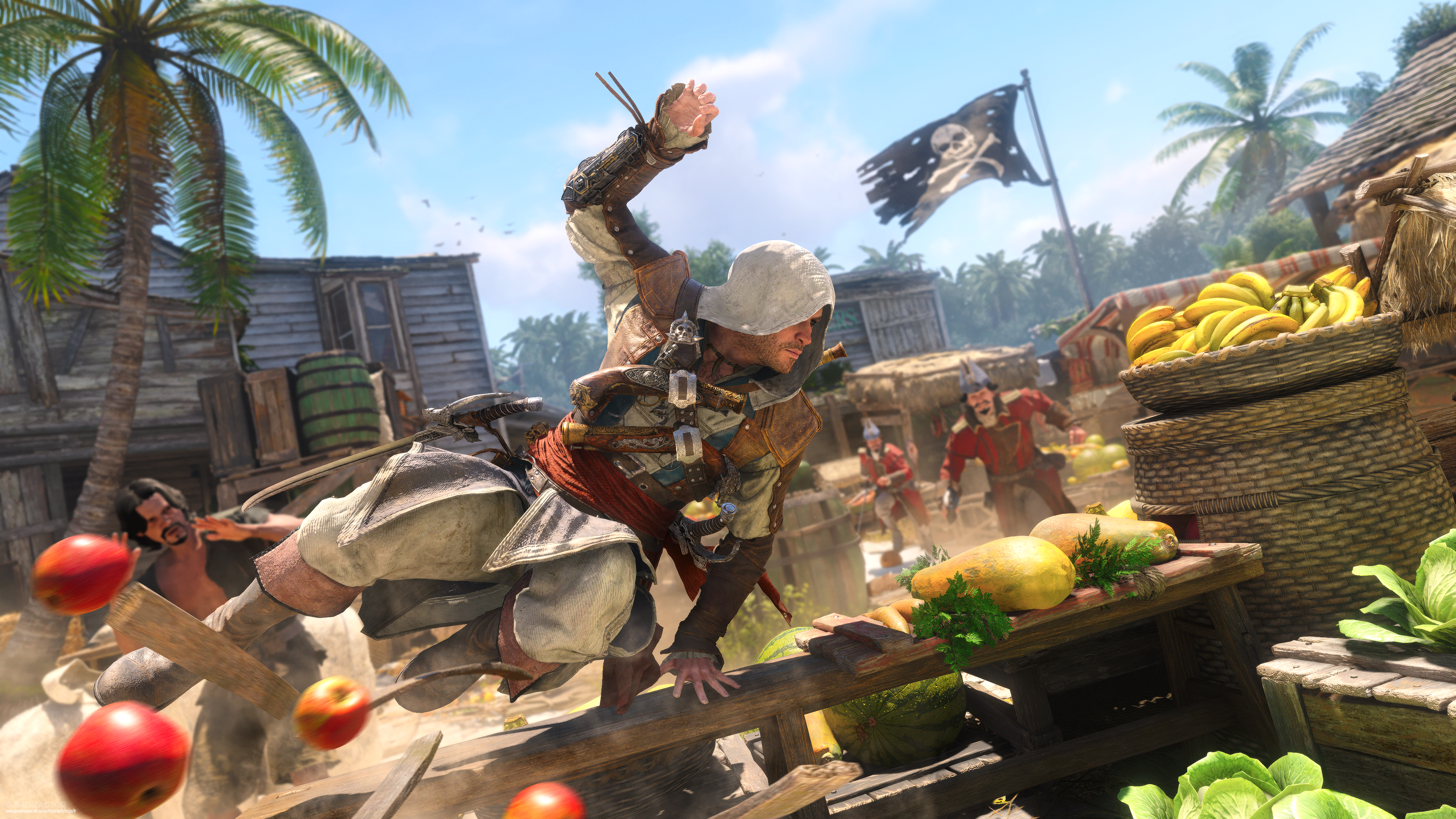
Gamereactor interviewed Nicolas Lopez, an architect on Ubisoft's Anvil Engine, about AI use in game development. Lopez connected AI's fit in graphics to stochastic techniques and Monte Carlo integration, while also saying the fit is less natural outside graphics. The interview appeared around coverage of Anvil technology for Assassin's Creed: Black Flag Resynced. Separate GamesMarket and Ubisoft sources provide broader context on Anvil's rendering constraints and Ubisoft's experimentation with generative AI, but the specific Lopez comments come from Gamereactor.
Technical context
Graphics workloads often have measurable targets: denoise a sampled image, approximate expensive lighting, or improve frame-time trade-offs without introducing unacceptable artifacts. Those are better candidates for learned models than open-ended creative or gameplay decisions because teams can evaluate latency, memory use, temporal stability and visual error against existing pipelines.
For practitioners
Engine teams should prototype ML in bounded rendering tasks first, then measure it under real GPU budgets and content variation. Applying similar techniques to animation, quest logic, dialogue or design tools needs different validation because failures are less likely to look like simple numeric or visual error.
What to watch
Watch whether Ubisoft publishes implementation details, performance numbers or shipped Anvil features that use learned denoisers, sampling aids or other ML-assisted rendering systems.
Key Points
- 1Lopez's comments point to graphics workloads, not a broad replacement claim for game-development roles or creative teams.
- 2Sampling-heavy rendering tasks map naturally to learned denoisers, importance sampling and surrogate models under tight GPU budgets.
- 3Engine teams still need latency, memory and artifact checks before shipping ML inside real-time rendering pipelines.
Scoring Rationale
This is a solid technical-practitioner story because it identifies a realistic ML use case inside graphics pipelines. The score stays modest because the article is based on interview comments rather than a shipped feature, benchmark or broad product release.
Sources
Public references used for this report.
Practice interview problems based on real data
1,625 SQL & Python problems across 15 industry datasets — the exact type of data you work with.
Try 250 free problems