TUM Robot Uses Language Models To Locate Objects
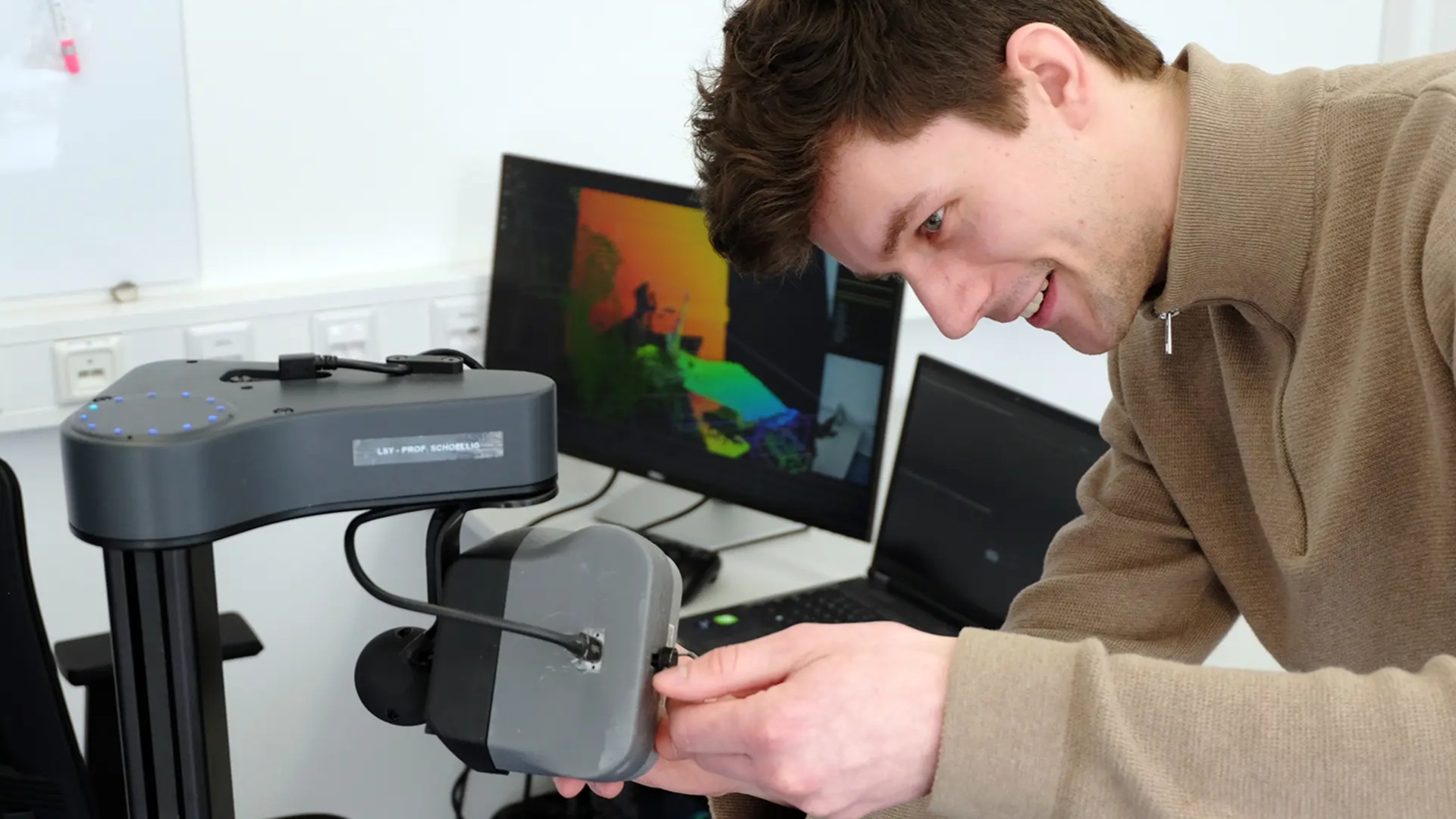
Researchers at the Technical University of Munich (TUM) developed a search robot that uses language models together with centimeter-accurate three-dimensional mapping to locate missing household objects. Published in IEEE Robotics and Automation Letters, experiments show the robot checks probable spots about 30% more efficiently than random search and detects new items with roughly 95% accuracy; the team highlights applications in assistive and factory settings.
Key Points
- 1Uses 3D mapping plus language models to autonomously locate missing household objects.
- 2Assigns probabilistic scores to search locations, improving search efficiency by ≈30%.
- 3Maintains visual memory and detects changes with about 95% accuracy for repeated searches.
Scoring Rationale
Peer-reviewed TUM research demonstrating measurable efficiency gains, but limited novelty and confined experimental scope to simple home settings.
Practice interview problems based on real data
1,625 SQL & Python problems across 15 industry datasets — the exact type of data you work with.
Try 250 free problems