Trump Prioritizes Iran and Ukraine at G7 Summit
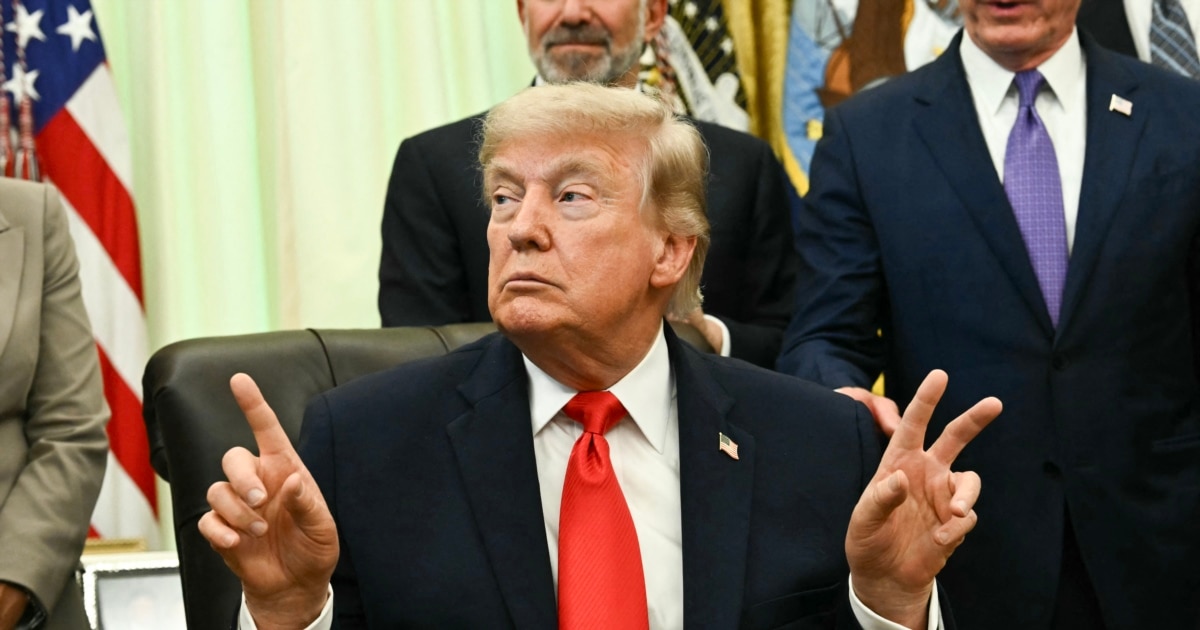
Reporting by RFE/RL and Reuters shows US President Donald Trump arrives at the G7 meeting in Evian-les-Bains in mid-June with an agenda that includes trade, artificial intelligence, Ukraine, and the crisis involving Iran. A June 13 background briefing quoted a senior administration official saying, "The President will meet with G7 leaders to address key issues of shared importance, including economic growth and development, supply chain resilience, illegal immigration, and artificial intelligence," (RFE/RL). Reuters reports Trump will hold bilateral talks with Indian Prime Minister Narendra Modi and that U.S. Trade Representative Jamieson Greer will visit India after the summit for further negotiations. Multiple outlets, including RFE/RL and Politico, place the US-Iran confrontation and the closure of the Strait of Hormuz at the center of summit discussions, while hosts in France aim to preserve unity and avoid open confrontation.
What happened
RFE/RL reports that US President Donald Trump is attending the Group of Seven summit in Evian-les-Bains, scheduled in mid-June, with an agenda spanning trade, artificial intelligence, and the wars in Ukraine and Iran. A June 13 background briefing, quoted by RFE/RL, quoted a senior administration official saying, "The President will meet with G7 leaders to address key issues of shared importance, including economic growth and development, supply chain resilience, illegal immigration, and artificial intelligence."
Reuters reports that Trump will meet Indian Prime Minister Narendra Modi on the sidelines, and that U.S. Trade Representative Jamieson Greer is set to travel to India the week after the summit for further talks on a possible trade agreement; Reuters adds that officials do not expect a deal to close at the G7. RFE/RL and other outlets list planned bilateral meetings with leaders from Qatar, the United Arab Emirates, Egypt, and outreach to Ukrainian President Volodymyr Zelenskyy.
RFE/RL and Politico report that the aftermath of US air strikes on Iran on February 28 and the near-total closure of the Strait of Hormuz have elevated the Iran crisis to a dominant, cross-cutting issue for summit deliberations.
Editorial analysis - technical context
For practitioners tracking governance and infrastructure, the inclusion of artificial intelligence on the G7 agenda is meaningful as part of a broader effort by major economies to coordinate standards and export controls. Industry-pattern observations suggest multinational summits frequently surface alignment efforts around AI safety principles, cross-border data flows, and chip-export policies, but concrete regulatory harmonization typically requires follow-up working-level negotiations.
Industry context
Observers including Times of Israel and Reuters describe French hosts as trying to set a low bar for success given historically fractious interactions with President Trump, noting that diplomatic management and avoiding public confrontation are priorities. Industry-pattern observations note that geopolitical disruptions, here, the Strait of Hormuz closures and supply-chain effects reported by RFE/RL, can quickly ripple into energy markets, commodity logistics, and timelines for critical-minerals sourcing that affect hardware availability for data centers and AI compute.
What to watch
- •"Progress on Iran diplomacy": whether summit communiques or bilateral statements reference an interim arrangement that affects maritime transit or frozen-asset negotiations (reported coverage: RFE/RL, Politico).
- •"Trade momentum with India": if follow-up technical talks by Jamieson Greer produce tariff or procurement commitments that alter supply-chain calculus for hardware or software sourcing (reported coverage: Reuters).
- •"G7 language on AI": the scope and specificity of any shared AI principles or export-control language; observers should track whether outcomes move beyond high-level statements to implementation timelines.
Observed patterns in similar summits
Industry-pattern observations show that G7 declarations often prioritize consensus and statements of intent; operational changes usually require months of interagency and trade-technical work. For AI and hardware supply chains, that means practitioners should expect incremental policy signals first and regulatory or procurement impacts later.
Bottom line
Reporting across RFE/RL, Reuters, Politico, and other outlets frames the Evian G7 as a high-stakes diplomatic convening where Iran and Ukraine dominate the geopolitics, trade talks with India are visible but unlikely to be closed at the summit, and AI appears on the agenda as part of a broader push for allied coordination. Industry observers and practitioners will watch summit language for early indicators of export-control and procurement shifts that could affect compute and supply-chain planning.
Key Points
- 1G7 summit in Evian-les-Bains (mid-June) centers on Iran, Ukraine, trade, and artificial intelligence, per RFE/RL and Reuters.
- 2Reuters reports Trump will meet Narendra Modi and that USTR Jamieson Greer will pursue follow-up trade talks in India after the summit.
- 3Industry-pattern observations: summit language typically signals intent; operational changes for AI governance or hardware supply chains follow in slower, technical negotiations.
Scoring Rationale
The G7 summit story lists artificial intelligence as one of four agenda items alongside Iran, Ukraine, and trade, but the primary reporting centers on geopolitical and diplomatic developments rather than AI policy substance. Score reflects the marginal AI angle: summit language may eventually shape AI governance frameworks, but no concrete AI decisions or outputs are documented in coverage.
Sources
Public references used for this report.
View 9 more sources
- Trump to Meet With Middle East Leaders, Attend Ukraine Session at ...usnews.com
- ‘The elephant in the room’: Trump’s Iran war looms over G7politico.com
- Iran and Ukraine loom over G7, as France hopes Trump will at least stay for durationtimesofisrael.com
- Netanyahu will not join Trump meeting with Middle East leaders at G7, senior US official saysjpost.com
- Trump strikes Iran to maintain credibilitylemonde.fr
- Trump says G7 support 'irrelevant,' claims 'victory' in Iran waraa.com.tr
- US seeks G7 help in demining Strait of Hormuz as Iran talks progressktvh.com
- G7 meets on Russia-Ukraine war as Rubio tries to sell U.S. ... - PBSpbs.org
- Macron’s Agenda Meets Trump’s at the G7 Summitcfr.org
Practice with real Ad Tech data
90 SQL & Python problems · 15 industry datasets
250 free problems · No credit card
See all Ad Tech problems