
Tomorrow.io adds $35 million to DeepSky funding
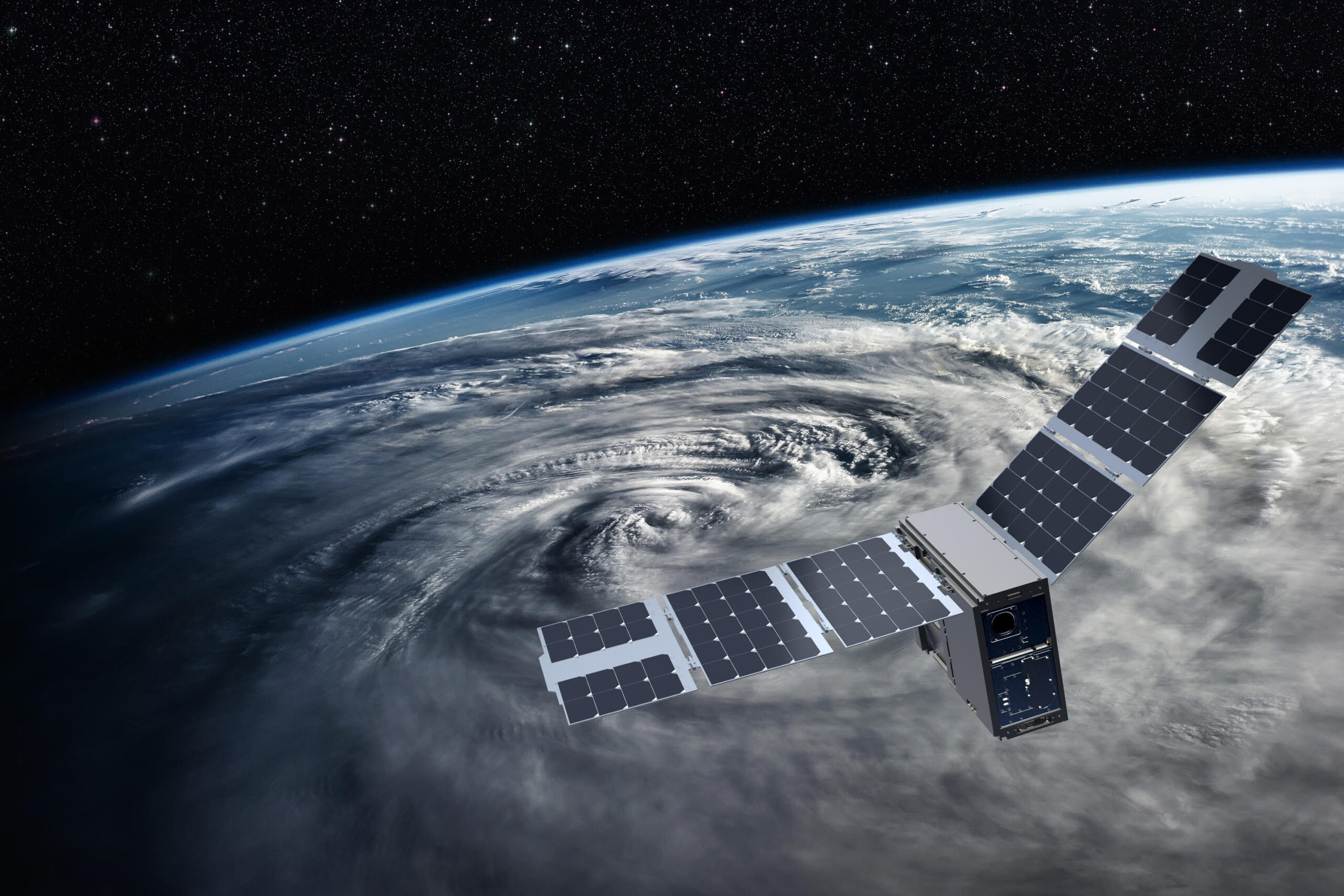
Tomorrow.io has added $35 million to its Series F financing, bringing the round to $210 million, reporting by SpaceNews and Globes says. SpaceNews reports the additional capital came from existing investor Pitango and Harel Insurance, joining Series F leads Stonecourt Capital and HarbourVest Partners. SpaceNews and Globes state the funds will support deployment of the next-generation DeepSky satellite constellation, expansion of space-based observation capacity, and acceleration of the company's AI capabilities, including an "agentic" platform to convert weather data into real-time operational guidance. Globes quotes CEO Shimon Elkabetz: "Weather is one of the most powerful forces shaping the global economy... As AI becomes embedded in operations, that capability becomes foundational." Editorial analysis: This financing extension reinforces investor appetite for combined space and AI weather intelligence, a development practitioners should watch for higher-fidelity atmospheric inputs to forecasting and resilience systems.
What happened
Tomorrow.io added $35 million to its ongoing Series F round, bringing the round total to $210 million, SpaceNews and Globes report. SpaceNews says the additional capital came from existing investor Pitango and Harel Insurance, joining lead investors Stonecourt Capital and HarbourVest Partners. Per SpaceNews, the company's Gen1 network of 11 microwave sounder satellites achieved a global 60-minute revisit rate for atmospheric observations. SpaceNews reports the funds will accelerate development of the next-generation DeepSky satellites, which the operator has said will be larger than the six-unit cubesats used in Gen1 and will carry multiple co-located sensors. Both SpaceNews and Globes state the capital will also support expansion of AI capabilities and development of an "agentic" platform intended to turn weather data into real-time operational guidance. Globes attributes a public statement to CEO Shimon Elkabetz: "Weather is one of the most powerful forces shaping the global economy, yet it remains one of the least fully integrated into how decisions are made. Tomorrow.io was built to change that by transforming how the planet is observed and turning data into real-time, actionable intelligence. As AI becomes embedded in operations, that capability becomes foundational."
Editorial analysis - technical context
Companies combining higher-resolution space-based sensing with AI-driven forecasting aim to reduce latency and improve situational awareness for operational users. High-frequency revisit rates and co-located sensor suites increase vertical atmospheric profiling fidelity, which, when fused with models, can improve short-term nowcasts and probabilistic forecasts used by aviation, energy, and logistics teams. For practitioners, richer satellite-derived atmospheric observations can change the calibration, retraining cadence, and input-feature design of operational forecasting pipelines; these effects are industry-wide and not a claim about the company's internal roadmap.
Industry context
Reporting frames this extension as further investor conviction in weather-as-infrastructure narratives that combine remote sensing and generative/agentic AI. Observers and customers in sectors sensitive to weather-driven disruption have raised budgets for resilience and decision-support tools, creating commercial demand for low-latency, high-fidelity atmospheric data. This trend increases opportunities for integrations between satellite data providers, model vendors, and downstream decision-support platforms.
What to watch
- •Deployment cadence and sensor payload specs for the next-generation DeepSky satellites as publicly disclosed.
- •Validation datasets or benchmark comparisons showing how DeepSky observations change forecast skill at sub-6-hour horizons.
- •Product announcements or APIs exposing the reported "agentic" platform and its interfaces for operational customers.
Key Points
- 1Tomorrow.io extended its Series F by $35 million, raising the round to $210 million, per SpaceNews and Globes.
- 2Investors are funding expansion of space-based sensing plus AI, reflecting demand for lower-latency, higher-fidelity atmospheric inputs.
- 3For practitioners, new satellite-derived observations may require changes to model inputs, retraining cadence, and operational deployment pipelines.
Scoring Rationale
This funding is a notable extension for a space-AI weather provider that could increase availability of higher-frequency atmospheric observations for enterprise forecasting. The story matters to practitioners integrating new remote-sensing inputs, but it is not a frontier-model or market-defining event.
Sources
Public references used for this report.
Practice interview problems based on real data
1,625 SQL & Python problems across 15 industry datasets — the exact type of data you work with.
Try 250 free problems