Tom Hanks Raises Concerns About AI Vocal Likeness
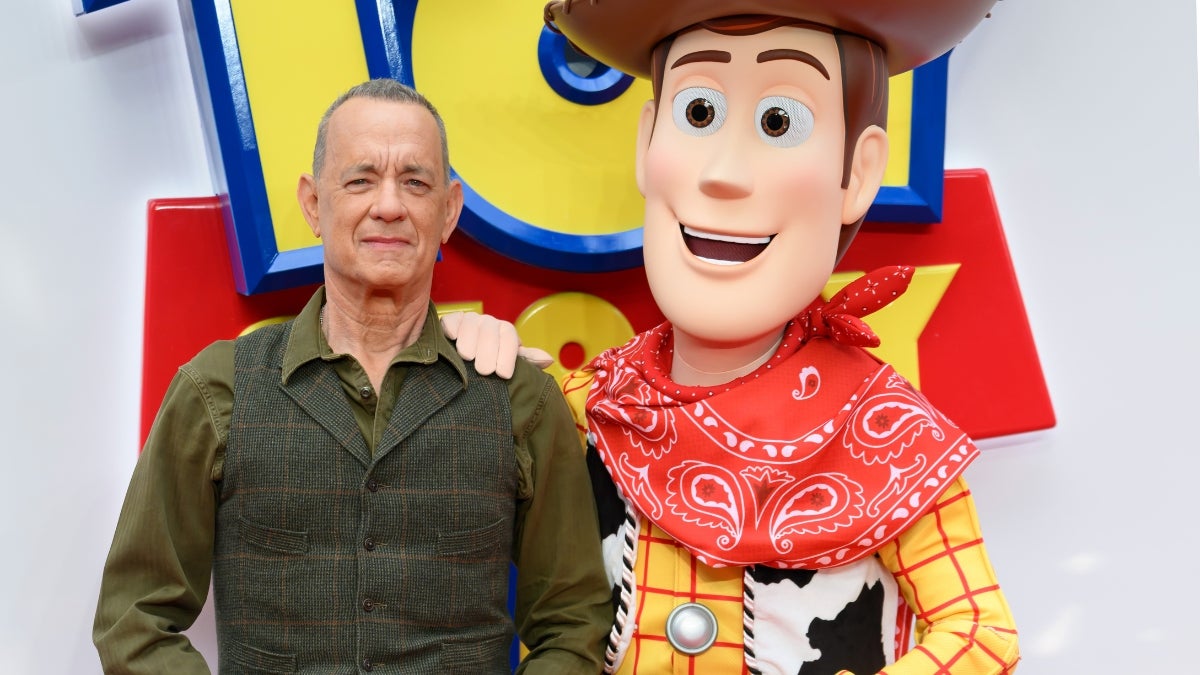
The consent problem in voice synthesis is no longer hypothetical for the industry's most recognizable franchise voices, and this episode shows why: three decades of pristine, isolated dialogue recordings are exactly the training data modern voice cloning needs. In an Entertainment Weekly interview covered by TheWrap and Variety, Tom Hanks, who has voiced Woody across 31 years of Toy Story films, said "Time is undefeated" and noted that "Every word we have ever recorded in time in 'Toy Story' is on digital media somewhere, so they could put together anything they would want." Hanks and Tim Allen both called an AI-generated sequel "a scary thought." Variety notes Hanks flagged this dynamic as early as 2023, citing The Polar Express as an early case of actor data stored for future recreation. No studio plan is reported; the significance is pressure: high-profile statements like this accelerate demands for clearer guild and studio standards on archival audio reuse, consent, and watermarking.
Archival audio is the sleeping rights problem in synthetic media, and it takes a franchise like Toy Story to make it legible: a 31-year library of studio-quality, isolated vocal performances is close to ideal fine-tuning data for modern voice cloning, and the performer who recorded it has no practical technical control over its reuse.
What Hanks said
In an Entertainment Weekly interview, reported by TheWrap and Variety, Tom Hanks said it is "scary" to imagine studios reusing past recordings to synthesize his voice. "Time is undefeated," he said, adding: "The question would be whether or not we could cobble together some version of me. Every word we have ever recorded in time in 'Toy Story' is on digital media somewhere, so they could put together anything they would want." Hanks and Tim Allen, the voice of Buzz Lightyear, both called the prospect of an AI-generated sequel "a scary thought." Toy Story 5 opened at $160 million domestically and $312 million globally, per TheWrap, which also reports director Andrew Stanton saying the fifth film is likely the franchise's final installment.
The longer arc
Variety notes Hanks raised this concern in a 2023 Adam Buxton Podcast interview, saying anyone can now be recreated "at any age" via AI or deepfake technology, and pointing to The Polar Express (2004) as an early case of actor data being captured and stored for future performance recreation. TechRadar and Futurism also picked up the new remarks, a sign of how far beyond the trade press this concern now travels.
Technical reality
Modern voice cloning pipelines combine speaker embeddings, prosody-aware text-to-speech models, and large speech datasets; clean, isolated, professionally recorded dialogue, exactly the asset a long-running animated franchise accumulates, is far better training material than found audio. The available controls are contractual and procedural rather than technical: consent clauses, provenance tracking, and licensing frameworks, implemented unevenly across studios and talent unions.
What to watch
Any studio or guild guidance specifically covering reuse of archival audio; contract language on voice synthesis in new film and game agreements; and progress on watermarking and consent-capture tooling. Statements from performers of this profile have historically preceded, and accelerated, formal standard-setting.
Key Points
- 1Tom Hanks warned that decades of 'Toy Story' vocal recordings could let studios synthesize his performance without his participation, calling it 'a scary thought.'
- 2High-quality archival audio from a 30-year franchise is technically well-suited to modern voice cloning, raising real consent and rights-management challenges.
- 3The episode adds to industry pressure for clearer guild and studio standards on archival audio reuse, watermarking, and performer consent.
Scoring Rationale
The story spotlights a high-profile performer's public concern about voice cloning using archival recordings, raising consent and rights issues relevant to synthetic media practitioners. It is not a technical breakthrough, regulatory action, or studio policy change - it is a celebrity expressing a concern in a press context, placing it solidly in the minor tier.
Sources
Public references used for this report.
Practice interview problems based on real data
1,625 SQL & Python problems across 15 industry datasets — the exact type of data you work with.
Try 250 free problems