Threat Actors Operationalize AI Across Cyberattacks
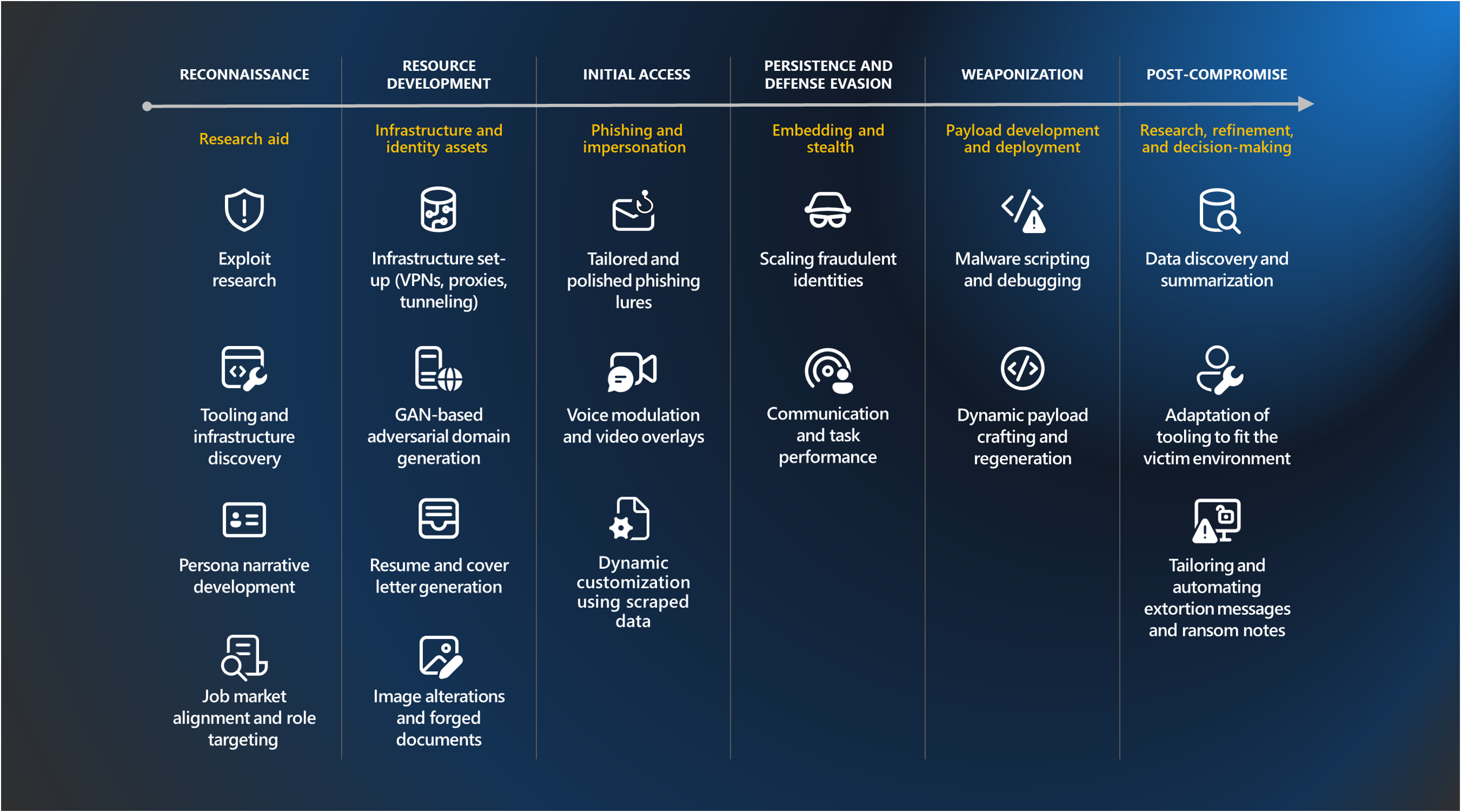
Microsoft Threat Intelligence reports that threat actors are operationalizing AI across the cyberattack lifecycle, using language models to draft phishing, generate or debug malware, and fabricate identities; observations focus on North Korean groups like Jasper Sleet, Coral Sleet, and Emerald Sleet. Microsoft notes early agentic AI experiments and describes defensive guidance while reporting thousands of disrupted fraudulent accounts and coordinated mitigation efforts.
Key Points
- 1Leverage LLMs to automate reconnaissance, persona fabrication, phishing lures, malware coding, and post‑compromise tasks at scale
- 2Reduce technical friction and operational cost, increasing attack speed, scale, persistence, and defense evasion capability
- 3Adopt AI-aware detections, identity protections, and coordinated disruptions to mitigate evolving, agentic and jailbreaking threats
Scoring Rationale
Strong Microsoft sourcing and industry-wide relevance increase impact, but limited novel techniques and preliminary agentic evidence constrain maximum score.
Practice with real Logistics & Shipping data
90 SQL & Python problems · 15 industry datasets
250 free problems · No credit card
See all Logistics & Shipping problems