
Terry Tao Advocates AI-Assisted Formal Proofs
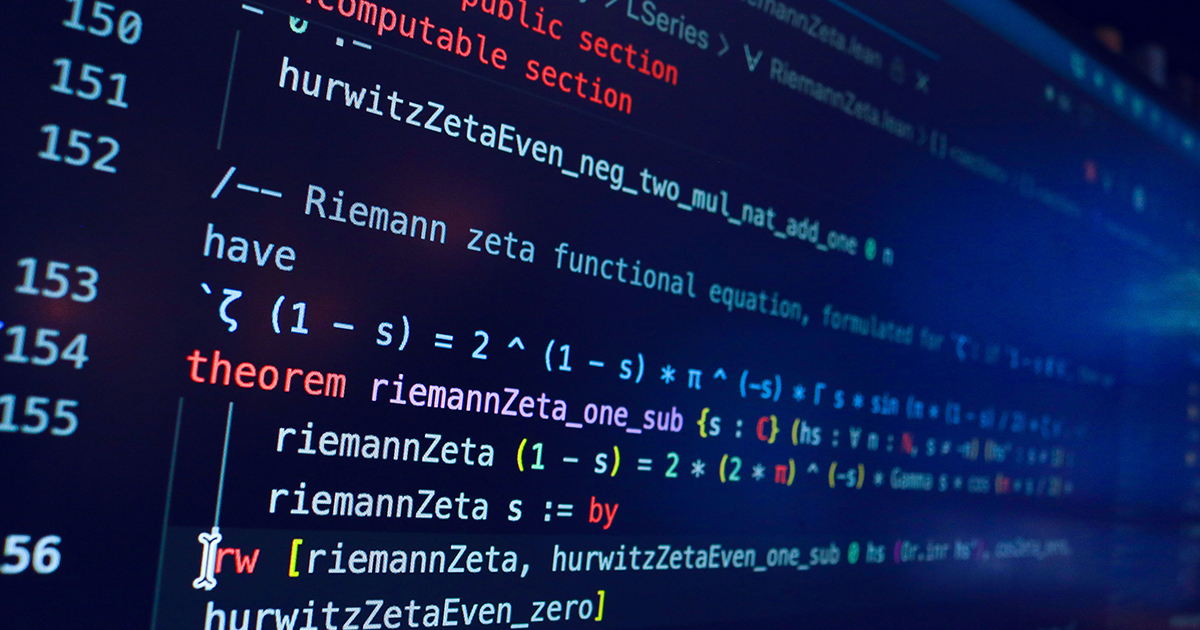
Quanta Magazine reports that Fields Medalist Terry Tao has become a prominent advocate for combining automated proof-checkers such as Lean with AI tools to formalize and verify mathematical arguments. Quanta recounts a 2014 panel where Tao predicted mathematicians might one day write papers "not in LaTeX, but in some language which some smart software will convert to a formal language," and describes his more recent work advancing mechanized proof as a way to break problems into independently verifiable components. The article frames proof assistants as providing "ironclad assurances" that individual steps are correct and discusses how human mathematicians and AI systems can collaborate on large, modular formalizations. Tao's own 2026 writing on AI and mathematical method, and independent coverage in Scientific American, corroborate his growing public advocacy.
What happened
Quanta Magazine reports that mathematician Terry Tao has become an active proponent of using automated proof-checkers and AI to formalize mathematics. The article cites Tao's 2014 panel remark that "one day we may actually write our papers not in LaTeX, but in some language which some smart software will convert to a formal language, and every so often you'll get a compilation error - the computer does not understand how you derived this step," and describes his recent engagement with tools such as Lean, which Quanta presents as an automated proof-checker that can provide "ironclad assurances" of correctness. Tao's own 2026 essay on mathematical methods in the age of AI and independent coverage in Scientific American corroborate this public advocacy.
Technical context
Why it matters
What to watch
Editorial analysis
Proof assistants like Lean encode mathematical definitions and proofs in a formal language whose kernel checks each step for logical consistency. The workflow Quanta describes - decomposing a proof into smaller lemmas that can be formalized and mechanically verified - aligns with established practice in theorem proving and program verification, and increasingly with AI systems that draft candidate formal steps for a checker to validate.
For practitioners, pairing AI model assistance with proof assistants targets two persistent pain points: translating informal reasoning into formal statements, and managing large, modular proof developments. A Fields Medalist's visible advocacy can influence funding, community adoption, and recruitment into formal-methods and neural-symbolic toolchains.
Track adoption signals such as the number of published formalized results and large-scale formalization projects, interoperability between proof assistants and ML models (APIs and training datasets for formalization), and reproducible case studies that quantify time-to-formalization gains. Public advocacy is not a substitute for technical benchmarks or formal evaluations of model-assisted workflows.
Key Points
- 1Fields Medalist Terry Tao has publicly championed automated proof-checkers and AI-assisted formalization, raising the visibility of mechanized mathematics.
- 2Proof assistants such as Lean let proofs be decomposed into independently verifiable lemmas, reducing human error and enabling large modular collaborations.
- 3Practitioners should watch for reproducible case studies and tooling that connect ML-driven formalization to proof assistants, plus datasets and benchmarks for formalization.
Scoring Rationale
A Fields Medalist's visible advocacy for AI-assisted formalization raises the profile of mechanized mathematics, a substantive frontier direction for researchers and tool builders. It is a profile and advocacy story rather than a concrete technical result, so it sits in the notable-but-not-paradigm range, now well-corroborated by Tao's own 2026 writing and Scientific American.
Sources
Public references used for this report.

Practice interview problems based on real data
1,625 SQL & Python problems across 15 industry datasets — the exact type of data you work with.
Try 250 free problems