
Tech Leaders Back Universal High Income Amid AI Layoffs
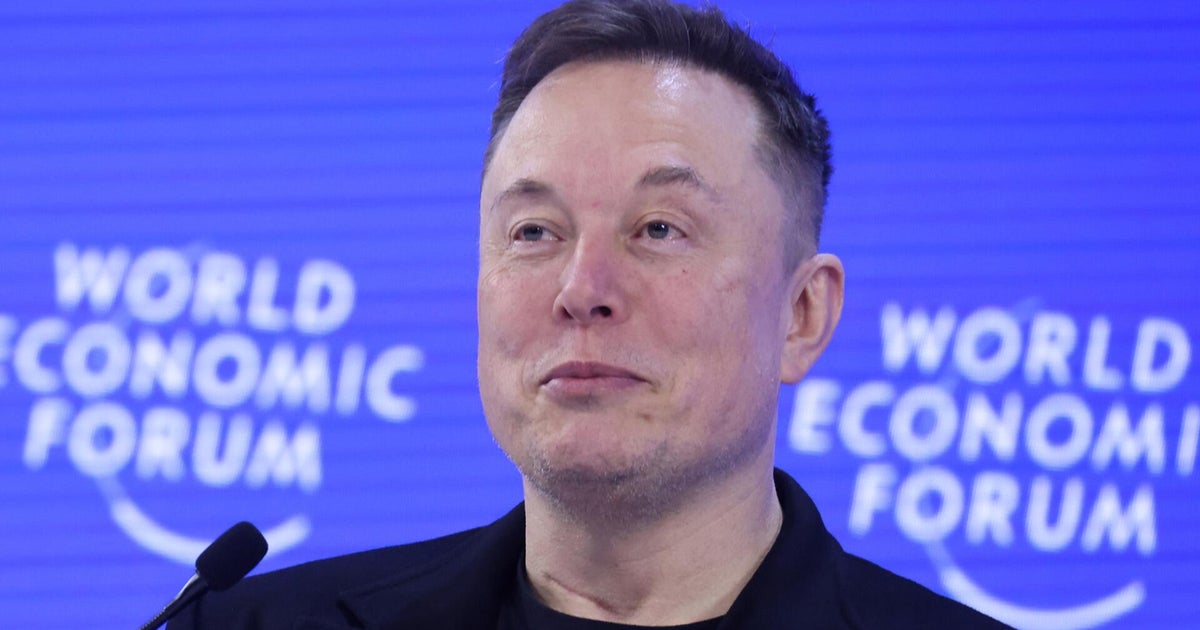
Elon Musk posted on X on April 17, 2026 that "Universal HIGH INCOME via checks issued by the Federal government is the best way to deal with unemployment caused by AI," reviving public debate over cash-transfer policy as AI-linked layoffs mount. Andrew Yang, a longtime universal-basic-income advocate, echoed the call, tweeting that AI will "wind up funding universal income." The renewed attention follows divergent displacement estimates cited by Business Insider: Boston Consulting Group projects 10% to 15% of US jobs (roughly 17 million to 25 million people) could be affected within five years, while Goldman Sachs puts the figure closer to 2.5%. Economists pushed back hard: Sanjeev Sanyal, a former top economic adviser to India's finance minister, called Musk "so wrong on this," warning it "will bankrupt any government that attempts it," while Merlin AI co-founder Pratyush Rai said "the basic math on UHI doesn't add up" given inflationary pressure on housing.
The gap between the two cited displacement estimates, Boston Consulting Group's 10 to 15 percent versus Goldman Sachs's roughly 2.5 percent, is itself the more useful signal here: methodology and time horizon change the headline number by a factor of four to six, and that uncertainty is exactly what high-profile "universal high income" endorsements tend to paper over. The louder the political proposal, the less the underlying forecasting agreement actually is.
What happened
Elon Musk posted on X on April 17, 2026 that "Universal HIGH INCOME via checks issued by the Federal government is the best way to deal with unemployment caused by AI," according to Business Insider and Fox Business, and pinned the post to the top of his profile. Andrew Yang, who ran for US president in 2020 on a universal-basic-income platform, tweeted his support, writing "It's clear that AI will wind up funding universal income. Let's make that happen ASAP." CBS News's "The Takeout" covered the broader trend of tech leaders signaling support for cash-transfer policy amid AI-linked layoffs, while The New York Times's Hard Fork podcast hosted Yang for a dedicated discussion of the idea.
Industry context
Business Insider's coverage cites the displacement estimates driving the debate's urgency: Boston Consulting Group projects that 10% to 15% of US jobs, roughly 17 million to 25 million people, could be affected by AI within five years, while Goldman Sachs estimates a narrower 2.5% of US workers at risk. Commentary distinguishes standard UBI, a modest recurring payment, from what Musk calls "Universal HIGH INCOME," a materially larger, economy-wide transfer. Sanjeev Sanyal, formerly a top economic adviser to India's finance ministry, wrote that Musk is "so wrong on this," arguing AI-driven productivity gains will not eliminate scarcity or inflation risk and that the plan "will bankrupt any government that attempts it." Merlin AI co-founder and CEO Pratyush Rai raised a related concern: "If everyone gets a high income check, everyone's competing for the same houses, land, schools, lifestyle."
For practitioners
This debate matters to AI practitioners indirectly but concretely: it shapes the political and regulatory environment automation deployments will operate in, influences public funding priorities for reskilling programs, and affects the social-license calculus employers face when publicly linking layoffs to AI adoption. The BCG-versus-Goldman gap is also a useful reminder that headline displacement percentages depend heavily on methodology, so any internal workforce-planning estimate should specify its assumptions rather than borrow a single external figure.
What to watch
Three signals will show whether this moves from social-media debate to policy: legislative activity or pilot programs that specify eligibility, payment levels, and funding mechanisms; updated macroeconomic assessments reconciling the BCG and Goldman Sachs estimates as more AI-linked layoff data accumulates; and whether other prominent technologists or platform operators publicly back a specific funding mechanism rather than a general endorsement.
Key Points
- 1Elon Musk and Andrew Yang publicly endorsed AI-era cash-transfer policy in April 2026, reviving political attention on universal income proposals.
- 2Cited displacement estimates diverge sharply, Boston Consulting Group's 10-15% of US jobs versus Goldman Sachs's roughly 2.5%, underscoring forecasting uncertainty.
- 3Economists Sanjeev Sanyal and Pratyush Rai publicly challenged the fiscal and inflationary math behind a large-scale universal high income program.
Scoring Rationale
High-profile public endorsements of large-scale cash-transfer policy raise political salience for automation-era social policy, with real if indirect implications for AI workforce/regulatory debates. Trimmed slightly from 6.9: this is social-media commentary and pushback rather than an actual policy proposal, pilot program, or legislative action.
Sources
Public references used for this report.
View 5 more sources
- Economist Slams Musk's Universal High Income Plan To Combat AI Job Losses As Fiscally Reckless - 'He Is So Wrong'benzinga.com
- Elon Musk backs 'universal high income' to combat AI job lossesfoxbusiness.com
- Elon Musk has a surprising message for unemployed Americansthestreet.com
- Elon Musk calls for government cash to counter AI job lossesmercurynews.com
- Elon Musk has Universal HIGH INCOME idea to deal with AI layoffstimesofindia.indiatimes.com
Practice interview problems based on real data
1,625 SQL & Python problems across 15 industry datasets — the exact type of data you work with.
Try 250 free problems
