Bihar CM Mentions AI Identifying Green Gamchha Wearers
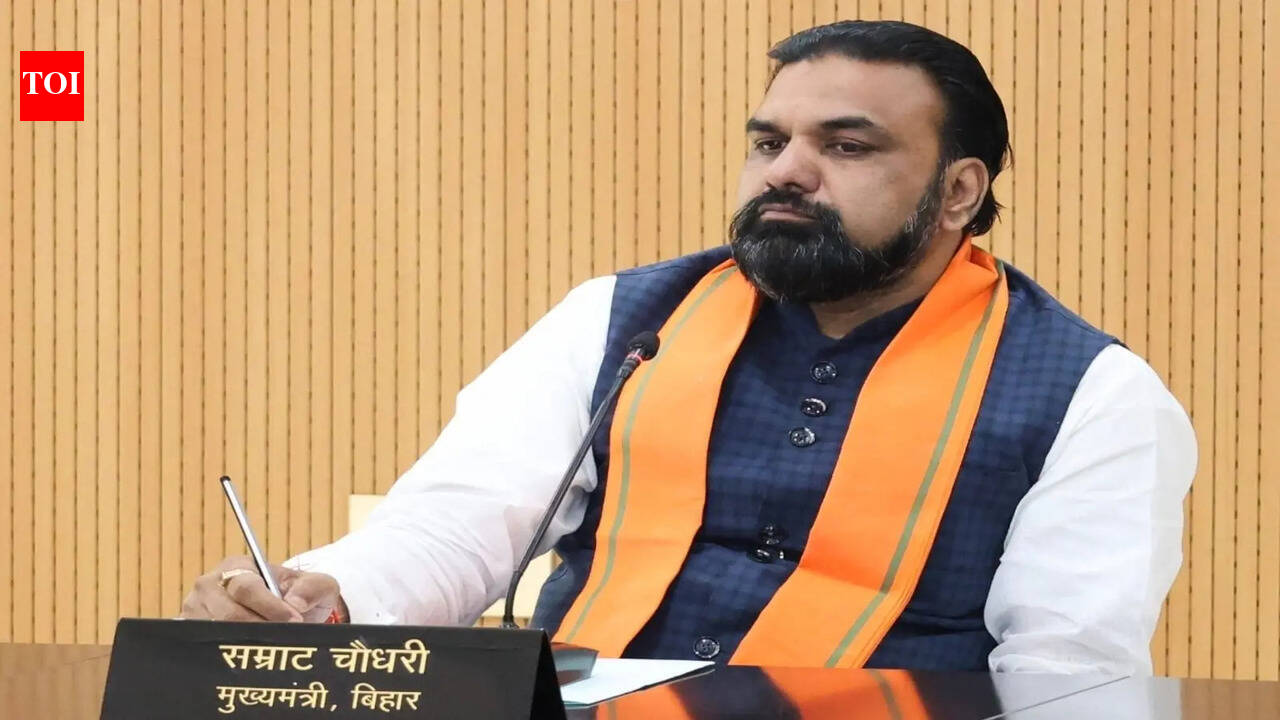
At the Bihar AI Summit 2026 in Patna, Chief Minister Samrat Choudhary said the state will push to become an AI hub and that an AI policy would be introduced soon, according to The Statesman. Per The Statesman, he said around 4,000 AI cameras had been installed in Patna and quipped that if instructed to do so, AI could identify people wearing green "gamchha" scarves associated with the RJD. He immediately clarified that he was not referring to anyone in particular, The Statesman reports. The Chief Minister also addressed caste and policing, saying police should treat criminals as criminals regardless of caste, per The Statesman.
What happened
Per The Statesman, Chief Minister Samrat Choudhary opened the "Bihar AI Summit 2026" in Patna and said the state government would soon introduce an AI policy as part of efforts to make Bihar an AI hub. Per The Statesman, he said around 4,000 AI cameras had been installed in Patna. During remarks on policing, the Chief Minister remarked, "If AI is told to identify people wearing green 'gamchha' (green scarves commonly used by RJD leaders and workers), imagine what would happen. It would immediately identify all those wearing green 'gamchha'," and then clarified he was not referring to anyone in particular, according to The Statesman. The Statesman also reports he discussed caste and policing, saying police should treat criminals as criminals regardless of caste.
Editorial analysis - technical context
Public reporting of installed AI cameras and a planned AI policy highlights practical challenges common to government AI deployments: data governance, model accuracy in diverse public settings, camera calibration, and audit trails for automated identification. Industry-pattern observations note that real-world facial or apparel-based identification systems face high false-positive rates when deployed in uncontrolled outdoor environments, and performance often varies across demographic and clothing variations.
Context and significance
For practitioners tracking governance and surveillance, this event underscores how political rhetoric can foreground narrow use cases for computer vision. Industry observers have repeatedly flagged that municipal-scale camera networks require clearly defined policy guardrails, independent audits, and transparency about datasets and retention - all matters that become more urgent when identification of politically salient symbols is discussed in public forums.
What to watch
Observers should look for the forthcoming AI policy text, procurement notices for camera or analytics vendors, details on data retention and oversight mechanisms, and any pilot project documentation that describes model training data and evaluation metrics. Tracking local procurement and policy language will clarify whether deployments will include external vendor models, on-premises inference, or third-party managed services.
Key Points
- 1Bihar CM announced plans for an AI policy and says around 4,000 AI cameras are installed in Patna, per The Statesman.
- 2Public mention of identifying green 'gamchha' highlights surveillance and civil-liberty trade-offs when vision systems target politically charged symbols.
- 3Industry observers note government camera networks typically raise model-accuracy, bias, and data-governance challenges that need independent audits.
Scoring Rationale
The story is locally significant for practitioners because it links government AI policy and deployed camera networks with politically sensitive use cases; however, it lacks technical detail or new model releases, placing it in the mid-tier of practitioner relevance.
Sources
Public references used for this report.
Practice interview problems based on real data
1,625 SQL & Python problems across 15 industry datasets — the exact type of data you work with.
Try 250 free problems