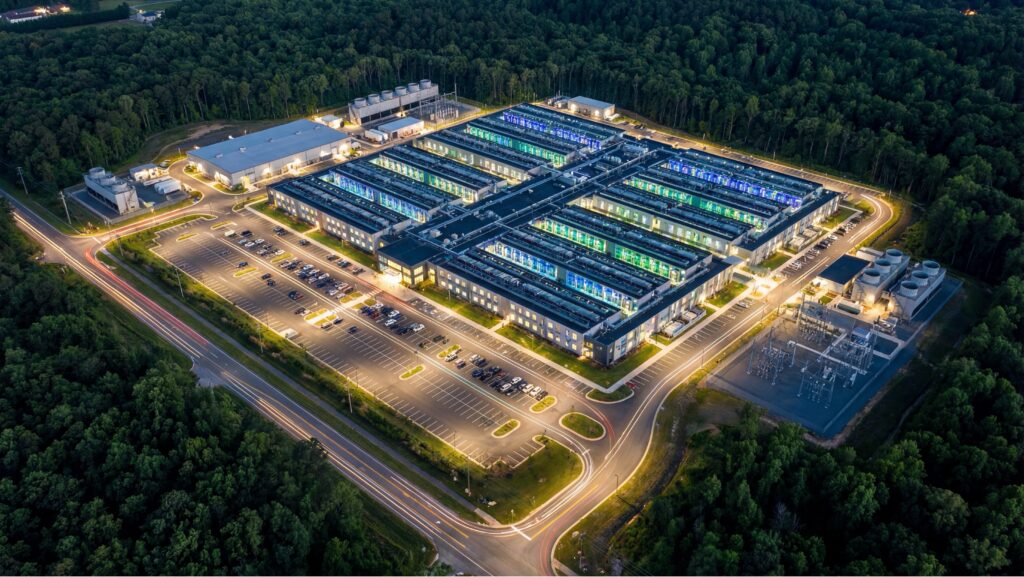
Suffolk Launches Jobsite of the Future to Embed AI Engineers

Suffolk, one of the largest U.S. construction builders, launched Jobsite of the Future, an AI-enabled operating model that embeds AI Engineers directly on active construction projects, per a June 9, 2026 Business Wire release. For AI/ML practitioners, the program is a concrete example of applied-ML productionization outside tech: Suffolk says the initiative builds on more than $100 million of prior data and technology investment and a structured data repository of about 293 terabytes. CEO John Fish called it "our boldest investment yet," and Construction Dive quotes vice president of corporate operations Doug Harrison on the need for consistent technology implementation to capture usable data across a historically fragmented industry. Onsite AI Engineers focus on design review, scheduling, and process improvements, using tools such as AI-assisted blueprint checks, computer vision, and voice-activated scheduling.
The interesting detail for AI/ML practitioners is not that a construction firm is using AI, it is where Suffolk chose to put the engineers: physically embedded on jobsites rather than centralized in a data team, a deliberate bet that feedback loops and data quality matter more than model sophistication in a historically fragmented, low-data-maturity industry.
What happened
Business Wire reports that Suffolk launched a program called Jobsite of the Future, an AI-enabled operating model that places AI Engineers on active construction projects and equips onsite innovation workspaces with advanced AI tools and real-time project data. Business Wire attributes a quote to John Fish, Chairman and CEO: "Jobsite of the Future is our boldest investment yet." The company reported a prior investment of more than $100 million in data and technology infrastructure and described a structured data repository of roughly 293 terabytes of construction data, figures also cited in IndexBox's coverage. Construction Dive includes direct reporting and a quote from Doug Harrison, vice president of corporate operations, emphasizing that consistent technology implementation is crucial to capturing meaningful data in a fragmented industry.
Technical context
Companies deploying AI directly on operational sites commonly confront three technical challenges: building reliable, versioned data pipelines from heterogeneous edge sources; enabling low-latency human-in-the-loop workflows for rapid model correction; and integrating AI outputs into existing schedule and procurement systems. Embedding specialized engineers onsite typically prioritizes data normalization, automated annotation, and lightweight tooling that supports incremental model improvements without full offline retraining cycles.
Industry context
Translating pilot ML systems into consistent production outcomes typically requires governance scaffolding: schema contracts for incoming data, automated validation, and clear rollback paths for model errors. For practitioners evaluating similar deployments, the critical engineering work often lies in observability, retraining triggers, and coupling model outputs to explicit KPIs such as rework rates and schedule variance, rather than in novel research models.
For practitioners
Per the Business Wire materials and secondary reporting, the initiative centers on three domains: design, schedule, and process. Reported tools and capabilities across sources include AI-driven design review to detect blueprint inconsistencies, computer vision to reduce paperwork, and voice-activated scheduling that compresses administrative tasks - concrete use cases where domain-specific models and applied ML pipelines can replace manual inspection and reduce rework, provided teams solve data drift, label quality, and integration challenges.
What to watch
Whether on-jobsite AI engineering measurably reduces reported rework or schedule slippage on early projects, how Suffolk operationalizes data ingestion into its structured data lake, and whether the tooling is proprietary or built on third-party platforms. Business Wire and IndexBox provide the baseline numbers and program description; Construction Dive adds independent practitioner-facing reporting and quotes from Suffolk leadership.
Key Points
- 1Suffolk launched Jobsite of the Future, embedding AI Engineers on active construction sites to speed feedback loops for applied ML.
- 2The program rests on a 293-terabyte structured data asset and over $100 million in prior technology spending, underscoring data infrastructure as a gating factor.
- 3Practical deployment priorities are data normalization, human-in-the-loop workflows, and integration with scheduling and procurement systems for measurable impact.
Scoring Rationale
A well-documented, multi-source applied-AI deployment at enterprise scale in a traditionally low-data-maturity industry, backed by concrete figures (293TB data lake, $100M+ investment) and independent trade-press reporting (Construction Dive, IndexBox) beyond the company's own press release. Notable for practitioners focused on productionizing ML outside tech, but not a model or research breakthrough.
Sources
Public references used for this report.
Practice interview problems based on real data
1,625 SQL & Python problems across 15 industry datasets — the exact type of data you work with.
Try 250 free problems