SpaceX Targets Orbital AI Computing Tests by 2027
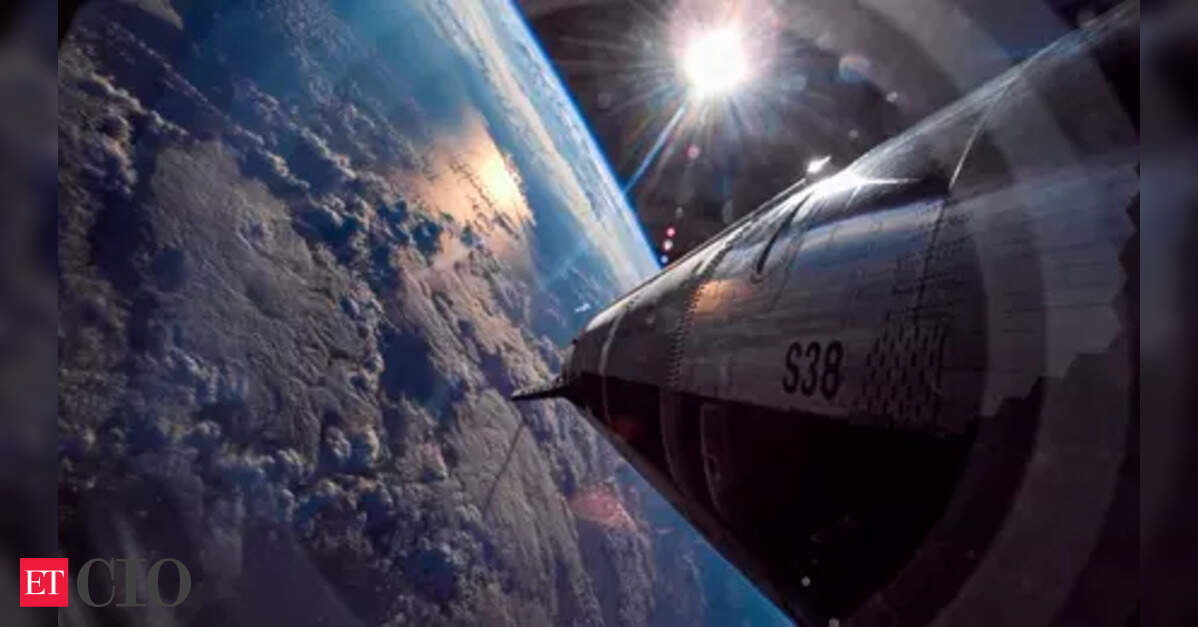
The real story in SpaceX's IPO roadshow disclosures is a timeline gap: executives are now promising demonstrator tests of orbital AI computing by late 2027, a year earlier than the 'as early as 2028' commercial-deployment language in the company's own S-1 filing, and investors should read that gap as marketing pressure ahead of the largest IPO in history rather than a settled engineering plan. Per Reuters, SpaceX President Gwynne Shotwell and CFO Bret Johnsen told roadshow investors the company will fly early demonstrator hardware, distinct from the commercial-scale rollout described in the FCC application for up to one million data-center satellites. Subsequent reporting names the demonstrator craft AI1, targeting roughly 120 kilowatts of onboard compute apiece. AWS CEO Matt Garman has separately called space-based data centers 'just not economical' given current launch costs, an important counterweight given SpaceX priced its IPO at $135 a share and a $1.77 trillion valuation partly on this ambition. Practitioners should track FCC comment-period filings and any independent technical disclosures, not roadshow slides, as the real signal.
Editorial analysis
SpaceX's IPO roadshow put a specific date on an ambition that until now had mostly lived in slide decks: orbital AI computing demonstrator tests by late 2027. That is a full year ahead of the 'as early as 2028' commercial-deployment language in the company's own S-1 filing, per Reuters, and the gap matters more than the headline date. Roadshow presentations are sales documents built to excite investors ahead of what became, at $135 a share and a $1.77 trillion valuation, the largest IPO in history. A firm regulatory filing and a named satellite program give the claim more substance than typical roadshow talk, but the timeline itself has not been independently verified outside SpaceX's own disclosures.
What was disclosed
Per Reuters, SpaceX President Gwynne Shotwell and CFO Bret Johnsen told investors at two pre-IPO presentations that the company aims to fly initial orbital AI computing demonstrators by the end of 2027. SpaceX has separately asked the FCC for authority to launch and operate up to one million satellites under a system it calls the 'SpaceX Orbital Data Center,' a filing the agency's Space Bureau accepted on February 4, 2026, and in which SpaceX describes the project as a first step toward becoming a 'Kardashev II-level civilization,' a reference to a scale for measuring a civilization's ability to harness its host star's total energy output. The FCC filing covers satellites operating between 500 km and 2,000 km altitude, linked by optical inter-satellite lasers to each other and to Starlink.
The AI1 satellite
Subsequent reporting, including from Data Center Dynamics, identifies the demonstrator hardware as the AI1 satellite, which SpaceX says will average 120 kilowatts of onboard compute per unit. Shotwell told CNBC around the IPO that SpaceX intends to trial compute workloads on existing Starlink broadband and mobile satellites first, 'canary' tests in her words, before AI1 units fly. The roadshow also cited compute-capacity relationships with Google and Anthropic; separate Data Center Dynamics reporting on SpaceX's IPO filing indicates those arrangements chiefly involve renting terrestrial xAI data-center capacity rather than the still-unlaunched orbital hardware, a distinction the roadshow framing did not make clear.
A competitive counterpoint
The million-satellite ambition has a prominent skeptic. AWS CEO Matt Garman said in February 2026 that space-based data centers are 'just not economical' today, citing launch costs and the sheer mass of server hardware, and noted 'there are not enough rockets to launch a million satellites yet.' That critique predates the IPO roadshow but directly addresses the scale claim underlying it, and is a useful check on a filing that is, after all, investor marketing material.
For practitioners
Treat the late-2027 date as a demonstrator milestone, not a production deployment date; the commercial rollout depends on FCC approval, Starship launch cadence, and unresolved thermal and power-delivery engineering at orbital scale. Compute buyers evaluating SpaceX's AI story today are transacting for terrestrial xAI capacity, not orbital capacity - keep those two offerings separate when modeling vendor risk.
What to watch
FCC docket SAT-LOA-20260108-00016 for comment resolution and any waiver rulings; SpaceX technical disclosures or launch manifests naming AI1 specifically; and whether Google, Anthropic, or other named partners confirm orbital, as opposed to terrestrial, compute commitments in their own disclosures.
Key Points
- 1SpaceX now targets late-2027 orbital AI compute demonstrators, a year ahead of its own IPO filing's 'as early as 2028' commercial deployment language.
- 2The claim rests on roadshow talking points and an FCC filing for a million satellites, not yet on independent technical verification or launches.
- 3AWS CEO Matt Garman publicly calls space data centers 'not economical' today, a useful check against SpaceX's IPO-era orbital compute pitch.
Scoring Rationale
Verification strengthens the evidentiary basis without changing the overall calibration: the FCC's public notice independently confirms the million-satellite application and its February 2026 acceptance date, the SEC filing confirms the IPO's share price and structure, and independent trade press (Data Center Dynamics) separately names the AI1 demonstrator satellite and its specifications. AWS CEO Matt Garman's on-the-record skepticism about orbital data-center economics provides a legitimate counterweight the original summary lacked. The story remains a major infrastructure and market event bounded by real contingencies (FCC approval, Starship cadence, unproven orbital economics), consistent with the original score.
Sources
Public references used for this report.
View 9 more sources
- FCC Space Bureau Accepts for Filing SpaceX's Application for Orbital Data Centers (DA 26-113)docs.fcc.gov
- SpaceX IPO: Musk's firm set to launch first 'orbital data center' AI1 satellites in 2027, will put compute on Starlink craftdatacenterdynamics.com
- SpaceX reveals its share price and record valuation: 555.6 million shares at $135 apiece, at a $1.77 trillion valuationfortune.com
- SpaceX aims to launch orbital AI computing tests by end of next year, sources sayfinance.yahoo.com
- SpaceX aims to launch orbital AI computing tests by end of next year, sources say - AOLaol.com
- SpaceX aims to launch orbital AI computing tests by end of 2027, sources saystraitstimes.com
- SpaceX targets orbital AI test by late 2027 - Tech in Asiatechinasia.com
- SpaceX aims to launch orbital AI computing tests by end of next yearm.economictimes.com
- SpaceX aims to launch orbital AI computing tests by end of next year, sources saywtvbam.com
Practice interview problems based on real data
1,625 SQL & Python problems across 15 industry datasets — the exact type of data you work with.
Try 250 free problems