Sony AI's Ace defeats elite table tennis players
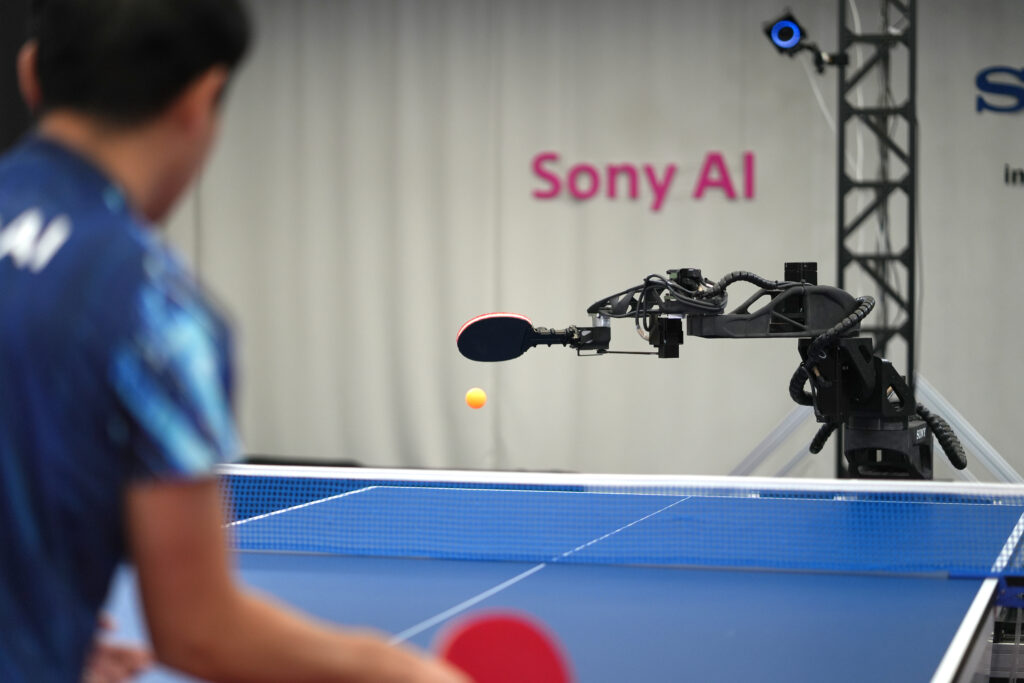
Reuters, The Guardian and a Nature paper report that Ace, a robotic table-tennis player developed by Sony AI, competed under International Table Tennis Federation rules and defeated some elite human players. Per The Guardian and the Nature paper, Ace won three of five matches against elite opponents and produced competitive results in other contests. Fortune and Nature report the system uses nine cameras, an eight-jointed arm on a movable base, and was trained with reinforcement learning. The Nature study documenting the experiments was published in Nature. Fortune quotes project lead Peter Dürr saying, "There's no way to program a robot by hand to play table tennis. You have to learn how to play from experience," and Michael Spranger noting the work could have applications in manufacturing and, as Fortune puts it, "it's also not hard to imagine how such high-speed and highly perceptive hardware could be used in war."
What happened
Per a study published in Nature and reporting by Reuters and The Guardian, Ace, a robotic table-tennis system developed by Sony AI, played a series of matches under official International Table Tennis Federation rules and beat several elite human players. The Guardian and the Nature paper report that Ace won three of five matches against elite opponents, with competitive performances in the remaining matchups. Reuters describes Ace as achieving "expert-level" performance in a physical sport, citing the project lead. Fortune reports that Sony AI staged the trials on a purpose-built, Olympic-sized court at its Tokyo site.
Technical details
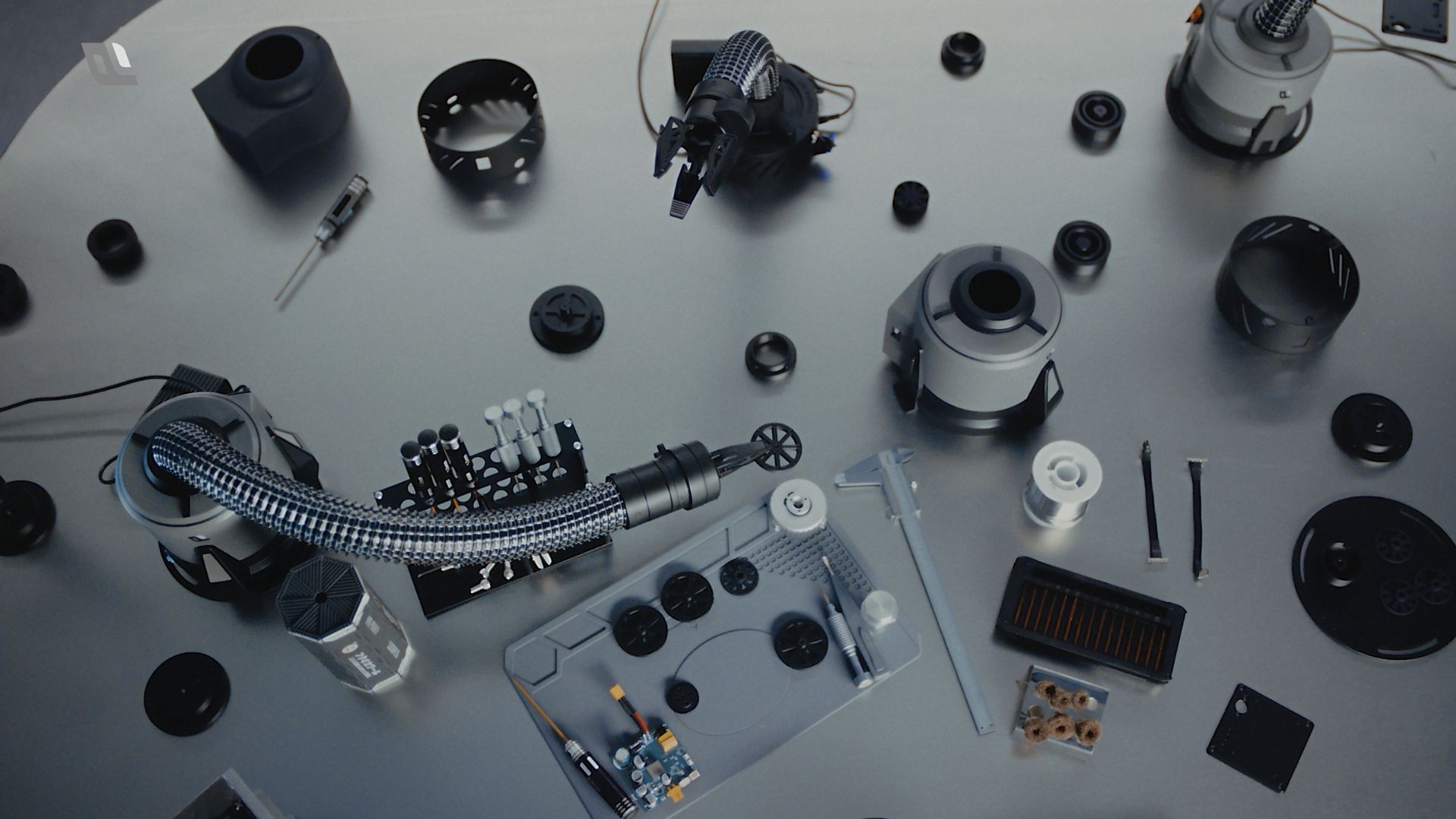
Per the Nature paper and Fortune, Ace combines high-frame-rate perception from nine cameras positioned around the court, an eight-jointed robotic arm on a movable base, and AI-based control trained via reinforcement learning. Sources describe the perception pipeline as tracking the ball and estimating spin by zooming on the ball's logo and combining multiple camera views to compute trajectory and angular velocity in real time. The hardware and control stack prioritize low-latency observation-to-action loop times, according to the technical description in the published report.
Editorial analysis - technical context
Research teams attempting dynamic, contact-rich tasks typically integrate three technical elements: fast, redundant perception; low-latency, torque-capable actuators; and closed-loop policies learned in simulation and fine-tuned on hardware. The combination reported for Ace, multi-view high-speed vision plus learned control policies, mirrors a growing pattern in robotics research where scale in data and compute, not hand-crafted rules, produces fluid behavior in non-repetitive environments. Groups working on comparable physical tasks often rely on massive simulation, domain randomization, and staged real-world fine-tuning to bridge sim-to-real gaps.
Context and significance
Sony AI's reported results extend prior milestone-driven narratives used in AI research, where games (chess, Go, poker, video games) served as controlled decision-making benchmarks. Bringing comparable decision quality into the physical world raises different engineering questions because execution noise, actuation limits, and perception failure modes matter. The Reuters and Fortune coverage highlight two implications: the techniques could transfer to high-speed industrial settings and could be adapted to contexts with safety and misuse considerations. The Guardian notes Ace achieved shots and responses that human players described as surprising or previously thought infeasible.
What to watch
follow replication attempts and open release artifacts. The Nature paper provides experimental details; observers should look for released code, trained policies, and datasets that would enable independent verification. Monitor follow-up work that quantifies the volume of simulation and real-world data required, latency and actuator specifications, and benchmarks that place Ace's performance on a continuous skill scale rather than discrete match outcomes. Also watch safety and policy responses that discuss high-speed, highly perceptive robotics applied outside controlled environments.
Editorial analysis
For practitioners, the immediate takeaway is methodological. Teams building robots for fast, contact-rich tasks will likely need to invest in integrated pipelines that co-design perception, control, and hardware. Observers should treat Ace as a proof-of-concept for end-to-end learned control in a narrow, highly instrumented setting rather than as evidence that general-purpose humanoid robots have achieved comparable agility.
Key Points
- 1Ace combines high-speed multi-view perception and learned control to achieve expert-level play, showing integrated pipelines can close sim-to-real gaps.
- 2The Nature study and media coverage highlight industrial implications, as similar techniques could transfer to high-speed manufacturing tasks.
- 3Replication, released code, and hardware specs will determine whether Ace is a narrow milestone or a broadly reusable robotics advancement.
Scoring Rationale
This is a notable robotics milestone documented in Nature and covered widely, relevant to practitioners working on perception-control integration. Its immediate applicability is limited by the instrumented testbed and lack of publicly released artifacts, and the story is older than three days which reduces immediacy.
Sources
Public references used for this report.
Practice interview problems based on real data
1,625 SQL & Python problems across 15 industry datasets — the exact type of data you work with.
Try 250 free problems