Snap Launches SPECS Into Google's Wearable Graveyard
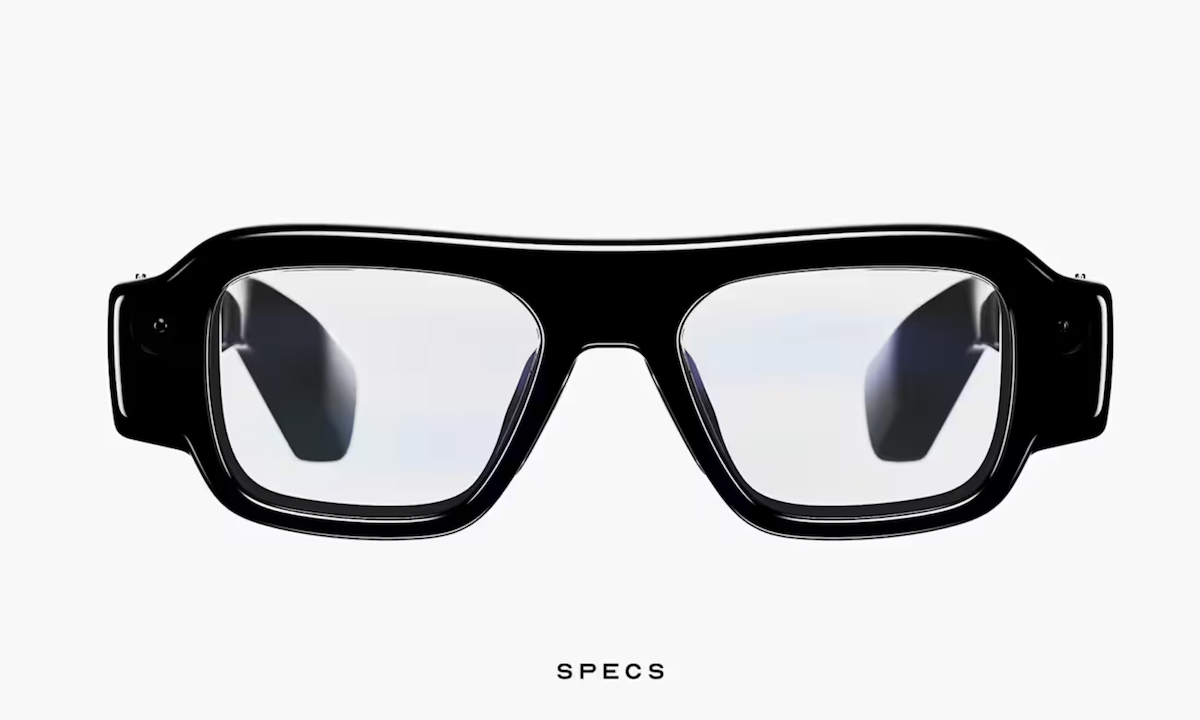
Snap launched Specs, its first consumer augmented reality glasses, at the Augmented World Expo (AWE 2026) on June 16, 2026, priced at $2,195 with preorders open immediately and units shipping this fall in the US, UK, and France, per CNBC and MacRumors. The standalone glasses feature deep integrations with both OpenAI and Google Gemini multimodal AI assistants, which use the device's cameras and microphones to answer questions, provide real-time language translation in 40+ languages, and assist with contextual tasks including navigation, car repair guidance, and measurements, per TechRadar and Tom's Guide. The hardware runs dual Qualcomm Snapdragon chips, offers a 51-degree field of view, and provides 4 hours of active battery life (20 hours total with the bundled charging case), per UploadVR. Snap's Lens Studio developer platform also gained integrations with Claude Code, Codex, and Cursor for agentic AR development.
What happened
Snap introduced Specs, its first consumer-targeted augmented reality glasses, at the Augmented World Expo (AWE 2026) on June 16, 2026. Priced at $2,195 with a $200 refundable deposit for preorders, units are scheduled to ship this fall across the US, UK, and France, per CNBC and MacRumors. Snap CEO Evan Spiegel framed the launch as a bet on AR glasses as a post-smartphone computing platform, per CNBC.
AI integration
Specs ships with deep integrations of both OpenAI and Google Gemini multimodal AI assistants that access what the wearer sees and hears to answer questions and provide contextual assistance in real time, per TechRadar and Tom's Guide. Demonstrated use cases include turn-by-turn navigation overlay, real-time language translation in 40+ languages, car repair guidance, cooking timers, and furniture measurements. A Depth Module API lets developers anchor 3D AR content using LLM-generated inputs; an Automated Speech Recognition API enables real-time transcription.
Hardware
Specs runs two Qualcomm Snapdragon chips and offers a 51-degree field of view - meaningfully wider than prior consumer AR glasses. The smaller 47mm model weighs 132g; the 52mm version weighs 136g. Active battery life is 4 hours, extending to 20 hours total with the bundled charging case. The device is fully standalone with no tether or external compute puck, per UploadVR.
Developer ecosystem
Snap's Lens Studio gained agentic development tooling and integrations with Claude Code, Codex, and Cursor, signaling intent to attract AI-native developers. A new EyeConnect feature allows two Specs wearers to share AR experiences by making eye contact.
Context
Specs enters a market with a historically poor track record - Google Glass, early Meta Ray-Ban Stories with displays, and Snap's own developer-only Spectacles all had limited consumer uptake. The title references this 'wearable graveyard.' However, Meta's Ray-Ban smart glasses (display-free, simpler) have achieved meaningful sales, and this generation of Specs brings AI assistant integration that prior products lacked. Key open questions for practitioners evaluating the platform: whether $2,195 limits developer investment given uncertain consumer uptake, how the dual OpenAI-Gemini integration differentiates from competing smart glasses, and whether fall shipping and current preorder volumes indicate viable scale.
Key Points
- 1Snap's Specs AR glasses launch at $2,195 with preorders open, shipping fall 2026 - the first consumer AR glasses with built-in OpenAI and Google Gemini multimodal AI integration.
- 2The standalone device runs dual Qualcomm Snapdragon chips, 51-degree FOV, 4-hour active battery life, and supports real-time ASR in 40+ languages with no external compute required.
- 3Lens Studio gains Claude Code, Codex, and Cursor integrations for agentic AR development, expanding the platform's appeal to AI-native developers.
Scoring Rationale
A significant consumer AR hardware launch with genuine AI integration (OpenAI, Gemini, developer tooling for Claude Code and Codex), relevant to practitioners tracking applied AI and spatial computing. Score reflects the device's premium price point and shipping-this-fall status rather than proven consumer scale, and the historically challenging AR glasses market.
Sources
Public references used for this report.
Practice with real Social Media data
90 SQL & Python problems · 15 industry datasets
250 free problems · No credit card
See all Social Media problems