SingHealth signs MoU with Bhutan on ethical AI
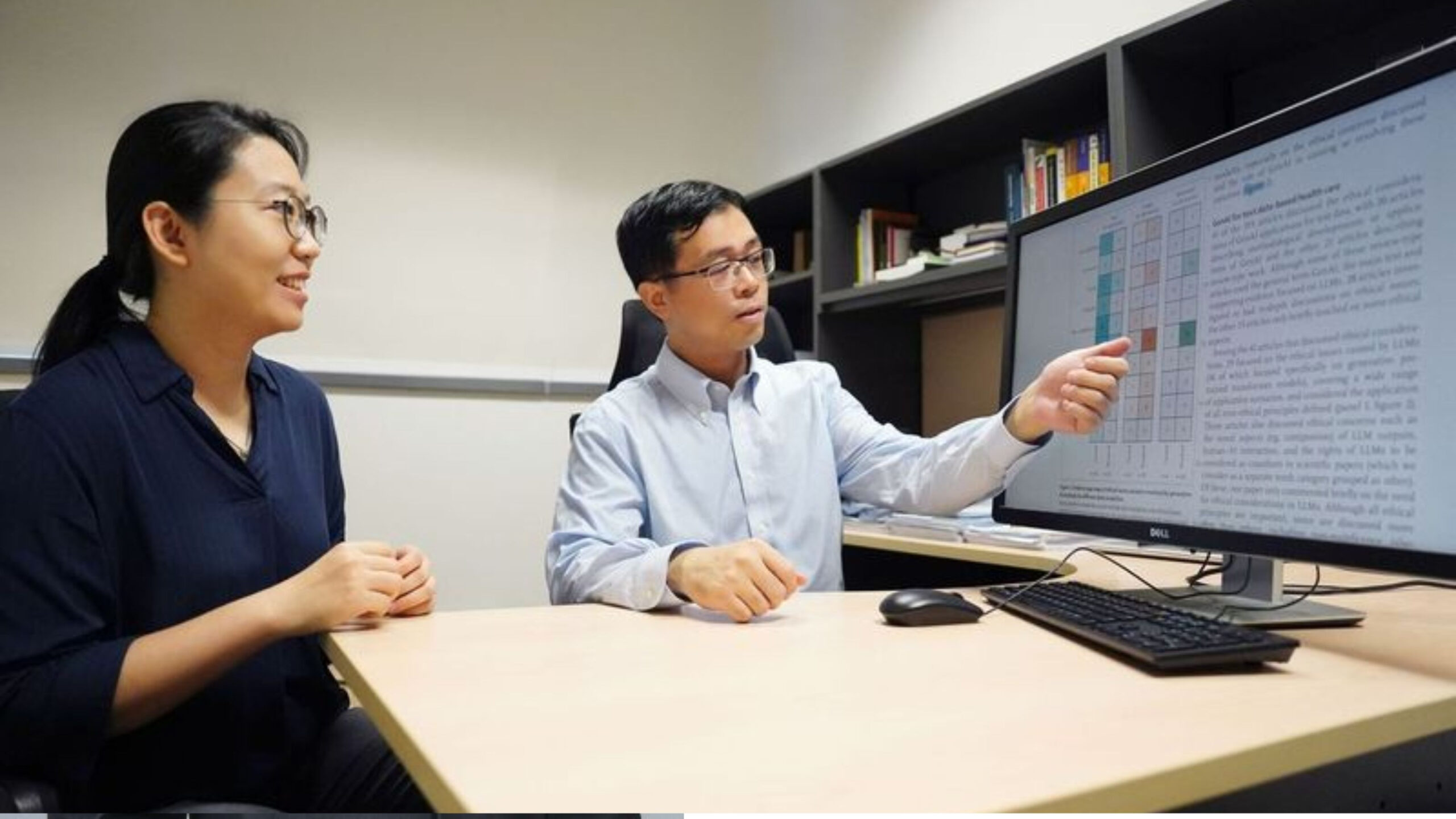
Singapore Health Services (SingHealth) and the Gyalpozhing College of Information Technology (GCIT), Royal University of Bhutan, signed a two-year Memorandum of Understanding to promote the responsible use of artificial intelligence in healthcare, according to a SingHealth statement reported by PTI and regional outlets. The agreement covers co-development of publications, guidelines and educational programmes on AI ethics and responsible healthcare AI use, the statement says. The partners will also jointly develop AI applications adapted to Bhutan's regulatory and clinical environment, including an AI-assisted chest radiograph model trained on Bhutanese data, with a planned roll-out across Gelephu Mindfulness City hospitals by 2027, SingHealth's AI Office Director Associate Professor Daniel Ting told PTI.
What happened
Singapore Health Services (SingHealth) and the Gyalpozhing College of Information Technology (GCIT), Royal University of Bhutan, signed a two-year Memorandum of Understanding (MoU) to promote the responsible use of artificial intelligence in healthcare, according to a SingHealth statement reported by PTI and covered by DailyExcelsior and DevDiscourse. The MoU specifies collaborative work on publications, guidelines and educational programmes for AI ethics and responsible healthcare AI use, per the SingHealth statement reported by PTI.
What the collaboration will build
- •Co-developed publications, guidelines and educational programmes on AI ethics and responsible healthcare AI use, per SingHealth's statement reported by PTI.
- •Joint development of AI applications adapted to Bhutan's regulatory frameworks and healthcare environment, per the same statement.
- •An AI-assisted chest radiograph model trained on Bhutanese data, developed by GCIT and Bhutan's Digital Health and Innovation Unit with clinical expertise from SingHealth, with a planned roll-out across Bhutan's Gelephu Mindfulness City (GMC) hospitals by 2027, a timeline quoted from Associate Professor Daniel Ting in PTI coverage and repeated in regional reporting.
Technical details
The chest radiograph work will draw on existing imaging-model research from SingHealth's ecosystem. Techedt reports the project will build on the multimodal medical imaging foundation model MerMED-FM, developed at SingHealth Duke-NUS Academic Medicine Centre and the A*STAR Institute of High Performance Computing. Techedt also notes that MerMED-FM has been published in The Lancet Digital Health and has demonstrated performance in detecting conditions including pneumonia and tuberculosis, according to that coverage.
Industry context
Operational significance
What to watch
Editorial analysis
Cross-border partnerships that adapt medical imaging models to local datasets are increasingly common as deployers confront dataset shift, regulatory differences, and limited local specialist capacity. Such collaborations often prioritise local data curation, annotation workflows, and clinician-in-the-loop validation to maintain safety and clinical effectiveness.
For practitioners, the project highlights practical steps for responsible deployment: assembling local clinical partners, creating governance artefacts (guidelines and education), and engineering data pipelines that reflect population-specific prevalence and imaging characteristics. This approach reduces the risk of poor generalisation when models trained on one population are applied to another.
Observers should track four indicators: whether the partners publish validation results on Bhutanese test sets, the documented governance structures for ethical oversight, the interoperability and integration approach used in rural GMC hospitals, and any public timeline updates to the announced 2027 roll-out. Public releases of model performance, data provenance, and clinical evaluation protocols will determine how reusable the work is for other low-resource settings
Key Points
- 1SingHealth and GCIT signed a two-year MoU to co-develop ethics guidance and an AI chest radiograph model, enabling local adaptation of imaging AI.
- 2Building on MerMED-FM and local Bhutanese data reduces dataset-shift risk, a necessary step for clinically robust medical-imaging deployments.
- 3Industry pattern: cross-border projects emphasize governance, clinician involvement, and transparent validation as prerequisites for safe, scalable healthcare AI.
Scoring Rationale
The story is a notable cross-border collaboration adapting medical-imaging AI to a specific population and regulatory context, relevant to practitioners working on deployment and governance. It is not a frontier-model release or major funding event, so its impact is mid-to-high but not industry-shifting.
Sources
Public references used for this report.
Practice with real Health & Insurance data
90 SQL & Python problems · 15 industry datasets
250 free problems · No credit card
See all Health & Insurance problems