Seven-Ring AI System Translates Sign Language in Real Time
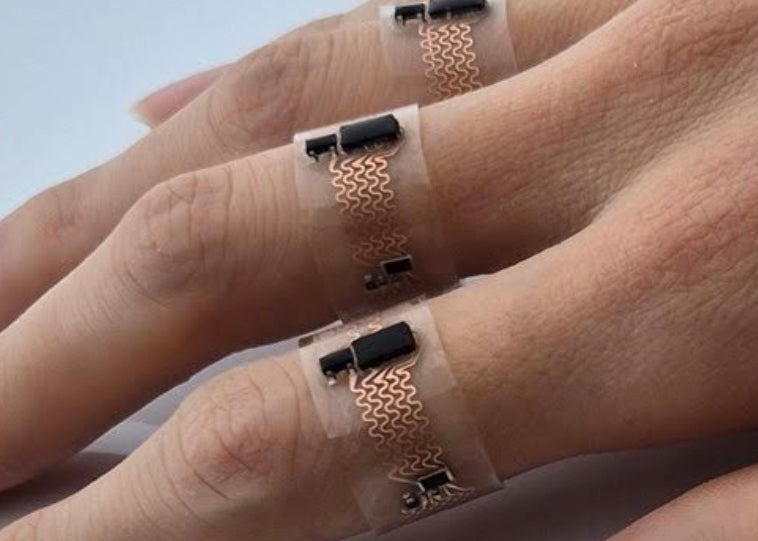
According to a paper published in Science Advances, a South Korean research team developed a system of seven wireless smart rings that translate sign language into text in real time. The system was trained on 100 common words in American Sign Language (ASL) and International Sign Language (ISL) and achieved over 88 percent accuracy in tests, per the Science Advances paper. Singularity Hub and CNET report the rings are wireless, stretch to fit different finger sizes, and use a replaceable 12-hour battery. The researchers built an AI-based "autocomplete" that predicts likely next words to reduce pauses during fluent signing, the paper reports. The study frames the device as a user-independent, wearable alternative to camera- and glove-based systems, according to the Science Advances paper and coverage by Singularity Hub and CNET.
What happened
According to a paper published in Science Advances, a South Korean research team prototyped a system of seven wireless smart rings designed to translate sign language into text in real time. The system was trained on 100 common words drawn from American Sign Language (ASL) and International Sign Language (ISL) and produced over 88 percent accuracy in the authors' reported tests. The rings are wireless, stretch to fit different finger sizes, and run on a replaceable 12-hour battery, the paper and media coverage note. The authors describe the work as aiming for "seamless interaction between signers and non-signers," according to the Science Advances article.
Technical details
Per the Science Advances paper, the device captures finger and hand motions with on-ring sensing hardware and feeds gesture signals to an AI classifier trained on a curated vocabulary. The authors report the system is designed to be user-independent, meaning it does not require individualized calibration during deployment, and incorporates an AI-driven "autocomplete" mechanism that predicts likely next words to reduce latency and create phrase-level output. Singularity Hub and CNET contextualize the approach against camera-based computer-vision systems and EMG/glove sensors, noting that the ring form factor reduces dependency on line-of-sight and bulky wiring.
Industry context
What to watch
Editorial analysis
Wearable, on-body sensing is an established alternative to camera-based recognition for gestures and sign languages because it can mitigate lighting, occlusion, and background-variation failure modes. Systems that are user-independent and have built-in prediction or autocomplete features address two common practical constraints for real-time assistive translation: latency and the need for per-user training. Prior commercial prototypes and research devices have often required per-user calibration or suffered from inconvenient wiring; reporting on this prototype places it within a trend toward lower-friction, sensor-rich assistive devices.
Observers following this space should monitor four indicators that determine practical deployability:
- •vocabulary scaling, specifically whether models can expand beyond 100 words to conversational coverage;
- •real-world latency and error modes in noisy, multi-person environments compared with lab results;
- •long-term ergonomics and battery performance beyond the reported 12-hour runtime; and
- •validation in trials with native, fluent signers and with diverse signing styles and speeds.
Researchers and product teams will also need to address privacy, data-handling, and accessibility pathways for real users, issues raised in prior coverage of sign-translation systems.
Key Points
- 1Prototype uses seven wireless rings and an AI "autocomplete" trained on 100 ASL/ISL words to enable near-real-time translation.
- 2Wearable on-ring sensing reduces line-of-sight and wiring issues that hinder camera-based or glove-based sign-translation systems.
- 3Industry observers will watch vocabulary scaling, real-world latency, battery life, and validation with fluent signers before wider adoption.
Scoring Rationale
This is a notable research prototype with clear assistive-technology implications and an academically vetted publication (Science Advances). It advances practical wearables for sign translation but remains a prototype limited to a 100-word vocabulary and lab-style tests.
Sources
Public references used for this report.
Practice interview problems based on real data
1,625 SQL & Python problems across 15 industry datasets — the exact type of data you work with.
Try 250 free problems