Sen Tom Cotton urges DOJ probe Chinese influence on US AI
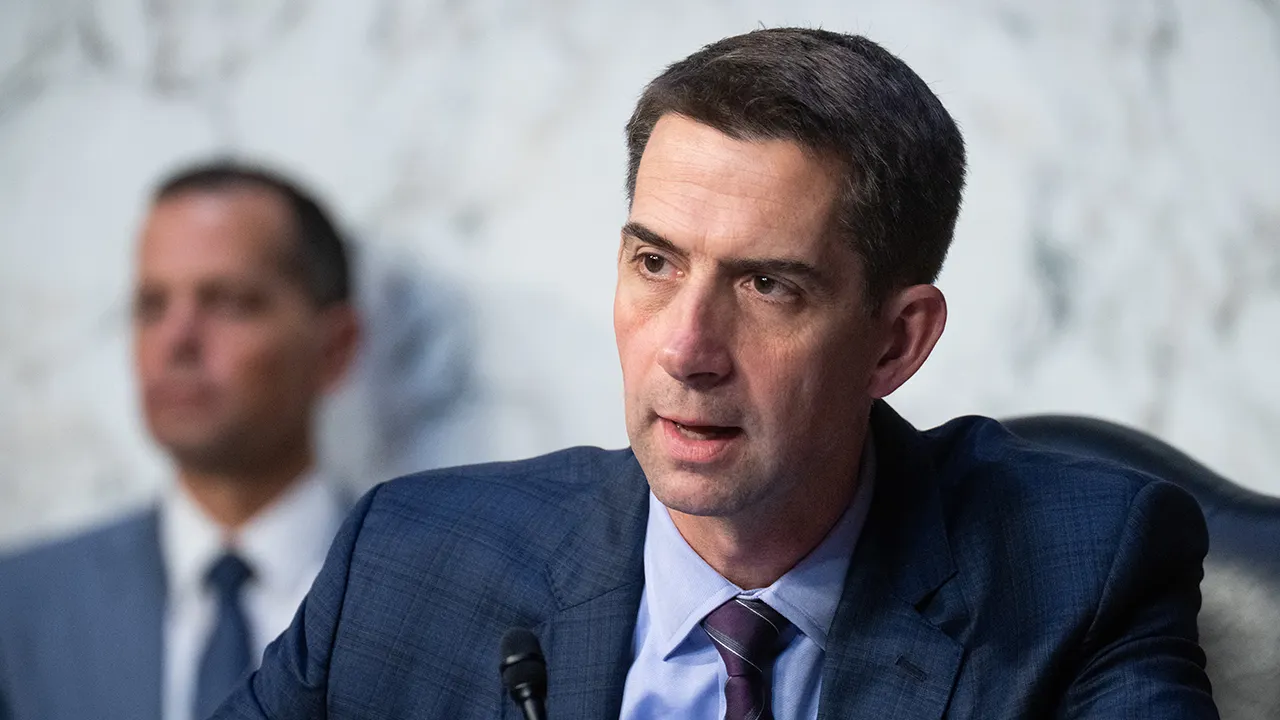
Senate Intelligence Committee Chairman Tom Cotton sent a letter to Acting Attorney General Todd Blanche on June 10, 2026, asking the Department of Justice to investigate an alleged Chinese Communist Party-linked influence campaign against U.S. AI data-center buildout. Cotton's letter cites a Bitcoin Policy Institute report alleging that a network of U.S. nonprofits funded by Shanghai-based Neville Roy Singham, along with Chinese state media, has spent years opposing American AI infrastructure, and says foreign-funded entities tied to the campaign have reportedly funneled more than $2 billion into U.S. advocacy groups. Cotton notes no entity in the network has been charged under the Foreign Agents Registration Act and told Fox News, "Americans should decide their own future free of communist propaganda." The DOJ has not publicly responded to the request.
For AI-infrastructure practitioners and policy-watchers, this letter signals that Congress's most senior intelligence overseer now treats opposition campaigns against data-center buildout as a potential national-security matter, not just local permitting friction. If DOJ acts, advocacy groups involved in siting fights could face new disclosure or FARA-registration exposure, raising the stakes for anyone tracking community-opposition dynamics around AI compute expansion.
What happened
Senator Tom Cotton (R-Arkansas), who chairs the Senate Intelligence Committee, sent a letter to Acting Attorney General Todd Blanche on June 10, 2026, requesting a DOJ investigation into foreign influence efforts targeting the buildout of American AI infrastructure, according to Cotton's own office and Fox News. In the letter, Cotton wrote that "a network of foreign actors, led by the Chinese Communist Party (CCP), is attempting to manipulate U.S. policy and public opinion on data centers," while acknowledging that "Americans certainly have valid concerns about potential rising energy costs and strains on natural resources related to data centers." He separately told Fox News Digital, "Americans should decide their own future free of communist propaganda."
Background
Cotton's letter cites a Bitcoin Policy Institute report alleging a multi-year, multi-vector influence campaign. It names a network of U.S. nonprofits funded by Neville Roy Singham, a Shanghai-based American expatriate whom Cotton describes as under U.S. government scrutiny for ties to the Chinese Communist Party, and states that investigations have found the Chinese government to be the network's "ultimate paymaster." The letter says foreign-funded charitable entities tied to the campaign have reportedly funneled more than $2 billion into U.S. advocacy organizations, and cites a Bernie Sanders-hosted panel on "the existential threat of AI" in which two of four panelists were Chinese government affiliates, including a Tsinghua University professor. Fox News additionally names activist Jodie Evans as connected to networks referenced in the reporting.
For practitioners
Cotton's letter notes that despite congressional review of "several of these matters," no entity in the named network has been charged under the Foreign Agents Registration Act (FARA), and he is asking DOJ to open a full investigation. Campaigns that foreground environmental or grid-impact concerns have already influenced data-center siting and permitting in multiple jurisdictions; prolonged opposition or new regulatory scrutiny of advocacy-group funding could add delay and compliance overhead for teams planning large-scale AI compute buildouts, independent of whether the underlying foreign-influence allegations are substantiated.
What to watch
- •Whether the DOJ opens a formal investigation or otherwise responds to Cotton's letter.
- •Any FARA enforcement action against the nonprofits or individuals named in the Bitcoin Policy Institute report.
- •Further independent reporting or fact-checking of the report's funding-flow claims, including the $2 billion figure.
Editorial analysis
The letter reflects a broader pattern of framing opposition to AI infrastructure buildout, whether motivated by energy costs, local environmental concerns, or geopolitics, as a matter of national-security scrutiny. Cotton's dual role as Intelligence Committee chairman lends the request institutional weight, but the underlying allegations currently rest on a single non-governmental think tank's report and Cotton's own characterization of it, rather than an independent government or judicial finding, and DOJ has not yet indicated whether it will act.
Key Points
- 1Senate Intelligence Committee Chairman Tom Cotton asked the DOJ to investigate an alleged Chinese-linked influence campaign against U.S. AI data centers.
- 2Cotton's letter cites a Bitcoin Policy Institute report alleging over $2 billion funneled to U.S. advocacy groups opposing AI infrastructure buildout.
- 3For practitioners, the request signals AI data-center siting opposition could face new national-security and FARA-disclosure scrutiny regardless of outcome.
Scoring Rationale
Notable AI-policy/geopolitics story: the Senate Intelligence Committee chairman formally asked DOJ to investigate an alleged Chinese-linked influence campaign against U.S. AI data-center buildout, backed by an official Senate letter and corroborated by Fox News and Washington Times. Scored just above the prior calibration given Cotton's institutional role, though the underlying $2B funding claim rests on a single think-tank report rather than a government finding.
Sources
Public references used for this report.
Practice interview problems based on real data
1,625 SQL & Python problems across 15 industry datasets — the exact type of data you work with.
Try 250 free problems