SEBI Deploys AI Surveillance Against Misleading Finfluencer Content
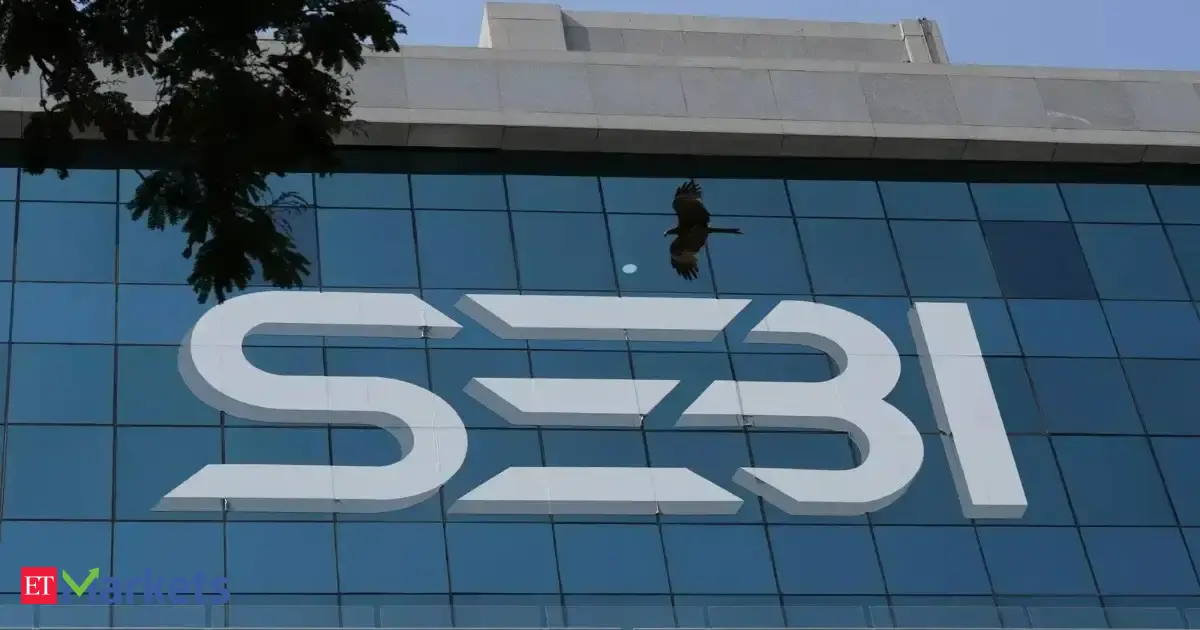
India's Securities and Exchange Board of India operationalised Project SUDARSAN on August 10, 2026, an AI-powered platform for monitoring unauthorised digital activity and potentially misleading social-media content. SEBI's investor survey found that 62% of investors are influenced by finfluencers, according to India Today and CNBC-TV18. The regulator also uses R(AI)DAR to review advertisements from asset management companies.
India's Securities and Exchange Board of India (SEBI) has operationalised Project SUDARSAN, an AI-powered surveillance platform designed to monitor unauthorised digital activity and detect content that could mislead investors. The deployment comes as SEBI's latest investor survey found that 62% of investors are influenced by finfluencers, according to reporting by India Today and CNBC-TV18.
Project SUDARSAN expands to "Surveillance of Unauthorised Digital Activity via Real-time Scanner for Anti-fraud," India Today reports. SEBI describes the system as using advanced multimodal AI to assess spoken language, visual cues and contextual intent, including content in regional languages. It scans public content across major social-media platforms, including videos, messages, images and advertisements, then combines identified signals with behavioural and regulatory parameters to assign risk scores and generate structured alerts for examination.
A regulatory response to social-media advice
CNBC-TV18 reports that SEBI Chairman Tuhin Kanta Pandey described the survey result as a reason for greater digital oversight. "This digital vigilance is further necessitated by our latest Investor Survey, which revealed that 62% of investors are influenced by finfluencers - many of whom operate without accountability or verified performance data," Pandey said, according to the outlet.
The reported detection scope includes guaranteed-return claims and fraudulent certifications. India Today notes that misleading investment promotion does not necessarily appear as plain text: videos, images, advertisements and messages can all carry investment claims. The approach extends beyond text-only monitoring by considering several content formats and contextual signals together.
SEBI's 2025-26 annual report describes a wider technology program that includes data analytics, AI and advanced surveillance tools. The report states that the regulator is using these technologies to strengthen market oversight, improve risk preparedness against cyber threats and support investigation mechanisms.
SUDARSAN and RDAR have different scopes
SEBI has paired Project SUDARSAN with R(AI)DAR, another AI-enabled system. CNBC-TV18 reports that R(AI)DAR reviews advertisements issued by asset management companies and is used to identify misleading or unauthorised promotional material.
The two systems address distinct monitoring surfaces:
- •Project SUDARSAN focuses on unsolicited financial advice and suspicious public digital activity, according to India Today and CNBC-TV18.
- •R(AI)DAR focuses on advertisements from asset management companies, CNBC-TV18 reports.
- •Both tools form part of SEBI's use of technology and data analytics in supervisory work, as outlined in the regulator's annual report.
The available reporting does not specify the underlying model architecture, training data, accuracy metrics, false-positive rates or the threshold that triggers regulatory review. It also does not establish that a system-generated alert by itself results in an enforcement action.
What the deployment means for AI governance
The public description illustrates a high-stakes content-risk workflow: multimodal ingestion, regional-language analysis, risk scoring and human examination of structured alerts. In comparable regulatory deployments, model quality depends not only on detection coverage but also on auditable review processes, calibrated thresholds and clear evidence trails for downstream investigators.
The technical challenge is especially relevant in financial-content monitoring, where a legitimate market discussion, promotional claim and prohibited or deceptive recommendation can share overlapping vocabulary. Industry experience with comparable systems indicates that multilingual context, image and video interpretation, and reviewer feedback loops are central to reducing both missed harmful content and erroneous flags. SEBI has not publicly disclosed operational performance measures for Project SUDARSAN in the material reviewed.
Key Points
- 1SEBI has operationalised Project SUDARSAN to monitor suspected misleading financial content across public social-media formats, India Today reports.
- 2SEBI's investor survey found 62% of investors are influenced by finfluencers, linking digital advice to a significant investor-protection concern.
- 3Comparable multimodal regulatory systems require calibrated risk scoring and auditable human review to manage false positives across languages and formats.
Scoring Rationale
This is a notable public-sector application of multimodal AI to financial-market supervision and online fraud risk. It is relevant to practitioners building content-risk, multilingual classification and human-in-the-loop review systems, although SEBI has not disclosed technical performance metrics or model details.
Sources
Primary source and supporting public references used for this report.
View 3 more sources
- Project Sudarsan: How Sebi is using AI to police finfluencers with 60% of investors trusting their adviceeconomictimes.indiatimes.com
- 62% investors follow finfluencers. Sebi is using AI to hunt down fake tips and fraudindiatoday.in
- SEBI deploys AI tools as annual report finds 62% investors follow ...cnbctv18.com
Practice with real FinTech & Trading data
90 SQL & Python problems · 15 industry datasets
250 free problems · No credit card
See all FinTech & Trading problems