Sam Altman Criticizes Anthropic's Claude Mythos Marketing
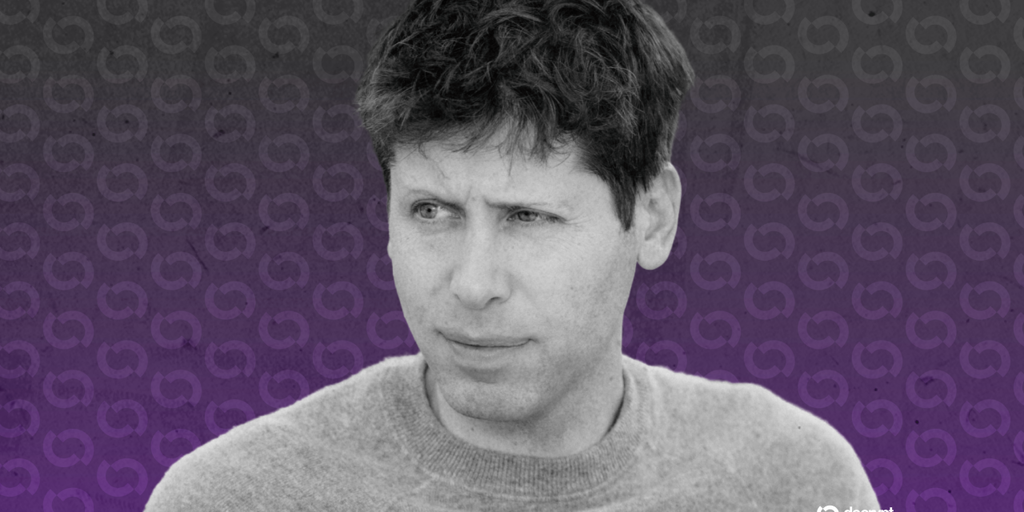
OpenAI CEO Sam Altman accused Anthropic of relying on "fear-based marketing" to amplify the perceived danger and value of its new model, Claude Mythos. Anthropic has limited the model's preview access to enterprise partners via Project Glasswing, citing cybersecurity risks including potential use for vulnerability discovery and exploit development. Bloomberg reporting of early unauthorized access has intensified scrutiny. The exchange highlights a broader industry debate over gatekeeping versus transparency: restricting access can reduce misuse risk but also fuels exclusivity claims and commercial scarcity tactics. For practitioners, the episode raises immediate questions about threat-modeling, auditability, and operational controls when evaluating powerful code- and security-capable models.
What happened
OpenAI CEO Sam Altman publicly accused Anthropic of using "fear-based marketing" to promote Claude Mythos, arguing the company exaggerates the model's dangerousness to justify restricted access and premium pricing. Anthropic rolled out Claude Mythos as a powerful assistant for advanced code reasoning and vulnerability discovery and limited early access through Project Glasswing to select enterprise partners. Bloomberg reported unauthorized access to Mythos on day one, intensifying concerns about both security and access controls.
Technical details
Claude Mythos is described by Anthropic as having elevated capabilities for advanced code reasoning, vulnerability discovery, and potential exploit generation. Anthropic has positioned the model behind enterprise previews and bespoke safeguards rather than a broad public API release. Reported mitigations include tight access controls and partner-only previews. Practitioners should evaluate the following when assessing such models:
- •model capability claims against reproducible benchmarks for code generation, static analysis, and exploit discovery
- •operational controls like role-based access, rate limits, query auditing, and provenance tracking
- •safety engineering techniques including fine-tuning with safety datasets, constrained decoding, and dynamic policy filters
Context and significance
The dispute between OpenAI and Anthropic is not only commercial rivalry, it reflects an industry fault line about how to handle dual-use capabilities. One side argues limiting access reduces immediate misuse risk; the other sees restrictions as a means to concentrate power and extract premium value. Altman framed Anthropic's messaging as marketing theater: "It is clearly incredible marketing to say, 'We have built a bomb, we are about to drop it on your head. We will sell you a bomb shelter for $100 million,'" he said. That quote compresses a long-standing tension: safety-first release controls can both protect and serve as scarcity-driven differentiation.
Why practitioners should care
If a model legitimately improves vulnerability discovery or exploit synthesis, it changes security tooling and adversary capabilities. Security teams, red teams, and ML ops must update threat models to include model-assisted exploit generation and adapt detection pipelines accordingly. If claims are overstated, however, over-restrictive policies could slow defensive adoption and auditing that would otherwise improve model safety. Bloomberg's report of early unauthorized access also shows that restricted previews are not a complete substitute for hardened operational security.
What to watch
Monitor independent audits, benchmark studies comparing Claude Mythos against targeted code and security evaluation suites, and Anthropic's published safety controls. Watch regulators and infrastructure providers for responses around access policies and disclosure requirements. The verdict on whether Anthropic is responsibly limiting access or weaponizing fear for commercial advantage will hinge on reproducible capability assessments and transparency in mitigation strategies.
Bottom line
The episode is a focused case study in trade-offs between rapid transparency and protective gatekeeping for dual-use models. Practitioners need technical validation, robust access controls, and updated incident response playbooks irrespective of which company is right about the marketing angle.
Key Points
- 1Altman calls Anthropic's messaging "fear-based marketing," arguing restricted access could be driven by scarcity and profit, not just safety.
- 2Anthropic limited Claude Mythos to enterprise partners via Project Glasswing, citing misuse risks tied to vulnerability discovery capabilities.
- 3Bloomberg-reported unauthorized access weakens the argument that preview gating alone prevents misuse, raising operational security concerns.
Scoring Rationale
The story matters because it centers on dual-use capabilities and access controls for a high-profile model, a practical concern for security teams and ML practitioners. It is notable but not paradigm-shifting; importance stems from operational and policy implications rather than a new technical breakthrough.
Sources
Public references used for this report.
Practice interview problems based on real data
1,625 SQL & Python problems across 15 industry datasets — the exact type of data you work with.
Try 250 free problems