Sail Research Raises $80M to Build Agent Infrastructure
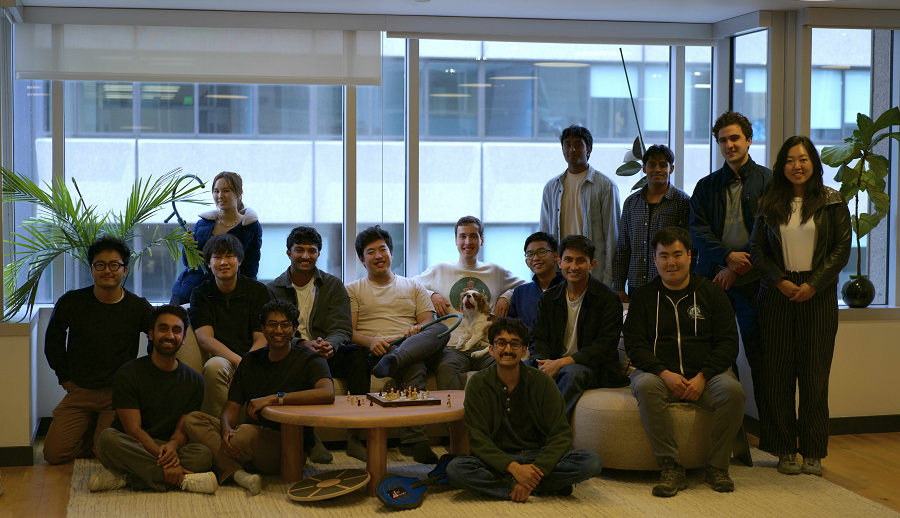
According to Sail Research's announcement and an official press release, the San Francisco startup raised $80,000,000 in combined Seed and Series A funding. The company said its seed was led by Sequoia Capital and the Series A was led by Kleiner Perkins, with participation from Redpoint Ventures, Theory Ventures, Vine Ventures, CRV, A* and Abstract Ventures. Fortune reported the deal values Sail at $450 million. Sail's blog and coverage in The Next Web describe the product as infrastructure optimised for long-horizon AI agents, claiming up to 10x lower cost-per-token through custom chips, inference engines, and a global controller. Angel investors named in the announcement include John Hennessy (chairman of Alphabet), Lip-Bu Tan (CEO of Intel), and Tri Dao (chief scientist at Together AI).
What happened
According to Sail Research's announcement on its blog, the San Francisco startup raised $80,000,000 in combined Seed and Series A financing. The company wrote that the seed round was led by Sequoia Capital and the Series A was led by Kleiner Perkins, with participation from Redpoint Ventures, Theory Ventures, Vine Ventures, CRV, A* and Abstract Ventures. Fortune reported the financing values Sail at $450 million. The blog post and press coverage list angel backers including John Hennessy, Lip-Bu Tan, and Tri Dao, plus unnamed angels from Anthropic, OpenAI, SpaceX, and Thinking Machines.
Technical details
Sail's public announcement describes a stack engineered for "long-horizon agents," combining chip selection, custom inference engines, and a global fleet controller to maximise utilization. The company wrote that its design aims to serve inference at "unbeatable price-per-token" and enable "the most patient agents" to access "10x more intelligence per dollar." The Next Web quoted cofounder and CTO Samir Menon saying, "Most inference infrastructure was designed to minimise latency on a single request, but that's the wrong optimisation for agents."
Industry context
Context and significance
What to watch
Editorial analysis
Investor reporting frames this raise as part of a broader shift toward infrastructure tailored to autonomous, long-running agent workloads rather than single-request, low-latency user prompts. Fortune quoted Kleiner Perkins partner Aditya Naganath saying, "It felt obvious to both of us that you're going to need a different, specific inference platform built for these long-running agents." Public coverage places Sail alongside an emerging set of companies targeting throughput, sustained reliability, and lower sustained cost for agentic applications.
For practitioners, the story underscores two converging pressures: agentic systems can consume orders of magnitude more tokens over hours or days, and per-token economics are becoming a gating factor for production deployments. Startups that can demonstrate consistent, verifiable reductions in cost-per-token and stable long-duration execution will be easier to evaluate for enterprise adoption. The presence of heavyweight investors and prominent angels signals investor confidence in the market opportunity, but independent benchmarks and customer case studies will be necessary for teams evaluating vendor lock-in, compatibility with opensource models, and expected cost savings.
Observers should track three concrete indicators: published benchmarks showing real-world price-per-token and throughput for representative agent workloads; early customer case studies quantifying end-to-end cost and reliability over multi-hour or multi-day runs; and any partnerships or hardware announcements that reveal whether Sail is optimising for commodity GPUs, custom accelerators, or a hybrid hardware approach. Also watch for third-party validation from customers named in Sail's post and for specification of API semantics and sandboxing guarantees for stateful, long-running agent sessions.
Key Points
- 1Sail's $80M raise highlights investor interest in agent-specific infrastructure; long-running agents drive sustained token consumption at 50-500x chat-level rates, per Fortune.
- 2Sail targets up to 10x lower cost-per-token via a custom inference stack and Sailboxes, stateful sandboxed environments designed to run for days rather than seconds.
- 3High-profile angel support from Hennessy, Lip-Bu Tan, and Tri Dao accelerates credibility; practitioners will still prioritise independent benchmarks and long-duration reliability metrics.
Scoring Rationale
An $80M raise at $450M valuation for agent-specific inference infrastructure, led by Sequoia and Kleiner Perkins with prominent angel backing from Hennessy, Lip-Bu Tan, and Tri Dao. Relevant to AI practitioners because long-horizon agent workloads expose a real gap in inference infrastructure optimised for low-latency single requests; agentic workflows consume 50-500x more tokens. Notable but early-stage; independent benchmarks and production case studies will determine actual practitioner impact.
Sources
Primary source and supporting public references used for this report.
View 6 more sources
- Sail Research Raises $80 Million to Build Max-Efficiency Infrastructure for AI Agentsprnewswire.com
- Exclusive: A former Apple engineer thinks AI infrastructure is built for the wrong future. Investors just gave him $80 million to fix itfortune.com
- Sail raises $80M to make AI agents cheaper to runthenextweb.com
- Sail Research raises $80M to build AI infrastructure for long-running agentscryptobriefing.com
- Sail Research Raises $80M in Seed and Series A Fundingfinsmes.com
- Sail Research - MapComapco.ai
Practice interview problems based on real data
1,625 SQL & Python problems across 15 industry datasets — the exact type of data you work with.
Try 250 free problems