Rubin Observatory Releases First Survey Discoveries
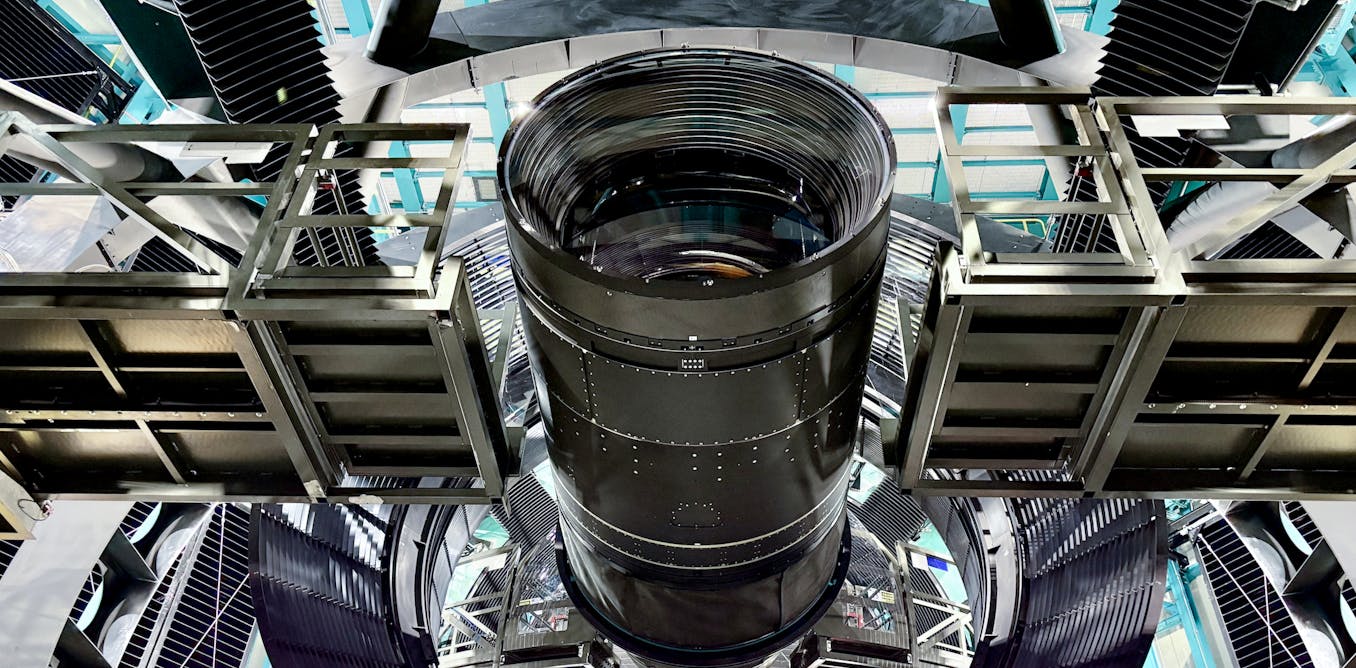
The Vera C. Rubin Observatory has begun releasing its first discoveries as it starts the Legacy Survey of Space and Time, a ten-year survey that will repeatedly image the southern sky. Early outputs include supernovae, variable stars and asteroids detected by its three-tonne, eight-meter-class telescope and the world’s largest camera capable of imaging light up to 12 billion years old. The data will enable studies of solar-system objects, transient phenomena and cosmic structure using machine-learning analyses.
Key Points
- 1Detects supernovae, variable stars and asteroids using nightly difference imaging from its large three-tonne camera.
- 2Expands samples for cosmology and solar-system science, probing to 12 billion years and Kuiper Belt objects.
- 3Enables practitioners to apply ML pipelines to massive transient and moving-object datasets for discovery and classification.
Scoring Rationale
High scientific novelty and global scope, but article provides a broad overview rather than detailed technical data.
Practice interview problems based on real data
1,625 SQL & Python problems across 15 industry datasets — the exact type of data you work with.
Try 250 free problems