Richtech Robotics launches 24/7 ADAM livestream and expands GPU infrastructure
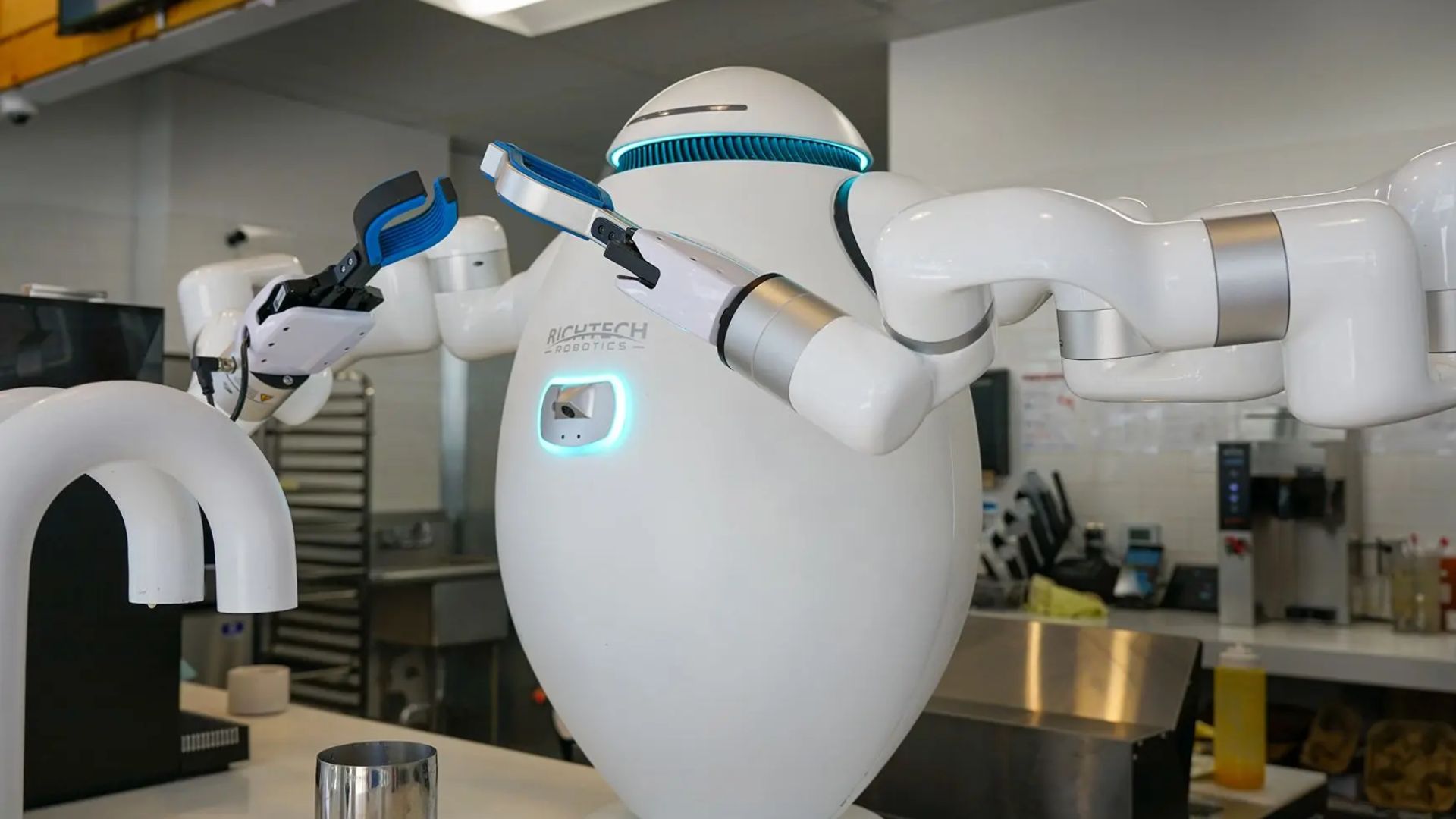
Richtech Robotics (Nasdaq: RR) launched a live, 24/7 interactive livestream on June 18, 2026 letting users worldwide chat in real time with ADAM, its NVIDIA-Isaac-built humanoid robot that runs on NVIDIA Jetson Thor for onboard compute. The move pairs a public data-collection channel with physical infrastructure: Richtech closed a $21.2 million purchase of a 79,325 square foot Las Vegas facility on May 29, 2026, which it says will house GPU-enabled computing and train its World Action Model, with data center operations expected by fall 2026. CEO Wayne Huang said the livestream creates a way "to communicate with embodied AI in a live, highly-interactive setting." For AI and robotics practitioners, this pairs uncurated public interaction data with dedicated training compute, a concrete pattern for scaling embodied-AI data pipelines.
For AI and robotics practitioners, the interesting signal here is not the livestream gimmick but the pairing: Richtech is running a public data-collection channel and buying the compute to turn it into training data in the same quarter, a concrete example of an embodied-AI company building both ends of its data pipeline at once.
What happened
Richtech Robotics (Nasdaq: RR) launched a live, 24/7 interactive streaming platform on June 18, 2026, letting users worldwide chat with ADAM, its AI-powered humanoid robot, in real time, according to the company's press release. ADAM was developed on NVIDIA's Isaac open robotics platform and runs on NVIDIA Jetson Thor for onboard compute. CEO Wayne Huang said the initiative helps "advance the evolution of the human-robot interaction by creating a global opportunity to communicate with embodied AI in a live, highly-interactive setting," while COO Phil Zheng framed it as ushering in "the next era of product engagement." Richtech describes ADAM as positioned to become one of the first robot "influencers." The launch follows Richtech's acquisition of a 79,325 square foot Las Vegas warehouse facility, first announced April 1, 2026 and closed May 29, 2026 for approximately $21.2 million, according to Yahoo Finance/Insider Monkey coverage citing the deal terms.
Technical context
NVIDIA positions Jetson Thor to handle perception, reasoning, planning, and manipulation directly on the robot, reducing dependence on remote compute, which matters for a system fielding live, unscripted conversations rather than scripted lab demos. Richtech says the Las Vegas facility will support GPU-enabled computing, robotics data collection, and training of its own World Action Model, with initial data center operations expected in fall 2026 and roughly 20,000 square feet reserved for an expanded headquarters by year-end.
For practitioners
Continuous public interaction at scale is both a data-collection opportunity and a stress test: it generates uncurated conversational and multimodal data with real-world sensor noise, but it also demands low-latency safety and moderation stacks, since live two-way chat with an unmoderated public audience creates content and privacy risks that closed lab evaluations do not. Richtech has not published technical detail on how flagged or edge-case interactions get filtered, annotated, or fed back into model updates.
What to watch
Whether Richtech publishes any data on interaction volume, moderation incidents, or measurable model improvements tied to the livestream; whether the Las Vegas facility's fall 2026 data center timeline holds; and whether other humanoid robotics vendors adopt similar always-on public interaction channels as a data-sourcing strategy. As a small-cap public company, Richtech's own claims about data yield and model gains lack third-party validation so far.
Key Points
- 1Richtech Robotics launched a 24/7 public livestream on June 18, 2026 letting users chat with its NVIDIA-powered humanoid robot ADAM in real time.
- 2The company closed a $21.2 million purchase of a 79,325 square foot Las Vegas facility on May 29, 2026 for GPU compute and model training.
- 3Continuous public interaction generates uncurated training data but requires real-time moderation and safety stacks that closed lab testing does not.
Scoring Rationale
Well-corroborated across the company's own press release, an independent Interesting Engineering deep-dive, and Yahoo Finance/Insider Monkey confirming the facility deal terms and timeline. It is a genuine operational data-collection pipeline pairing a public interaction channel with real GPU infrastructure, notable for embodied-AI practitioners, but it comes from a small-cap public company with no third-party validation yet of data yield or model improvement, keeping it in the solid rather than major-impact band.
Sources
Public references used for this report.
View 3 more sources
- Richtech Robotics Launches Interactive Livestream Featuring AI-Powered Robot ADAM, Enabling Online Users to Engage with ADAMtheglobeandmail.com
- Richtech Robotics launches interactive livestream featuring humanoid robothotelmanagement.net
- Richtech Robotics launches livestream for ADAM AI-powered humanoidtherobotreport.com
Practice interview problems based on real data
1,625 SQL & Python problems across 15 industry datasets — the exact type of data you work with.
Try 250 free problems