Researchers Teach Robots To Detect Human Errors
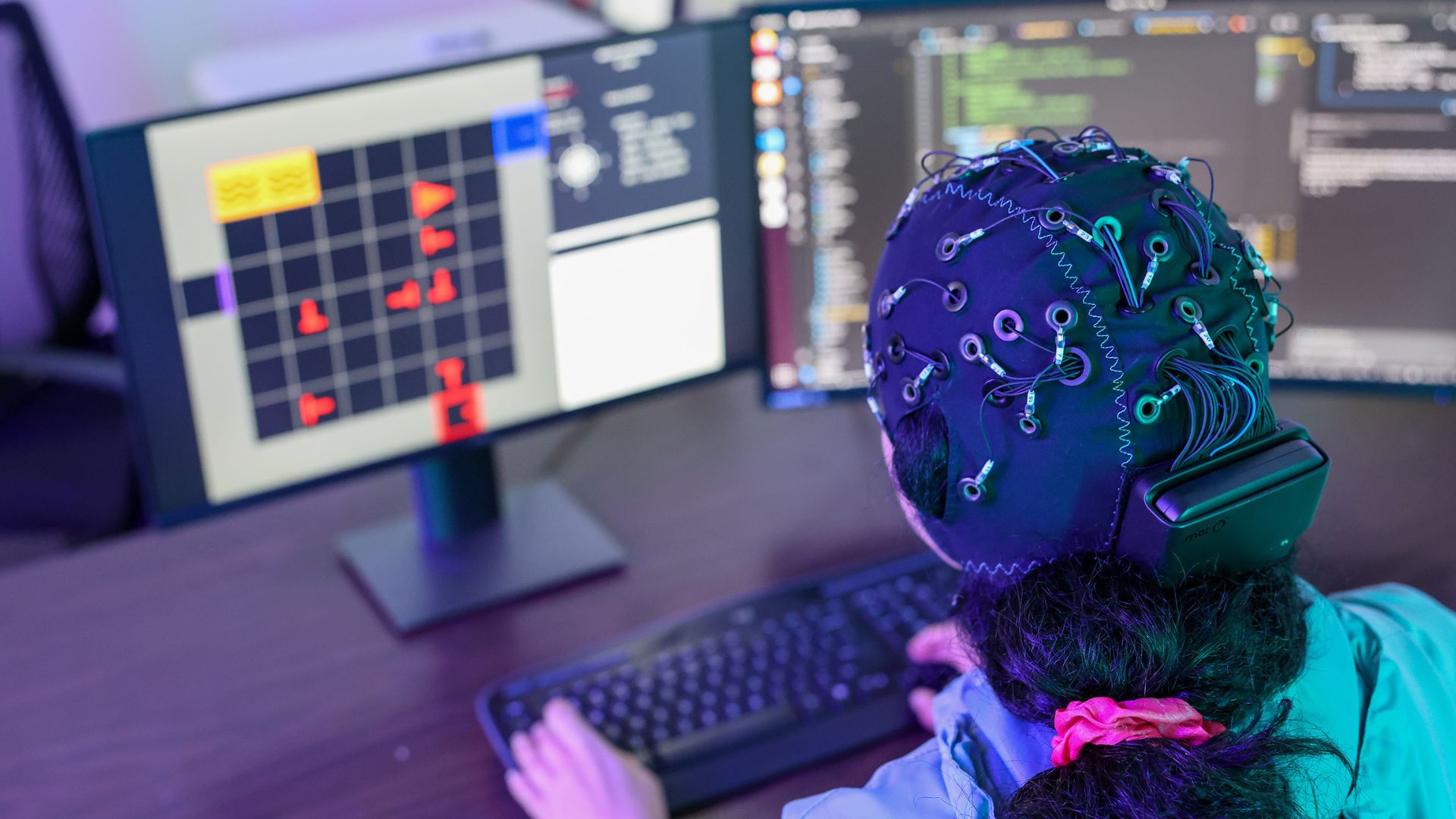
Researchers at Oklahoma State University are developing a neuroadaptive control system that uses wearable EEG to detect error-related potentials (ErrPs) and trigger robotic responses within milliseconds. The system pairs adaptive decoding to personalize users' brain patterns with Signal Temporal Logic to enforce safety limits, and is being tested using NVIDIA Isaac ROS and RTX PRO 6000 GPUs. The approach aims to reduce teleoperation failures and could extend to prosthetics and exoskeletons.
Key Points
- 1Detects error-related potentials (ErrPs) from EEG to initiate robotic slowdown, stop, or handback within milliseconds.
- 2Reduces operator delay by providing early brain-signal warnings, preventing collisions and failures in high-stakes teleoperation.
- 3Enables practitioners to integrate rapid human-in-the-loop safety using adaptive decoding and Signal Temporal Logic constraints.
Scoring Rationale
Practical neuroadaptive robotics demonstrates useful early-error detection, but remains limited by single-group research and unclear peer-review status.
Practice interview problems based on real data
1,625 SQL & Python problems across 15 industry datasets — the exact type of data you work with.
Try 250 free problems