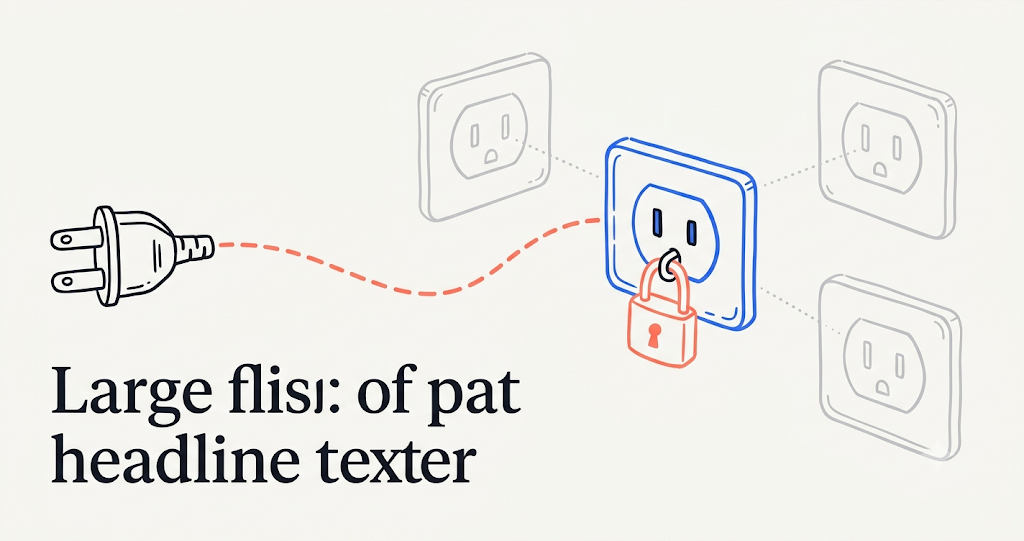
Researchers develop observational audit to detect label leakage without altering training data

Researchers introduce an observational privacy-auditing framework that detects when models leak training labels without modifying training data. The auditor mixes original training labels with proxy labels post-training and measures an attacker's ability to distinguish them; success above chance signals label leakage. Experiments on an image dataset and a large click dataset showed consistent results: tighter label-privacy settings reduced leakage signals and looser settings made leakage easier to detect. The approach reproduces findings from canary-based audits while removing the engineering overhead of altering training pipelines.
Key Points
- 1Core technical detail: The audit supplies a post-training mix of true training labels and proxy labels (e.g., from an earlier checkpoint) and measures an attacker’s ability to identify which records retained original labels as a leakage signal.
- 2Business implication: Because the method requires no dataset modification or extra training runs, it lowers operational barriers to routine privacy testing and eases adoption in production ML pipelines and compliance workflows.
- 3Future impact: The observational framework can become a practical standard for label-leakage evaluation across tasks, encouraging wider use of label-privacy controls and informing regulator and vendor assessments of deployed models.
Sources
Public references used for this report.
Practice interview problems based on real data
1,625 SQL & Python problems across 15 industry datasets — the exact type of data you work with.
Try 250 free problems