AI Vendor Lock-in Reshapes Architecture and Operations
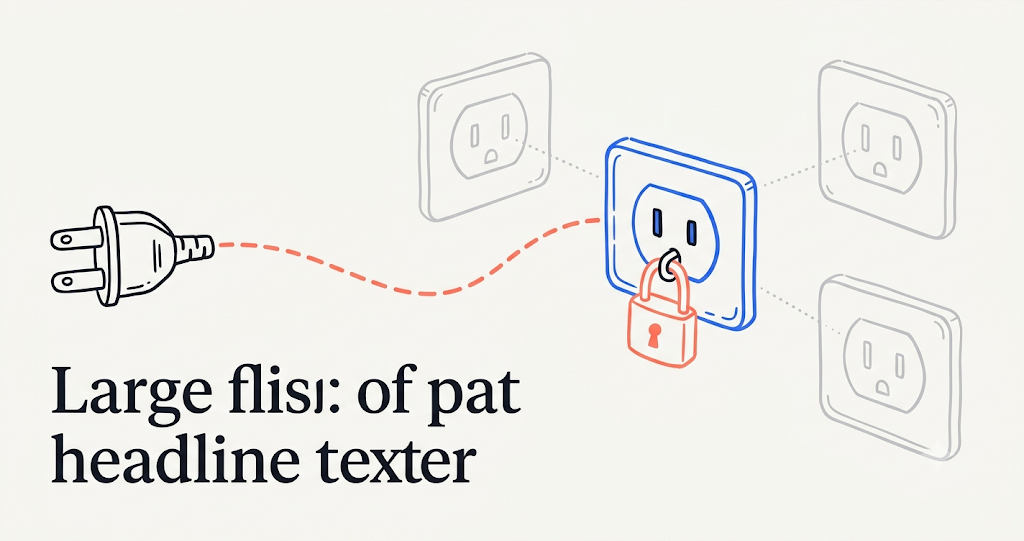
Anthropic's Claude Fable 5 and Claude Mythos 5 were suspended worldwide on June 12, 2026, after a US Commerce Department export-control directive, and were fully restored by July 1, 2026, once the government lifted the controls; the episode has become a reference case for how practitioners think about AI vendor lock-in. According to Anthropic's own statements, the Bureau of Industry and Security acted on a reported jailbreak of Fable 5, and because Anthropic could not screen users by nationality in real time, it disabled both models for everyone rather than only foreign nationals. A Toward AI essay uses the incident to argue that agentic workflows, accumulated fine-tuning and conversation history ("data gravity"), and fast-moving pricing and capability shifts now make AI switching costs technical and organizational, not merely contractual.
For AI architects and platform teams, the practical lesson of the Fable 5 and Mythos 5 shutdown is that single-provider dependency on a closed-API frontier model is no longer a theoretical risk to flag in a vendor review - it is now a documented failure mode that can trigger with hours of notice and run for weeks. Teams that had built abstraction layers or multi-provider routing reportedly failed over with less disruption than teams hard-wired to a single model.
What happened
On June 12, 2026, the US Commerce Department's Bureau of Industry and Security sent Anthropic an export-control directive at 5:21pm ET requiring a license for foreign-national access to two of its newest models, Claude Fable 5 and Claude Mythos 5, after Amazon researchers reported a technique for bypassing Fable 5's safeguards to identify software vulnerabilities. Because Anthropic could not reliably distinguish foreign nationals from US persons across its user base in real time, it suspended both models for all users worldwide; other Anthropic models, including Claude Opus 4.8, stayed available throughout. Anthropic disputed the directive's basis, saying its own testing showed other publicly available models, including OpenAI's GPT-5.5, could reproduce the same reported behavior. The controls were lifted on June 30, and Anthropic restored Fable 5 access starting July 1 with an updated safety classifier, alongside a new industry framework for scoring jailbreak severity developed with Amazon, Microsoft, Google, and other Project Glasswing partners.
Timeline
Commerce Department's Bureau of Industry and Security directs Anthropic to suspend foreign-national access to Fable 5 and Mythos 5; Anthropic disables both models for all users worldwide.
The US government approves restored Mythos 5 access for a set of US organizations.
The export controls on Fable 5 and Mythos 5 are lifted.
Anthropic redeploys Fable 5 globally with an updated safety classifier.
Industry context
Analysts frame the shutdown as the first time export controls have been used to force a real-time suspension of a commercially deployed frontier model, a scenario previously discussed mostly in the abstract in AI governance and vendor-risk circles. A Toward AI essay built around the episode argues that modern AI lock-in differs from earlier SaaS-era lock-in because it is driven by three compounding, non-contractual factors: unsettled standards for instruction and tool-calling schemas, provider-side accumulation of fine-tuning and conversation history that is hard to port, and pricing and capability shifts that move faster than procurement cycles. This is a general industry pattern, not a claim about any single vendor's intent.
For practitioners
The event gives concrete weight to mitigations previously discussed mostly as best practice: multi-provider routing and failover, standardized tool schemas (industry efforts like MCP and A2A are cited as steps toward interoperability), keeping structured traces and state that are portable across model versions, and evaluating open-weight or in-region alternatives for workloads where continuity cannot depend on a single closed-API provider. Regulated industries and organizations in jurisdictions with active sovereignty requirements are the most exposed to this specific failure mode, even though this particular incident resolved within about three weeks.
What to watch
Whether the Fable 5/Mythos 5 jailbreak-severity framework Anthropic is co-developing with Amazon, Microsoft, and Google becomes a broader industry standard; whether other frontier labs face comparable export-control directives as government capability evaluations catch up to newer model generations; and whether enterprise RFPs in regulated sectors begin to formally require multi-provider or open-weight fallback provisions as a condition of procurement.
Key Points
- 1A US export-control directive forced Anthropic to suspend Claude Fable 5 and Mythos 5 worldwide for about three weeks.
- 2The incident reframes AI vendor lock-in as an architectural and operational risk, not only a contractual one.
- 3Practitioners are advised to adopt multi-provider routing, portable tool schemas, and open-weight fallback options.
Scoring Rationale
Notable for AI architects and platform teams because it documents the first real-world government-forced shutdown of a commercially deployed frontier model, now independently confirmed via Anthropic's own statements and multiple outlets, and gives a concrete, resolved case study for vendor-lock-in and continuity planning. It stays below the major tier because the underlying incident, while precedent-setting, resolved within three weeks without lasting model or market disruption.
Sources
Public references used for this report.
Practice interview problems based on real data
1,625 SQL & Python problems across 15 industry datasets — the exact type of data you work with.
Try 250 free problems