Researchers Build Pneumatic Glove To Restore Grasp
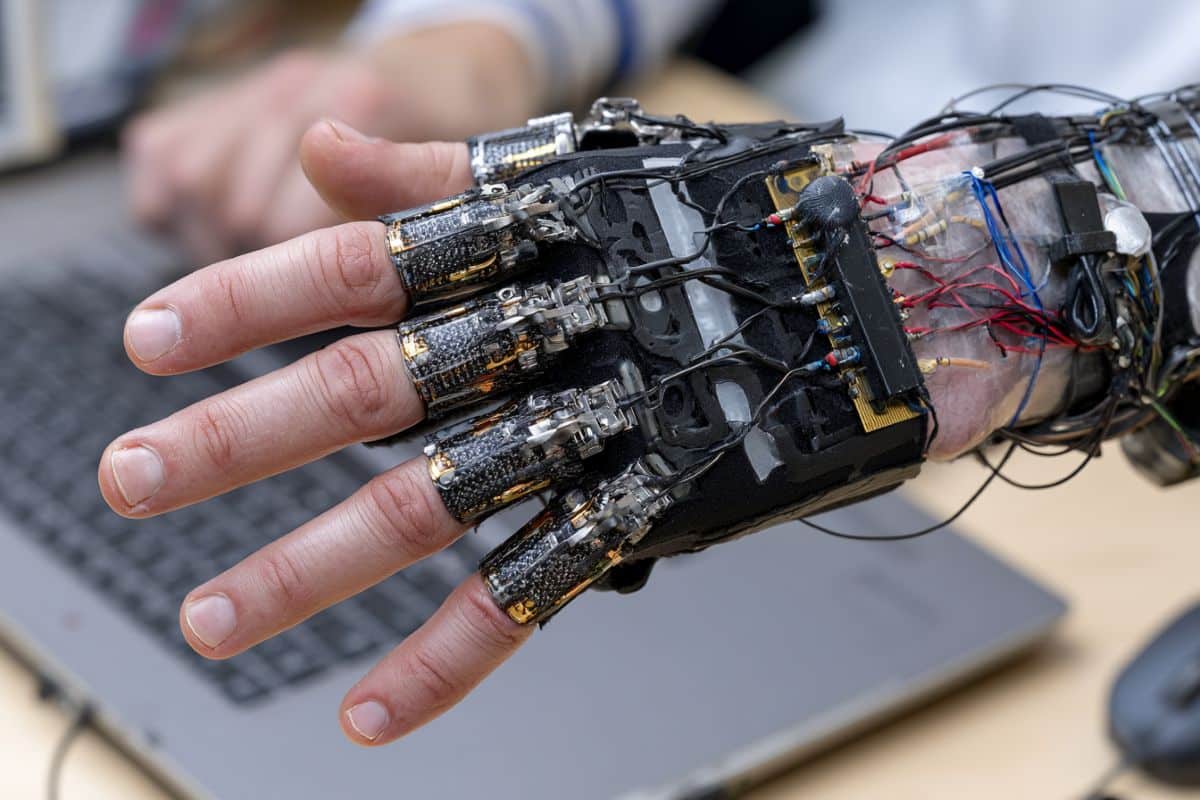
Technical University of Munich researchers reported a soft pneumatic glove that restored intentional grasping in a patient with severe hand paralysis, using a surface-EMG predictor with 97% sensitivity in a Nature Machine Intelligence study published June 23, 2026. The textile exoskeleton uses 13 air tubes, motion sensing, and machine-learning correction to infer grasp intent and keep objects from dropping during transport. For ML and robotics teams, the useful signal is not a general prosthetics breakthrough claim; it is a tightly scoped example of noisy biosignal decoding, soft actuation, and safety interlocks working together in assistive hardware. TUM says follow-on validation included stroke patients, with stronger benefit for severe impairment.
The practitioner takeaway is a systems pattern: noisy biosignal decoding is useful only when it is paired with actuation that is safe, cheap enough to wear, and evaluated against the impairment level it is meant to support. This glove is therefore more relevant as an assistive-robotics integration case than as a broad claim that ML has solved hand paralysis.
What happened
Technical University of Munich announced a soft-hand exoskeleton that uses a fabric pneumatic glove to help people with paralyzed hands grasp objects. The associated Nature Machine Intelligence article reports a lightweight textile exoskeleton with wrist dorsiflexion, an active thumb, and a non-invasive surface EMG grasp predictor.
Technical context
TUM says the glove uses 13 air tubes to bend and straighten fingers and rotate the wrist. The study reports a 97% sensitivity grasp predictor, motion data, and machine-learning-based error correction to compensate for weak and noisy muscle signals.
For practitioners
The design points to three deployment priorities for assistive ML: robust low-amplitude signal decoding, explicit safety logic for transport movements, and patient-specific evaluation. The reported results are most encouraging for severe or near-complete impairment, while utility for moderate residual function appears more task dependent.
What to watch
The next evidence gap is clinical scale. Larger cohorts, durability testing, at-home usability, and cost data will determine whether this remains a promising lab-to-clinic prototype or becomes practical rehabilitation hardware.
Key Points
- 1TUM's glove combines surface EMG intent prediction, motion sensing, and pneumatic actuation for severe hand impairment.
- 2The Nature Machine Intelligence study reported 97% sensitivity for the grasp predictor compared with healthy controls.
- 3Deployment relevance depends on patient selection, because reported benefits were stronger for severe impairment than moderate residual function.
Scoring Rationale
This is a notable assistive-robotics and healthcare AI result because it combines a peer-reviewed EMG predictor with soft actuation and patient validation. The score is tempered by the small clinical base and the fact that benefits appear strongest for a specific severe-impairment group.
Sources
Public references used for this report.
Practice with real Health & Insurance data
90 SQL & Python problems · 15 industry datasets
250 free problems · No credit card
See all Health & Insurance problems