Puspakom Deploys AI-Assisted Undercarriage Inspections
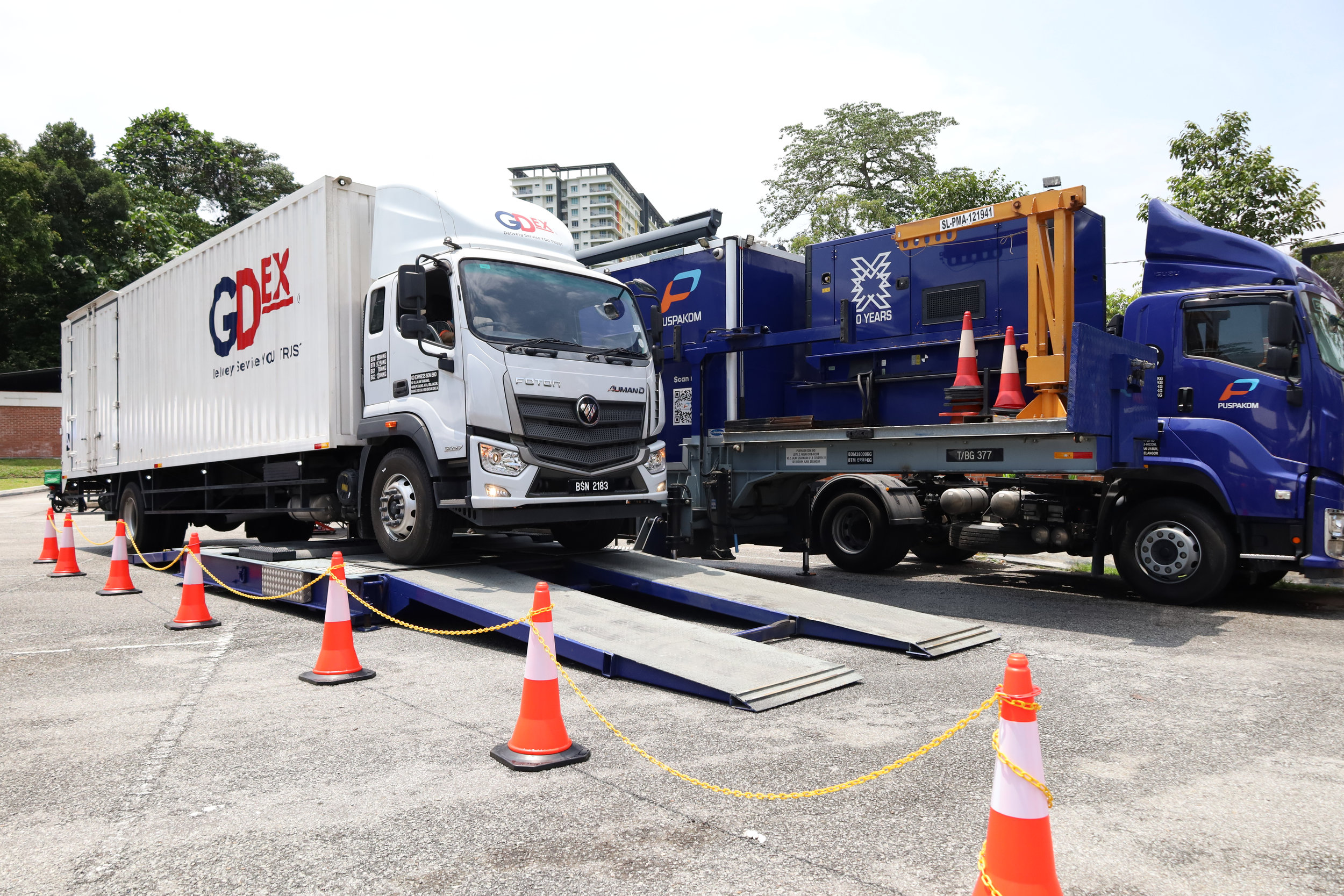
Puspakom has deployed an AI-assisted undercarriage inspection system for heavy commercial vehicles on its Mobile Truck Service, cutting reported inspection time from about 10 minutes to roughly one minute. Reporting published August 9 says the Keymag-developed system flags defects from undercarriage images, while Puspakom examiners retain the final pass-or-fail decision.
Puspakom has deployed an AI-assisted undercarriage inspection system for heavy commercial vehicles using its Mobile Truck Service, cutting the reported inspection time from around 10 minutes to about one minute. SoyaCincau reported on August 9, 2026, that the deployment is Malaysia's first AI-assisted undercarriage inspection technology and was showcased at the launch of Jelajah Malaysia Digital 2026.
Puspakom's February 3 media release said Malaysia's Road Transport Department approved the system in December 2025 and that Mobile Truck Service deployment was scheduled to begin in April 2026. The company said it jointly developed the system with Malaysian technology company Keymag Sdn Bhd to identify damage and support more consistent mobile inspections.
The system uses image analysis to identify potential undercarriage defects, including corrosion, oil leaks, brake-system faults, axle defects and structural damage, for further verification by a Puspakom vehicle examiner. Puspakom's release states that human examiners retain sole authority over whether a vehicle passes or fails inspection, making the tool a decision-support layer rather than an automated adjudication system.
From mobile deployment to broader rollout
The one-minute target was reported earlier in May. The Borneo Post quoted Puspakom CEO Mahmood Razak Bahman as saying that manual undercarriage checks took about 10 minutes while the AI-enabled process could be completed in approximately 60 seconds. In that report, Mahmood said the system had already been introduced in mobile services and was expected to be rolled out more widely from 2027.
SoyaCincau describes the current deployment as being on the Mobile Truck Service for heavy commercial vehicles. The available reporting does not specify the model architecture, training-data composition, operating thresholds, false-positive and false-negative rates, or how examiners record and resolve disagreements with system-generated defect flags.
Puspakom CEO Mahmood said in comments published by SoyaCincau that the integration was intended to improve operational efficiency and inspection consistency without compromising the integrity of statutory inspections. He also linked shorter inspection times to commercial drivers' productivity.
What human review changes
For inspection workflows, retaining a qualified examiner in the decision loop is consequential. Image-based defect detection can standardize the initial review of repeatable visual conditions, but vehicle inspection involves safety and compliance judgments where image quality, vehicle geometry, lighting, occlusion and ambiguous damage can affect model output.
In comparable computer-vision deployments, an AI flagging system can increase throughput when the workflow preserves audit trails for images, model detections and human dispositions. It can also create useful data for measuring where models and inspectors disagree. Those practices are particularly relevant in regulated settings because speed improvements alone do not establish detection quality or safety performance.
The Borneo Post placed the earlier deployment in the context of increased demand for heavy-vehicle inspections in Sarawak, including lorries and container trucks. Faster undercarriage screening could increase the number of vehicles processed per hour, as SoyaCincau noted, but independently reported accuracy and operational-quality metrics would be needed to assess the system beyond its stated time reduction.
The deployment also follows Puspakom's previously reported plans to use AI as additional vehicle-inspection operators sought licenses in Malaysia. A January 2025 report by The Rakyat Post described the competitive context and the company's undercarriage-inspection plans.
Key Points
- 1Puspakom's deployed system reduces reported heavy-vehicle undercarriage review time from about 10 minutes to one minute using image analysis.
- 2Human vehicle examiners retain pass-or-fail authority, keeping AI output in a decision-support role for a statutory safety workflow.
- 3Comparable computer-vision systems require measured detection quality, disagreement tracking and audit trails before throughput gains demonstrate inspection reliability.
Scoring Rationale
This is a concrete computer-vision deployment in a regulated, safety-sensitive vehicle-inspection workflow, with a reported order-of-magnitude reduction in inspection time. Its practitioner relevance is strongest for teams designing human-reviewed visual inspection systems, though published technical and accuracy details remain limited.
Sources
Primary source and supporting public references used for this report.
View 3 more sources
Practice interview problems based on real data
1,625 SQL & Python problems across 15 industry datasets — the exact type of data you work with.
Try 250 free problems