
Protesters Oppose Proposed AI Data Centres in Vancouver
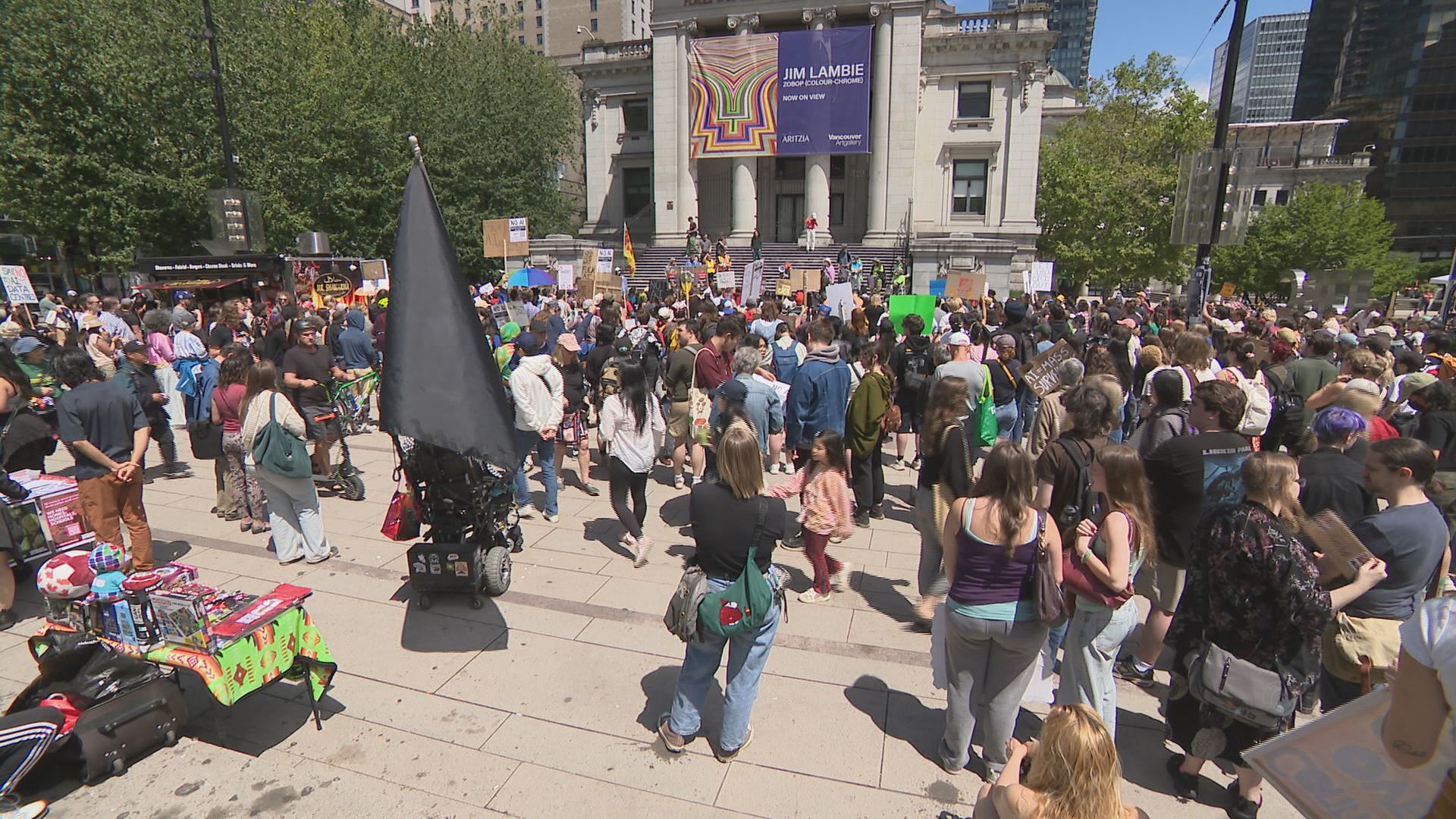
Hundreds of demonstrators marched from the Vancouver Art Gallery to City Hall on June 27, 2026, in a coordinated national day of action that National Observer reports included similar protests in 13-plus other Canadian cities, opposing two proposed Telus-linked AI data centres in Vancouver. The Vancouver protest was the second in two months, following a roughly 750-person march on May 23, and organizers say a related Change.org petition has drawn about 15,000 signatures. According to Telus and The Tyee, the projects, developed with the federal government and Westbank, include a Mount Pleasant site slated to be operational by the end of 2026 and a second facility at 150 West Georgia St. planned for 2029, together scaling toward 150 megawatts of BC Hydro capacity by 2032. Demonstrators, speaking to CBC and National Observer, cited concerns about electricity and water demand amid Metro Vancouver's Stage 3 water restrictions, and about being left out of the city's rezoning consultation process.
Community pushback against data centre siting is becoming a recurring test case for AI infrastructure builders: local opposition can shape permitting timelines and consultation requirements well before a facility ever breaks ground, and the Vancouver protests are one of the clearest examples yet of that dynamic playing out in a Canadian city with a live water restriction in effect.
What happened
Hundreds of people marched from the Vancouver Art Gallery to City Hall on June 27, 2026, in what National Observer reported was part of a coordinated national day of action, with organizer Guerric Hache saying demonstrations were held the same day in 13 other cities across BC, Alberta, Saskatchewan, Ontario and New Brunswick. It was the second Vancouver march in two months: a first protest on May 23 drew roughly 750 people, according to the Vancouver Sun and Daily Hive. The group behind both marches, No AI Vancouver, was founded by 18-year-old university student Torin LaRocque. Organizers say a Change.org petition opposing the data centres had reached nearly 14,000 signatures by June 22 and about 15,000 by the time of the second march, per CityNews.
Industry context
The protests target a Telus-led project developed with the federal government and Westbank under Ottawa's Enabling Large-Scale Sovereign AI Data Centres initiative. Per The Tyee's reporting, which cited Telus and BC Hydro spokespeople, the buildout spans three sites: an existing facility in Kamloops, a Mount Pleasant site (the former Hootsuite headquarters) expected online by the end of 2026, and a downtown Vancouver site at 150 West Georgia St. planned for 2029. Telus says the three sites will draw 85 megawatts initially and scale to 150 megawatts and more than 60,000 GPUs by 2032, and has told Daily Hive it expects the investment to add $9 billion to the Canadian economy. The company says the facilities will use closed-loop liquid cooling, cutting water use by 90 percent versus a conventional data centre, and will route waste heat into Vancouver's Neighbourhood Energy Utility and Creative Energy's district system.
For practitioners
Two friction points recur across the reporting and are broadly applicable to siting decisions elsewhere: first, vague or narrowly framed public notices (Vancouver's rezoning materials listed the Mount Pleasant site only as "Bulk Data Storage," according to National Observer, leaving residents unaware of the project's true scale until Telus's own announcement) can undercut trust even when a formal comment process exists; second, quantified sustainability claims, such as Telus's water- and energy-efficiency figures, do not by themselves resolve concerns tied to a specific local constraint, in this case Metro Vancouver's Stage 3 water restrictions. Teams planning regional capacity should expect community and council scrutiny to focus on grid load, water draw relative to local supply conditions, and the clarity of early public disclosures, not just headline efficiency metrics.
What to watch
Vancouver's Mount Pleasant rezoning application is under review and is expected to go before city council in July, when the public will get another opportunity to speak, according to the city's statement to National Observer. Vancouver Coun. Sean Orr has publicly questioned who would pay for grid upgrades and whether the facilities represent the best use of the city's limited land. Beyond Vancouver, similar fights are underway in Alberta (Olds, near a proposed gas-powered Synapse facility) and Saskatchewan (a proposed Bell hyperscale project near Regina), and the Council of Canadians has published an organizing toolkit aimed at other communities facing comparable proposals.
Key Points
- 1Hundreds marched in Vancouver on June 27, 2026, part of a reported national day of action against AI data centres spanning 13-plus Canadian cities.
- 2Telus's Vancouver AI data centre cluster, built with the federal government, is planned to reach 150 megawatts of BC Hydro capacity by 2032.
- 3A Change.org petition against the project had drawn roughly 15,000 signatures, and Vancouver's Mount Pleasant rezoning heads to council in July.
Scoring Rationale
Verified reporting shows this was not an isolated local protest but part of a coordinated national day of action across 13-plus Canadian cities, tied to a named hyperscaler-adjacent project (Telus, with federal government backing) scaling to 150 megawatts, with a concrete July council decision point ahead. That combination of national coordination, a major named infrastructure buildout, and an upcoming regulatory milestone supports a solid, notable-adjacent community/infrastructure-policy signal for practitioners tracking data centre siting risk. It remains a regional Canadian story without direct effect on AI models, platforms, or global markets, so it stays in the solid range rather than higher.
Sources
Public references used for this report.
View 5 more sources
- Hundreds march in Vancouver to oppose planned AI data centrescbc.ca
- Got Questions About AI Data Centres in Vancouver? Here Are Answersthetyee.ca
- 'Reflexive and honest': AI data centre backlash reflects public concerns, analyst saysctvnews.ca
- How sustainable are Vancouver's AI data centres going to be?vancouversun.com
- Vancouver protest opposing planned AI data centresglobalnews.ca
Practice with real Ad Tech data
90 SQL & Python problems · 15 industry datasets
250 free problems · No credit card
See all Ad Tech problems
