Protesters March Against Proposed AI Data Centres in Vancouver
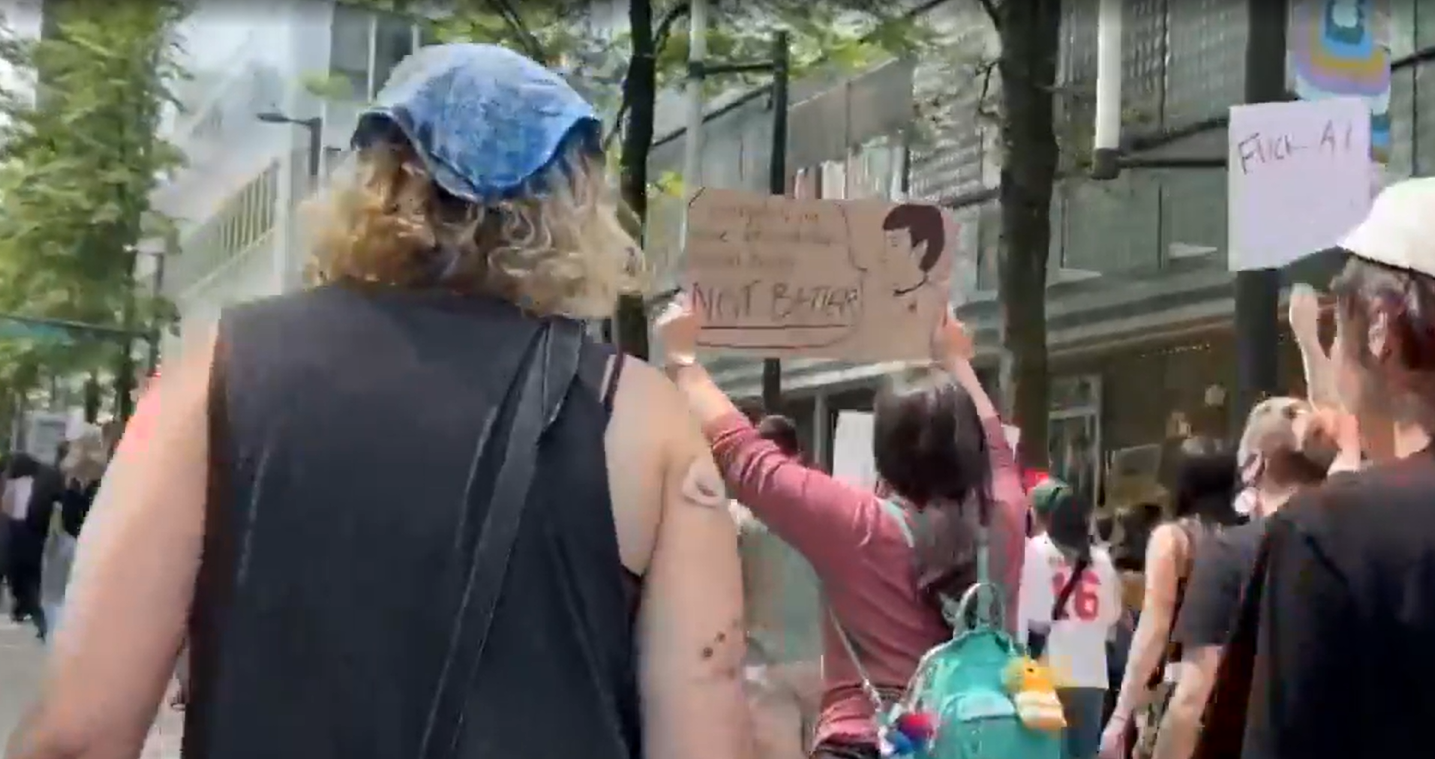
About 750 people marched through downtown Vancouver on May 23 to protest a planned cluster of AI data centres backed by Telus, according to Daily Hive and CP24 (Vancouver Sun put the crowd at more than 500). Protesters, including organizer Torin LaRocque, argued that even Telus's own efficiency claims still imply a large water draw once more than 60,000 GPUs are running, especially with Vancouver under Stage 2 water restrictions. Telus told Daily Hive its facilities will run on 98 percent renewable electricity, use 80 percent less energy and 90 percent less water than typical data centres, and route waste heat into Vancouver's district energy systems. A second protest march is planned for June 27.
Vancouver's fight over Telus's proposed AI data centres previews a friction point that will recur wherever sovereign AI infrastructure meets urban water and power constraints: efficiency claims measured on a percentage basis can still mean large absolute resource draws once a project reaches the scale Telus is proposing, and that gap between percentage claims and absolute consumption is exactly what protest organizers targeted.
What happened
An estimated 750 people marched through downtown Vancouver on Saturday, May 23, to protest a planned cluster of AI data centres backed by Telus, according to Daily Hive, which corresponded directly with both protest organizers and Telus. CP24 and Vancouver Sun also covered the march; Vancouver Sun put the crowd at more than 500. Participants assembled at Waterfront Station, marched down Granville Street to Granville Island, and continued to Vancouver City Hall, where BC Green Party leader Emily Lowan, COPE council candidate Solomon Yi-Kieran, and organizer Torin LaRocque addressed the crowd, per Daily Hive. CP24 reports protesters carried signs criticizing data centres' water usage and corporate involvement in AI development.
Technical context
Telus told Daily Hive its Vancouver AI Factories will run on 98 percent renewable electricity from BC Hydro via a closed-loop liquid-cooling system, will be 80 percent more energy-efficient than a conventional data centre, and will use 90 percent less water, an estimated 300 million litres saved annually. Telus said waste heat will be routed into Vancouver's Neighbourhood Energy Utility in Mount Pleasant and Creative Energy's downtown district system, enough to heat roughly 150,000 homes. The company frames the project, part of the federal Enabling Large-Scale Sovereign AI Data Centres initiative, as adding $9 billion to Canada's economy while keeping sensitive data onshore; the three-site B.C. network (Vancouver and Kamloops) is projected to reach more than 60,000 GPUs and 150 megawatts of capacity by 2032.
For practitioners
LaRocque's central critique, that even a highly efficient facility running 60,000-plus GPUs at continuous load implies a large absolute water draw, is the crux of most infrastructure-siting fights: percentage-efficiency claims and absolute resource consumption can both be accurate and still support opposite conclusions. Teams scoping AI infrastructure in water- or power-constrained cities should expect community and regulatory scrutiny to focus on absolute draw at full build-out, not just per-unit efficiency gains, particularly where a region, like Vancouver under Stage 2 water restrictions, already faces resource stress.
What to watch
- •A second march is planned for June 27, starting at Waterfront Station and passing 150 W. Georgia Street, a proposed data-centre site, before ending at City Hall.
- •BC Hydro says it is taking a "managed and phased approach" to the new power demand; watch for formal grid-capacity or permitting decisions.
- •Whether Telus publishes facility-level water and energy figures, beyond percentage claims, as the Vancouver and Kamloops sites move through approvals.
Key Points
- 1About 750 protesters marched through Vancouver against Telus's planned sovereign AI data centres, citing water and electricity concerns amid Stage 2 restrictions.
- 2Telus says its facilities will be 98 percent renewable, 80 percent more energy-efficient, and use 90 percent less water than conventional data centres.
- 3Organizers argue percentage efficiency claims still mean large absolute water draw at scale, a tension likely to recur in AI infrastructure siting fights.
Scoring Rationale
Well-corroborated across six independent outlets including direct organizer and company statements; genuine practitioner relevance on the gap between percentage-efficiency claims and absolute resource draw at scale. Kept in the solid range since this is a single-city siting dispute rather than a national policy shift or major technology event.
Sources
Public references used for this report.
Practice interview problems based on real data
1,625 SQL & Python problems across 15 industry datasets — the exact type of data you work with.
Try 250 free problems