Principia Mathematica Reframes Logicism and Type Theory
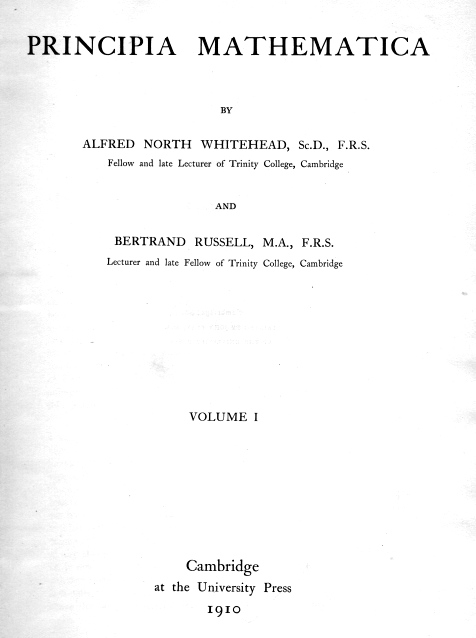
An encyclopedia entry summarizes Alfred North Whitehead and Bertrand Russell's Principia Mathematica, the three-volume work first published 1910–1913, presenting a section-by-section synopsis in modern logical notation. It highlights PM's ramified theory of types and additional axioms (reducibility, infinity) introduced to avoid Russell's paradox, and compares PM with Frege’s system. The entry emphasizes PM's role in deriving Peano arithmetic and shaping twentieth-century foundations of mathematics.
Key Points
- 1Presents Principia Mathematica's structure and contents in modernized logical notation, covering volumes I–III.
- 2Introduces ramified theory of types plus axioms of reducibility and infinity to avoid paradoxes.
- 3Enables derivation of Peano arithmetic from logic, affecting foundations and comparative study with Frege.
Scoring Rationale
Authoritative historical analysis provides clarity, but the piece offers limited novelty or practical impact for contemporary practitioners.
Practice interview problems based on real data
1,625 SQL & Python problems across 15 industry datasets — the exact type of data you work with.
Try 250 free problems