Prabowo Urges Vigilance Over Nuclear and AI Developments
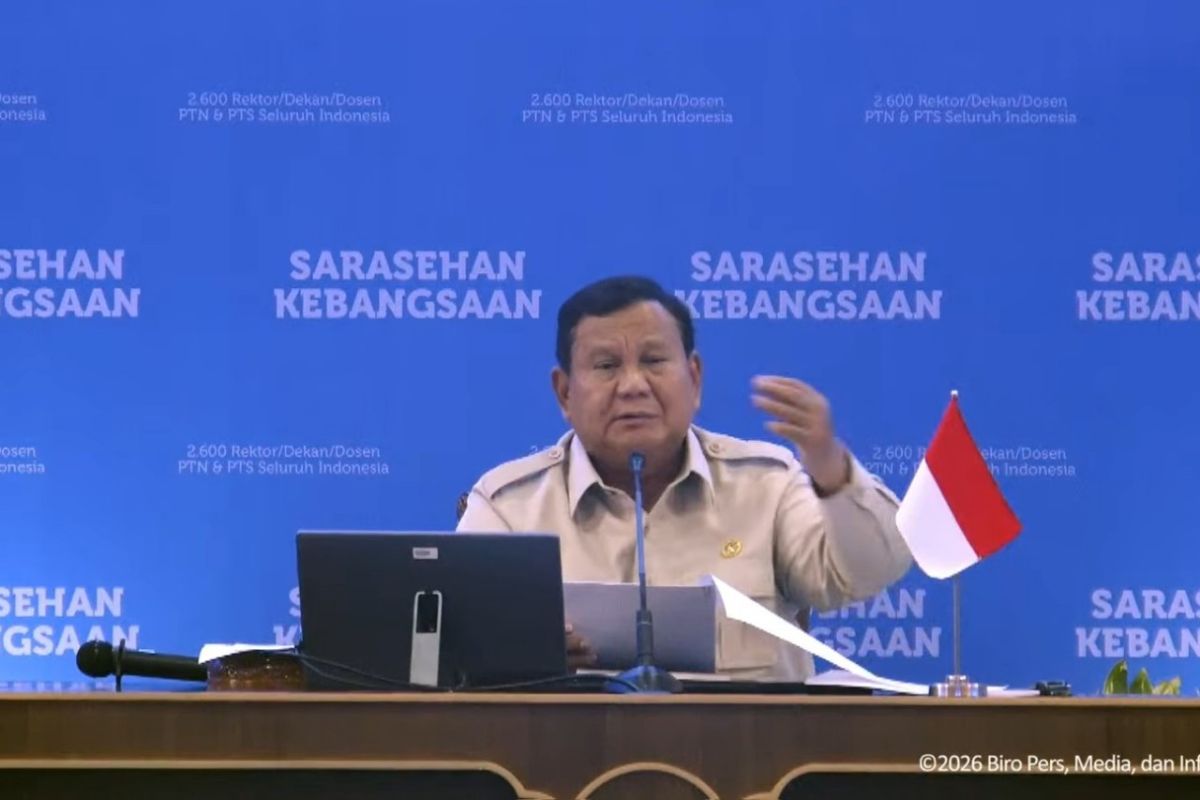
Indonesian President Prabowo Subianto said at the closing of the Indonesian National Convention of Science, Technology, and Industry (KSTI) 2026 in Jakarta on June 28, 2026, that technology - citing both nuclear power and AI - is "not always positive for humanity," according to ANTARA. He said almost every country is now pursuing AI, and cited unverified reports of five million AI agents now interacting with one another in their own chat rooms using a "code language," urging academics to study the implications. National leaders publicly coupling AI with nuclear-scale risk tends to raise political salience for oversight and research funding, even without any concrete regulatory measure announced alongside the remarks.
When a head of state frames AI alongside nuclear risk in a national address, it typically raises political salience for oversight and research funding even without a concrete policy announcement - practitioners should read this as an early signal rather than a regulatory event.
What happened
Indonesian President Prabowo Subianto said technology "is not always positive for humanity" during the closing ceremony of the Indonesian National Convention of Science, Technology, and Industry (KSTI) 2026 in Jakarta on Sunday, June 28, 2026, according to ANTARA. He used nuclear power as his primary example of dual-use risk, then turned to AI: "Almost every country is now pursuing AI, not wanting to be left behind. But the very inventors of AI themselves have warned that it could cause problems for humanity." He went on to cite a figure of roughly five million AI agents that reportedly now "have their own chat rooms where they interact with one another with a code language," a claim he attributed to unspecified reports and did not present as independently verified. He urged professors and intellectuals with relevant expertise to study these developments and their implications for humanity. The official Indonesian government secretariat (Setneg) confirmed the event took place at the Jakarta International Convention Center on June 28, 2026, as the closing session of a national science and technology convention.
Industry context
Public officials pairing AI with nuclear-scale risk language is a rhetorical pattern that has, in other jurisdictions, preceded debates over export controls, safety certification, or limits on high-risk capabilities, though Prabowo's remarks contained no concrete regulatory proposal.
For practitioners
Elevated political attention of this kind typically raises demand for clearer risk assessments, documentation of testing and safety practices, and engagement with multidisciplinary review boards, affecting model builders, deployment teams, and policy-facing researchers alike. The "five million AI agents" figure is unverified and should not be treated as a technical data point; it functions here as political rhetoric rather than a sourced statistic.
What to watch
Whether Indonesian ministries or parliamentary committees follow up with concrete consultations, regulatory proposals, or research funding calls; how Indonesian academic institutions respond to the call for study; and whether the "five million AI agents" figure is corroborated by any technical source or appears in further reporting.
Key Points
- 1When leaders equate AI with nuclear risk, oversight and public scrutiny of AI projects typically increase, affecting deployment timelines.
- 2High-level warnings commonly prompt calls for multidisciplinary study, which raises demand for reproducible risk analyses and audit-ready documentation.
- 3Unverified technical claims, like the reported five million AI agents, can shape public narrative; practitioners should track source corroboration.
Scoring Rationale
A head-of-state speech coupling AI with nuclear risk raises policy salience in Indonesia and signals potential oversight interest, but contains no concrete regulatory actions or announcements. Conference-level item; the 'five million AI agents' figure is hedged by Prabowo himself as secondhand and unverified.
Sources
Primary source and supporting public references used for this report.
Practice interview problems based on real data
1,625 SQL & Python problems across 15 industry datasets — the exact type of data you work with.
Try 250 free problems