Pope Leo Issues Encyclical Calling for AI Disarmament
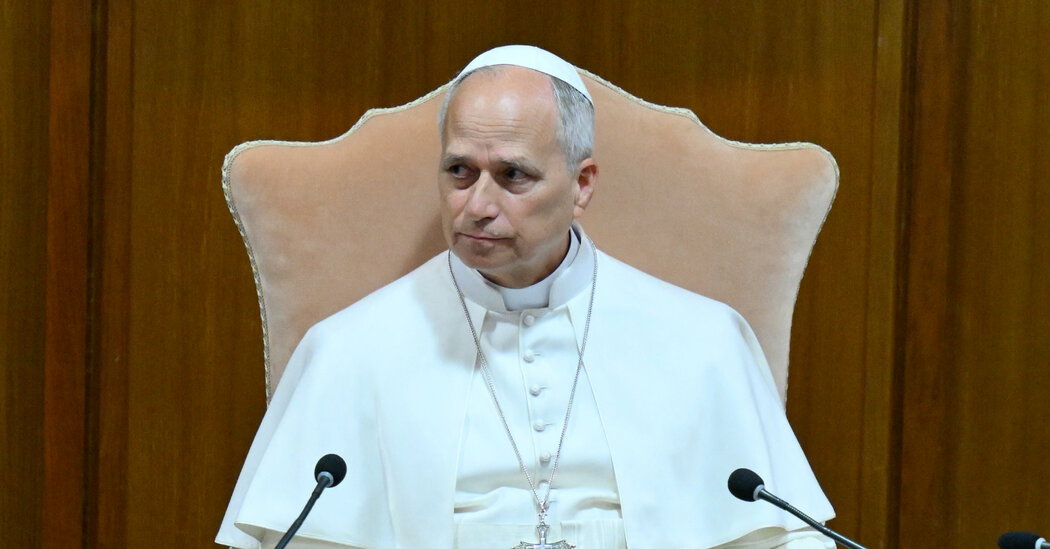
Pope Leo XIV published an encyclical titled "Magnifica Humanitas" addressing artificial intelligence, signed May 15 and released publicly May 25, 2026, according to Vatican News. Reporting by The New York Times and The Guardian notes the pope called for AI to be "disarmed," urging the technology be freed from logics of domination. The presentation at the Vatican featured bright banners and a video produced with EWTN, and The New York Times and AP report that Anthropic co-founder Christopher Olah sat three seats from the pope during the event. Industry observers should view this as a high-profile moral intervention that amplifies calls for regulation and public debate around concentrated AI power.
What happened
Pope Leo XIV released an encyclical titled "Magnifica Humanitas" on safeguarding the human person in the time of artificial intelligence, the Vatican published on May 25, 2026, and the pope signed the document on May 15, 2026, per Vatican News. The encyclical argues technology is not neutral and calls for development that serves the common good, language summarized by Vatican News. Reporting in The New York Times and The Guardian records that in a Vatican presentation the pope urged that AI be "disarmed," describing the need to free the technology from logics that make it an "instrument of domination, exclusion and death." AP reports the pope called for robust regulation and appealed for developers to work for the common good rather than profit. The New York Times and AP note the presentation was staged with bright yellow banners and an introductory video produced with EWTN, and that Christopher Olah, a co-founder of Anthropic, was seated three seats away from the pope and spoke at the event, according to those outlets.
Editorial analysis - technical context
Industry observers note the encyclical frames ethical concerns about AI in terms familiar to moral theology-human dignity, work, peace-and explicitly links those themes to concrete risks reported in journalism, such as autonomous weapons and concentrated control over data and infrastructure. For practitioners: public moral framing at this scale tends to increase political salience, which can accelerate regulatory attention, procurement criteria, and stakeholder demands for auditability, access, and governance safeguards.
Context and significance
Observed patterns in similar interventions
Industry observers note comparable high-profile moral statements have historically shaped political timelines by legitimizing regulatory proposals and by mobilizing civil society. Tech firms and investors often respond to such shifts with increased public engagement on safety, transparency measures, and participation in multistakeholder forums, though responses vary by company and jurisdiction.
What to watch
- •Whether national regulators and multilateral bodies cite "Magnifica Humanitas" in hearings, white papers, or legislative text; news outlets will report any explicit citations.
- •Statements or policy documents from major AI firms and trade groups responding to the encyclical; The New York Times and AP will likely cover corporate responses.
- •Any accelerated proposals on autonomous weapons, data governance, or AI auditing standards in EU, US, or UN forums, which journalists and policy trackers will flag.
Practical takeaway for practitioners
Editorial analysis
Major religious texts addressed to global audiences rarely intervene directly in fast-moving technology debates; public coverage in outlets from The New York Times to The Guardian and AP amplifies the encyclical beyond Catholic institutions. Observers following the overlap of ethics, policy, and product development should treat the document as a reputational and rhetorical force that supplements technical arguments for oversight and equitable access.
Expect increased public scrutiny and greater emphasis on explainability, governance, and equitable access framing in stakeholder conversations. That pattern typically raises the value of reproducible evaluation, documentation, and third-party audits in procurement and compliance contexts.
Key Points
- 1Pope Leo XIV's encyclical elevates AI ethics into the global moral-political conversation, increasing pressure for regulatory and governance responses.
- 2High-profile religious interventions tend to amplify calls for transparency and equitable access, raising the attention paid to auditability and procurement safeguards.
- 3The visible presence of AI leaders at the Vatican event focuses media coverage on the relationship between industry power and public accountability.
Scoring Rationale
A papal encyclical addressing AI is notable for raising moral and political salience across global audiences and could accelerate regulatory and public-policy attention relevant to practitioners.
Sources
Public references used for this report.
View 12 more sources
- Pope Leo denounces ‘culture of power’ driving rise of AItheguardian.com
- Pope calls for robust regulation of AI in manifesto that ponders the future of humanityapnews.com
- Pope Leo warns of AI fueling warfare in first major theological documentcnn.com
- Pope Leo warns AI should be 'disarmed' in manifesto on potential ...pbs.org
- Pope Leo XIV calls for AI to be 'disarmed,' directed to the common ...americamagazine.org
- Full Text of 'Magnifica Humanitas': Read Pope Leo XIV's First ...ncregister.com
- 8 things to know about Pope Leo XIV's sweeping AI manifestoncronline.org
- In his first encyclical, Pope Leo XIV says AI must serve humanity, not the powerful fewreligionnews.com
- The Vatican vs. killer robots: Pope Leo XIV takes aim at AI warfarepolitico.eu
- Pope Leo XIV Warns of Risks of AI, Calls for Robust Regulationtoday.com
- A Complete Guide to Pope Leo's First Encyclical: Magnifica Humanitasascensionpress.com
- Notes on Pope Leo XIV’s encyclical on AIsimonwillison.net
Practice interview problems based on real data
1,625 SQL & Python problems across 15 industry datasets — the exact type of data you work with.
Try 250 free problems