Pongbot Deploys AI Training Robots for Solo Tennis
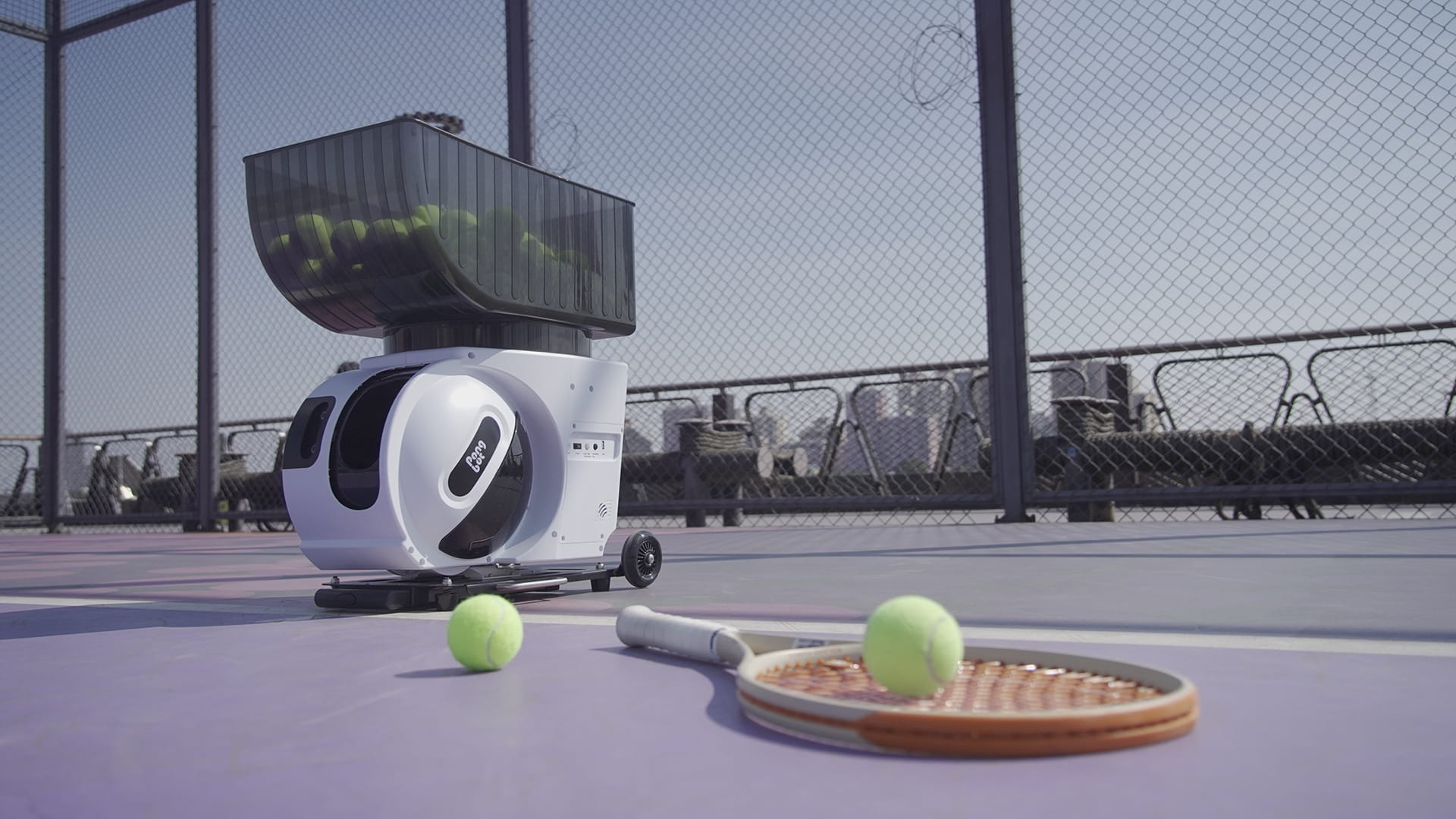
Pongbot sells AI-powered tennis robots that replicate elements of human coaching for solo practice. The flagship PongBot Pace S Pro combines smart sensors, an app, and adaptive algorithms trained on 100,000 matches to vary spin, speed, and placement. The unit holds 150 balls, fires up to 80 mph, and runs on a rechargeable battery for 8 hours. Reviews praise its drill variety, accurate spin control, and ability to simulate realistic point construction, while noting setup, weight (45+ pounds), and learning curve for the app. For coaches, clubs, and serious players, Pongbot offers a scalable, always-available training partner that shifts routine practice toward data-driven, repeatable skill work.
What happened
Pongbot launched and is shipping its AI-enabled tennis robots, most prominently the PongBot Pace S Pro, designed to replace or augment human hitting partners with programmable, adaptive practice. The robot holds 150 balls, can deliver shots up to 80 mph, spins at up to 60 rotations per second, offers 564 programmed drills, and claims training data derived from 100,000 matches. Reviewers call it one of the most effective solo training tools they have used.
Technical details
The system pairs on-device ball delivery hardware with external tracking and edge inference. The robot uses multiple smart trackers mounted to the net and optional wearable sensors to estimate the player's court position and recovery time. Connectivity and control are handled via the smartphone app and a physical remote; communication uses Bluetooth for pairing and telemetry. The Pace S Pro design highlights include:
- •150-ball hopper and high-torque launch mechanism for consistent speed and spin
- •Rechargeable battery providing 8 hours of operation for extended sessions
- •Program library of 564 drills covering single-stroke repetition, multi-shot combos, and full-court sequences
- •Adaptive shot selection based on player position and performance metrics, with adjustable spin and speed settings
The robot's firmware appears to run lightweight on-device inference to schedule shot sequences and adjust parameters in real time rather than streaming raw sensor data to a cloud model for each shot. The product integrates with smart rackets and wearable devices including the Apple Watch to sync performance metrics and session logs for post-session analysis.
Context and significance
Pongbot is part of a broader wave of sports-tech devices that apply AI and robotics to replicate labor-intensive coaching tasks. Compared with traditional ball machines, which are largely deterministic oscillators, the Pace S Pro adds three elements that matter for player development: adaptive variation to simulate an opponent, position-aware drill modulation to encourage court movement, and integrated telemetry for measurable progress. Qualcomm participated early in backing Pongbot, signaling interest from mobile-chip and edge-compute suppliers in sports-robotics use cases. The product also tightens the feedback loop between solo practice and data-driven coaching, enabling iterative skill work without the scheduling or cost overhead of a human coach.
Performance and user trade-offs
Early reviews praise the machine for shot consistency, spin fidelity, and the depth of its drill library. Practical limitations include transport weight at 45+ pounds, setup time for sensors and app calibration, and a nontrivial learning curve to program advanced drills. Pricing positions the Pace S and Pace S Pro in the premium consumer to light-commercial band, making them attractive to serious amateurs, clubs, and high-performance training centers but less so for casual buyers.
What to watch
Adoption will hinge on three things: real-world durability under high-frequency use, the accuracy of player-position inference in variable lighting and court environments, and the strength of integrations with third-party analytics and coaching platforms. Expect incremental firmware updates to refine shot selection algorithms and potential enterprise offerings for clubs that want centralized fleet management and session analytics.
Bottom line
Pongbot moves solo practice from repetitive ball-feeding to adaptive, coach-like drilling backed by telemetry. For practitioners building sports-AI systems, the product is a useful case study in combining edge robotics, local inference, and wearable-sync workflows to create continuous, measurable training experiences.
Key Points
- 1Pongbot combines sensors, edge inference, and a 150-ball launcher to simulate realistic opponents, increasing solo practice quality.
- 2Adaptive drills and telemetry trained on 100,000 matches enable progressive, measurable skill work that replaces repetitive manual feeding.
- 3Trade-offs include transport weight, setup complexity, and price, making the device most relevant for serious players and clubs.
Scoring Rationale
This is a notable product release that demonstrates practical integration of AI, sensors, and robotics for sports training. It is relevant to practitioners building edge inference and human-robot interaction systems, but it does not shift core AI research or infrastructure paradigms.
Sources
Public references used for this report.
Practice interview problems based on real data
1,625 SQL & Python problems across 15 industry datasets — the exact type of data you work with.
Try 250 free problems