
Perplexity AI Delivers Cited, Synthesized Search Answers
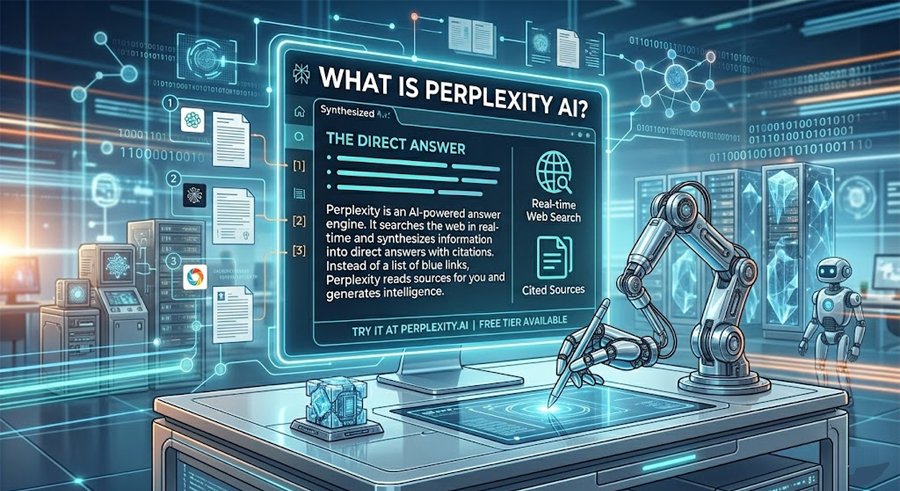
Perplexity AI is an AI-powered answer engine that searches the web in real time and synthesises results into a direct, cited answer rather than returning a ranked list of links, according to SmashingApps. The SmashingApps article reports that Perplexity formats answers with numbered source citations and offers a free tier at perplexity.ai. SmashingApps also lists a Pro plan priced at $20/month, with features the article describes as expanded daily 'pro searches' (the article contrasts 5 free pro searches per day with 600 per day on Pro), file uploads, and image generation. SmashingApps reports that more than 10 million people use Perplexity daily in 2026.
What happened
Perplexity AI is presented as an AI-powered answer engine that searches the web in real time and synthesises results into a direct, cited answer instead of returning a traditional list of links, per SmashingApps. The SmashingApps article reports that Perplexity includes numbered source citations with each claim and offers a free tier at perplexity.ai. The article lists a paid Pro tier at $20/month, and contrasts feature limits: it reports 5 pro-model searches per day on the free tier versus 600 per day on Pro, plus file-upload and image-generation capabilities for Pro users. SmashingApps reports over 10 million daily users in 2026.
Editorial analysis - technical context
AI answer engines like Perplexity use retrieval plus on-the-fly synthesis to produce single-pass answers rather than ranked links. Industry-pattern observations: systems that combine web retrieval, citation tracking, and answer generation typically trade fidelity and traceability against hallucination risk and latency. For practitioners, that pattern means verification workflows and provenance tooling become more important when adopting generated answers for research or operational use.
Industry context
Observed patterns in similar products show demand for quicker synthesis on research queries where users previously clicked through multiple sources. Industry reporting frames Perplexity as part of a broader class of 'answer engines' competing with traditional search by prioritising immediacy and source linking. For ML teams, this trend shifts emphasis toward evaluation metrics that weight citation accuracy and source relevance, not only answer fluency.
What to watch
Indicators an observer can follow include changes in Pro plan usage limits, published accuracy or provenance audits, and integration endpoints for enterprise workflows. Also monitor independent evaluations that compare citation correctness and factuality against baseline search plus manual synthesis. SmashingApps does not provide an independent audit; it reports product features and usage numbers without linking to third party verification.
Practical note for practitioners
Industry context: teams integrating answer-engine outputs should treat generated, cited answers as research drafts that require rapid provenance checks. Tooling for source validation, changelogging, and query-to-source traceability will be the practical controls most relevant to ML engineers and data scientists working with these systems.
Key Points
- 1AI answer engines that synthesise web sources reduce time-to-insight, increasing reliance on generated summaries for complex queries.
- 2Cited-answer UX shifts verification from discovery to provenance checking, making source-tracking and audit tooling more important for teams.
- 3Freemium limits and Pro tiers (per SmashingApps pricing details) will influence which users adopt answer-driven search for heavy research workflows.
Scoring Rationale
Perplexity represents a notable product-level shift in how search results are presented to practitioners, prioritising synthesis and citations. The story matters to ML/DS practitioners because it changes workflows for research and verification, but it is not a frontier-model or infrastructure breakthrough.
Practice interview problems based on real data
1,625 SQL & Python problems across 15 industry datasets — the exact type of data you work with.
Try 250 free problems

