PepsiCo Deploys Driverless Box Trucks for Regional Deliveries
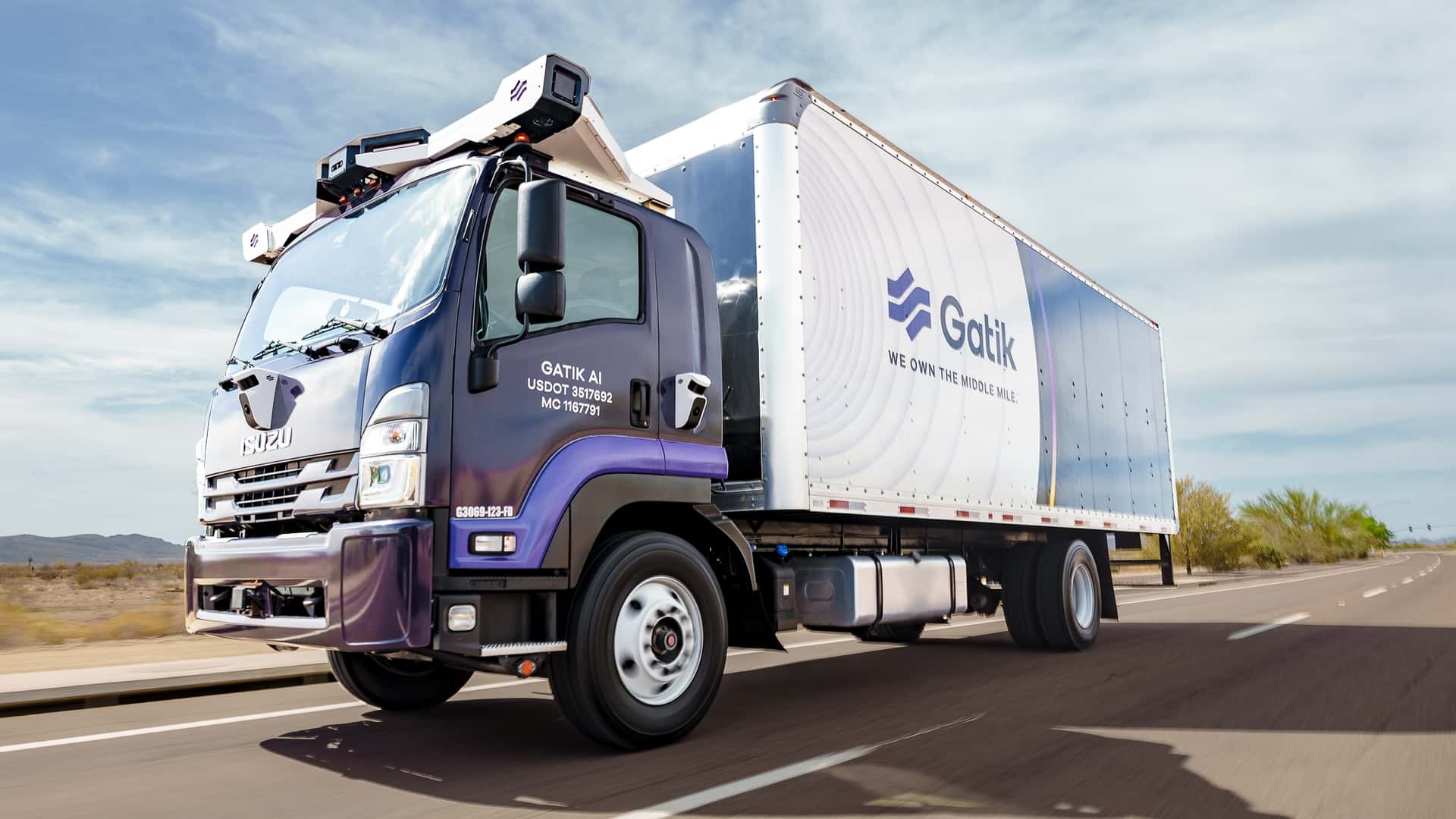
PepsiCo has launched a multi-year partnership with autonomous freight company Gatik to operate driverless box trucks in North America, according to a Gatik announcement dated June 8, 2026. Per Gatik and reporting by The Wall Street Journal, 41 Isuzu-branded trucks are operating across Arizona, Texas, and Arkansas (35 in Arizona, 5 in Texas, 1 in Arkansas), hauling Frito-Lay products between plants, warehouses, and retailers such as Walmart and Dollar General. Gatik calls it the largest commercial autonomous freight deployment to date and reports more than 98% on-time delivery across its operations. PepsiCo supply-chain executive Jim Farrell is quoted on the deployment's potential to strengthen delivery consistency. The trucks use cameras, radar, and lidar on short, highly repeatable regional routes. This is a notable commercial-scale logistics deployment with operational, labor, and monitoring implications for supply-chain teams.
What happened
PepsiCo and autonomous freight company Gatik announced a multi-year strategic partnership to deploy driverless box trucks in PepsiCo's North America regional transportation networks, per a Gatik announcement dated June 8, 2026. Gatik and reporting by The Wall Street Journal state that 41 Isuzu-branded autonomous box trucks are active across Arizona, Texas, and Arkansas, with 35 in Arizona, 5 in Texas, and 1 in Arkansas. Gatik characterizes the arrangement as the largest commercial autonomous freight deployment to date and says its trucks are moving PepsiCo and Frito-Lay products daily between manufacturing sites, warehouses, and retailers such as Walmart and Dollar General, reporting more than 98% on-time delivery across its operations (Gatik; WSJ; TruckNews).
Technical details
InsideEVs and other coverage describe the vehicles as Isuzu-branded box trucks powered by internal-combustion engines and equipped with multiple forward and rear cameras, radar, and lidar sensors. The trucks retain a conventional cab interior, including a steering wheel and HVAC, while Gatik has fitted driver-monitoring and external-camera feed displays. Reporting and the company indicate the deployment focuses on short-haul, repeatable routes, where route repeatability reduces operational variability and lets the autonomy stack accumulate route history (The Independent; TruckNews; Gatik).
Industry context
Companies operating at scale in consumer-goods logistics often trial automation on high-frequency, low-variability lanes because those routes minimize edge cases and simplify mapping, perception, and operational validation. Observed patterns in comparable deployments show that system reliability improves with route repetition, and operators typically combine autonomous drives with human-led loading and unloading and exception handling.
Context and significance
This deployment places autonomous freight technology inside a major, time-sensitive consumer-goods network, which raises practical questions for fleet operations teams, vendors, and carriers. Data engineers and operations leads will need to integrate new telemetry and monitoring streams into existing TMS and WMS systems, and safety and compliance teams will need documented procedures for on-route interventions, handoffs, and incident reporting. The public framing as a largest commercial deployment is likely to accelerate vendor demand signals and procurement interest among large shippers evaluating near-term automation.
What to watch
Track changes in route-level productivity and service-day consistency metrics reported by PepsiCo or partners, operational uptime and incident-rate data for the autonomous fleet, and labor and contracting developments tied to regional carrier and union responses. Trade reporting and filings may over time disclose throughput, cost-per-mile comparisons, and whether the deployments expand beyond the currently reported regional lanes.
Direct quotes and sourcing
Gatik's announcement includes a quote from CEO Gautam Narang describing the deployment as commercial-scale in a demanding supply chain, and PepsiCo executive Jim Farrell is quoted on strengthening service and adding capacity (Gatik; WSJ; TruckNews). Coverage in InsideEVs and The Independent provides additional technical and operational detail on vehicle hardware and route characteristics.
Limitations
Public sources provide fleet counts, geography, and quoted executive statements, but they do not publish detailed operational KPIs, contractual terms, or long-term rollout roadmaps, so observers should avoid inferring contractual intent or internal resource reallocation from public statements alone.
Key Points
- 1PepsiCo and Gatik deployed 41 driverless Isuzu box trucks across Arizona, Texas, and Arkansas in a multi-year autonomous-freight partnership.
- 2Short, repeatable regional routes minimize variability, making them the preferred early use case for commercial autonomous freight.
- 3Adding autonomous vehicles to supply chains requires integration work on telemetry, incident workflows, and operational monitoring for fleet teams.
Scoring Rationale
A commercial-scale autonomous-freight deployment inside a Fortune 50 consumer-goods supply chain is a notable real-world AI and autonomy deployment relevant to logistics and ML-in-production teams. Public sources confirm fleet size and geography but omit operational KPIs and contract terms, and the AI angle is autonomy and perception rather than a core ML advance, keeping impact in the notable-but-not-major range.
Sources
Public references used for this report.
Practice with real Logistics & Shipping data
90 SQL & Python problems · 15 industry datasets
250 free problems · No credit card
See all Logistics & Shipping problems