Pentagon Signs Classified AI Agreements with Seven Firms
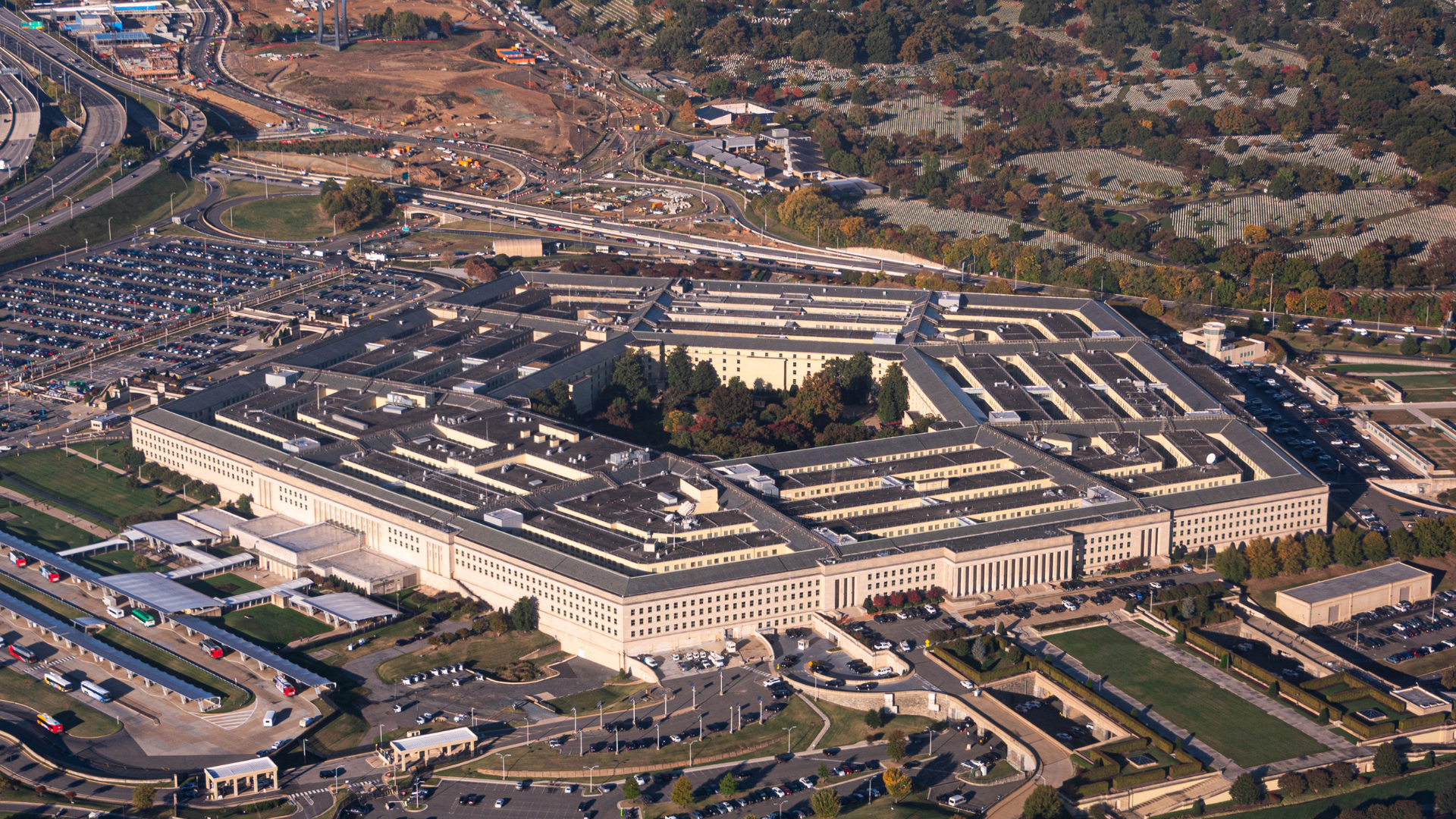
According to a Pentagon statement and reporting by Reuters, the Defense Department reached agreements with seven AI firms, OpenAI, Google, Microsoft, Amazon Web Services, NVIDIA, SpaceX/xAI and the startup Reflection, to allow those companies to operate their AI systems in classified networks. Reuters reports the agreements cover integration into the DoD's Impact Level 6 and 7 environments. Reuters and CNN report the Pentagon's announcement follows earlier disputes with Anthropic, which the department previously designated a "supply-chain risk" and has not been included in the new agreements. CNN and Reuters also note the Pentagon said its GenAI.mil platform has been used by over 1.3 million Defense Department personnel. The Verge, Reuters and CNN report that some Pentagon staff and contractors have resisted removing Anthropic's tools ahead of the transition.
What happened
According to a Pentagon statement and reporting by Reuters, the Department of Defense reached agreements with seven AI firms, OpenAI, Google, Microsoft, Amazon Web Services, NVIDIA, SpaceX/xAI, and the startup Reflection, to permit use of their AI systems on classified DoD networks. Reuters reports the deals enable integration into the DoD's Impact Level 6 and 7 environments. CNN and Reuters report the Pentagon highlighted its GenAI.mil platform has been used by more than 1.3 million Defense Department personnel.
The coverage notes a conspicuous exclusion: Anthropic. Reuters and CNN report the Pentagon previously designated Anthropic a "supply-chain risk" earlier this year and has not been included in the new agreements. Reporting by The Verge and CNN documents that Anthropic sued the government in response and that a federal judge recently issued a temporary injunction related to the dispute.
Technical details
Editorial analysis - technical context
Integrating multiple vendor models into classified networks typically requires agreed operational controls for data residency, inference isolation, and security validation. Public reporting does not enumerate the technical controls the Pentagon will require for each provider; Reuters and The Verge note the stated objective of avoiding "vendor lock" by broadening available providers. For practitioners, enabling models to run at Impact Level 6 and 7 implies additional compliance work on model audit trails, hardened inference hosts, and continuous monitoring systems, which are standard requirements for classified operational environments.
Context and significance
The agreements expand the set of vendors who can support classified DoD workflows after a period when Anthropic's model was the primary option inside the classified boundary, a point emphasized by Reuters and CNN. Public reporting frames the moves as part of the Pentagon's effort to diversify suppliers and accelerate the integration of generative AI into planning, logistics, targeting, and other operational tasks. The presence of major cloud and chip vendors such as AWS and NVIDIA, along with platform providers OpenAI and Google, widens the range of inference stacks and deployment patterns available to the DoD, according to multiple outlets including WSJ and Forbes.
Editorial analysis
From a security and procurement perspective, the exclusion of Anthropic after a supply-chain designation creates legal and operational friction; The Verge, CNN and Reuters document litigation and internal resistance from staff who have preferred Anthropic's tools. For practitioners, comparable shifts in vendor authorizations often produce short-term interoperability and tooling headaches as teams adapt CI/CD, model validation tests, and access controls to multiple vendor APIs and on-prem inference endpoints.
What to watch
- •Whether the Pentagon publishes technical baseline requirements or a standard security framework for vendors operating at Impact Level 6 and 7, as that will determine integration effort for different model architectures.
- •How the Anthropic litigation proceeds and whether federal rulings alter the companys eligibility for future classified work, as reported by The Verge and CNN.
- •Implementation details for GenAI.mil and metrics on operational uptake beyond the 1.3 million user figure cited in Pentagon commentary by Reuters and CNN.
- •How contractors and internal DoD teams manage the transition away from a de facto single-vendor dependency toward a multi-vendor environment, including changes to model evaluation and red-team processes.
Reporting sources include Reuters, CNN, The Verge, The Wall Street Journal, and related coverage in Forbes and The New York Times.
Key Points
- 1Pentagon agreements with seven vendors broaden classified AI options, reducing reliance on a single provider and expanding deployment choices.
- 2Anthropic remains excluded after being labeled a supply-chain risk, prompting litigation and operational friction inside the DoD.
- 3Integrating multiple vendors into Impact Levels 6 and 7 raises practitioner workload on hardened inference, auditability, and continuous monitoring.
Scoring Rationale
The story materially affects how AI systems will be procured and deployed in classified government settings and therefore matters to practitioners working on secure deployments, vendor integrations, and compliance. It is a notable, near-term policy and procurement development rather than a frontier-model release.
Sources
Public references used for this report.
View 5 more sources
- OpenAI, Nvidia, Alphabet And More Sign AI Deal With Pentagon For Classified Military Useforbes.com
- Top AI Companies Agree to Pentagon Deals for Classified Work - WSJwsj.com
- Pentagon Makes Deals With A.I. Companies to Expand Classified Worknytimes.com
- Pentagon plans to make US military ‘AI-first fighting force’ by pairing with companiestheguardian.com
- Pentagon signs deal with six top AI companies for classified workwashingtonexaminer.com
Practice interview problems based on real data
1,625 SQL & Python problems across 15 industry datasets — the exact type of data you work with.
Try 250 free problems