PC makers and Microsoft challenge Apple with Nvidia
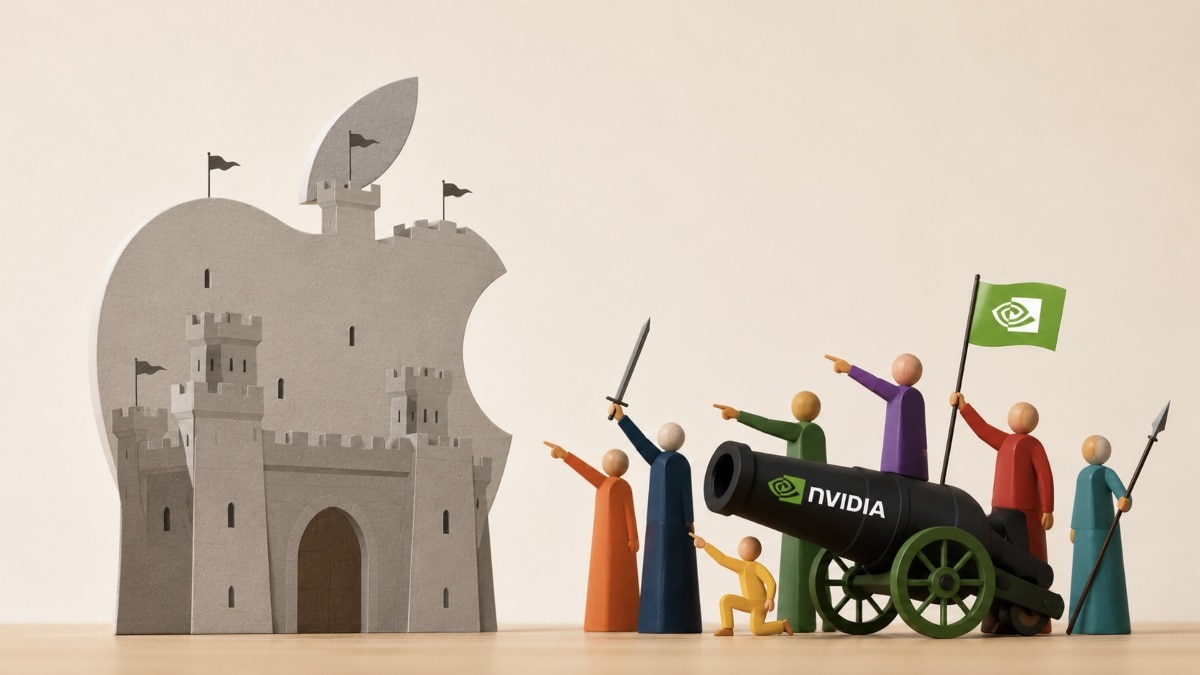
India Today frames a renewed push by Windows PC makers and Microsoft to challenge Apple's MacBook, this time leaning on Nvidia silicon. The hook is Nvidia's move into client PCs: at Computex 2026 on June 1, Nvidia unveiled an Arm-based PC superchip - reported as the RTX Spark, also referenced as N1X - built with MediaTek and slated to ship in fall 2026 in Windows laptops from Microsoft, Dell, HP, Asus, Lenovo and MSI (CNBC; TechRadar). Coverage describes a dedicated neural processing unit rated above 50 TOPS, clearing the 40-TOPS bar for Microsoft's Copilot+ branding and its on-device AI features. Microsoft's NVIDIA-powered Surface Laptop Ultra is positioned as a direct MacBook Pro rival running Windows on Arm (Windows Latest). For practitioners, the significance is less the Apple rivalry than Nvidia entering a CPU market long held by Intel, AMD, Qualcomm and Apple, with AI-PC NPUs becoming standard on the laptop spec sheet.
What happened
India Today's feature casts the latest round of Windows-versus-Mac competition as PC makers and Microsoft taking aim at Apple with Nvidia's help. The concrete development behind the framing is Nvidia's entry into client PC processors: at Computex 2026 on June 1, Nvidia introduced an Arm-based PC superchip, reported as the RTX Spark and also referenced as N1X, that is scheduled to appear in fall 2026 Windows laptops from Microsoft, Dell, HP, Asus, Lenovo and MSI (CNBC; TechRadar).
Technical details
According to Computex coverage, the chip pairs CPU cores co-designed by Nvidia and MediaTek with a Blackwell-architecture GPU block and a dedicated neural processing unit rated above 50 TOPS (TechRadar; CNBC). That NPU rating clears the 40-TOPS threshold Microsoft requires for Copilot+ branding, which gates on-device features such as Recall, local image generation and live captions. Microsoft's NVIDIA-powered Surface Laptop Ultra, running Windows on Arm, is presented as a flagship MacBook Pro rival (Windows Latest).
Context and significance
What to watch
- •Real-world performance, efficiency and battery life of RTX Spark laptops versus Apple's M-series when units ship in the fall.
- •Application and driver compatibility for Windows on Arm, historically a friction point for the platform.
- •How much Copilot+ and third-party software actually exercise the NPU rather than the CPU or GPU.
Bottom line
Editorial analysis
The notable shift is Nvidia entering a client CPU market long dominated by Intel, AMD, Qualcomm and Apple. Reporting notes that Qualcomm's Windows-on-Arm exclusivity has been winding down, opening the category to Nvidia, AMD and MediaTek. For AI practitioners, the practical effect is that high-TOPS NPUs are becoming a standard part of mainstream laptop specifications, expanding the installed base for on-device inference.
Headlines emphasize the Apple rivalry, but the durable story for data and ML practitioners is Nvidia normalizing Copilot+-class NPUs across the Windows laptop lineup, which broadens where on-device AI workloads can run.
Key Points
- 1Nvidia is entering the Windows PC market with an Arm-based superchip (reported as RTX Spark / N1X), built with MediaTek and due in fall 2026 laptops from Microsoft, Dell, HP, Asus, Lenovo and MSI (CNBC).
- 2The chip reportedly includes a 50+ TOPS NPU, exceeding the 40-TOPS threshold for Microsoft's Copilot+ on-device AI features (TechRadar).
- 3Editorial analysis: The bigger story for practitioners is Nvidia challenging Intel, AMD, Qualcomm and Apple in client CPUs, normalizing AI-PC NPUs across the Windows lineup.
Scoring Rationale
Nvidia's entry into the Windows PC market with an Arm-based, Copilot+-class superchip is a notable industry strategy shift that normalizes high-TOPS NPUs across mainstream laptops, which matters to anyone building or targeting on-device AI. It is hardware-competition news rather than a core ML research advance, and this item is feature-style coverage of the Computex announcement, so it lands in the mid-6 range.
Sources
Public references used for this report.
Practice interview problems based on real data
1,625 SQL & Python problems across 15 industry datasets — the exact type of data you work with.
Try 250 free problems