Payments Leaders Require AI Controls Explainable in 24 Hours
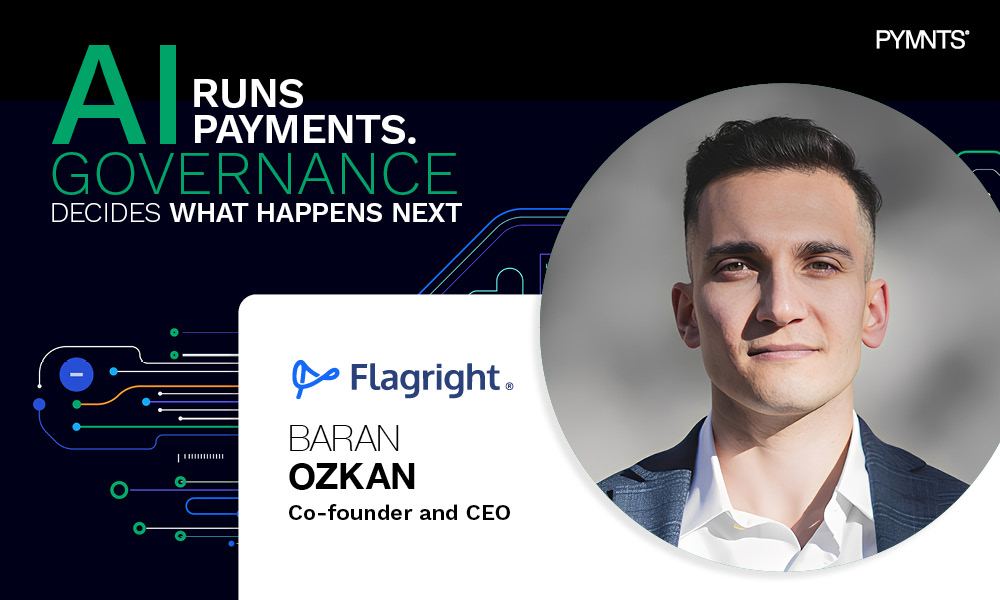
Baran Ozkan, co-founder and CEO of Flagright, argues that payments teams must prioritize explainable, accountable AI controls that can be defended within 24 hours. Weak governance shows up as scaled failures across approvals, blocks, investigations, and customer outcomes. Ozkan recommends slower staged deployments, version control, explicit human override points, and rigorous governance of third-party models and data providers. Every external dependency needs performance SLAs, change-notification rights, auditability, fallback plans, and independent validation. That operating discipline, he warns, is cheaper than remediating a high-impact regulatory or customer-facing failure after automation has been scaled.
What happened
Baran Ozkan, co-founder and CEO of Flagright, lays out a practical playbook for payments teams in a PYMNTS eBook and argues that AI controls must be explainable and defensible within 24 hours. He frames the core failure mode as an operating-discipline gap between a model output and the downstream business decision, not simply poor model accuracy.
Technical details
Ozkan prescribes staged rollouts with explicit control checkpoints: version control, replayability of historical cases, and human override points. He emphasizes treating every third-party model, screening source, identity signal, or data provider as a governed dependency with clear requirements. Recommended controls include:
- •performance SLAs and change-notification rights for vendors
- •audit logs and evidence capture to reconstruct decisions
- •independent validation and local replays of third-party models
- •fallback plans and concentration-risk mitigation
Context and significance
Payments systems amplify failures because transaction volume and automation scale error propagation rapidly. The piece reframes common compliance language into operational instructions practitioners can implement: log the evidence that led to a decision, assign decision ownership, require rollback paths, and codify when humans must intervene. This is not theoretical governance; it is risk control that materially reduces regulatory, financial, and reputational exposure in high-throughput environments.
What to watch
Teams should prioritize engineering work that enables replayability and explainability over aggressive performance optimization during initial deployments. Expect vendors to face rising demands for auditing features, change feeds, and local validation APIs as payments firms insist on governed dependencies.
Key Points
- 1Operational governance, not just model accuracy, determines whether AI scales safely in payments; poor discipline amplifies failures.
- 2Treat third-party models as governed dependencies by requiring SLAs, change notifications, auditability, and fallback plans to reduce vendor risk.
- 3Favor slower staged deployments with replayability, version control, and human override, because fixing scaled failures costs far more than delayed automation.
Scoring Rationale
Practical governance guidance for payments is directly relevant to ML engineers and compliance teams, but it is advisory rather than a major technical or regulatory development. The piece impacts operational priorities rather than introducing a new model or law.
Practice with real Payments data
90 SQL & Python problems · 15 industry datasets
250 free problems · No credit card
See all Payments problems