Pax Silica pact excludes China, empowers defense firms
The second Pax Silica Summit, held June 27 in Washington, D.C., expanded the US-led AI and semiconductor supply-chain alliance to 24 formal signatories as 10 new members -- including the European Union, Germany, the Netherlands, Argentina, Chile, and Panama -- signed the Pax Silica Declaration. The US State Department announced a pilot AI supply-chain credentialing platform in Panama ('Pax Pass') to streamline vetted shipments of semiconductors, AI infrastructure, and critical minerals. A Stanford University-partnered Foundry School workforce program was also unveiled. Russia's RT framed the pact as deepening EU dependence and empowering defense-linked firms; analysts across the political spectrum view it as a US-coordinated effort to reduce reliance on China across the full technology stack, from critical minerals to compute infrastructure.
What Is Pax Silica Launched in December 2025 by US Under Secretary for Economic Affairs Jacob Helberg, Pax Silica is the State Department's flagship effort on AI and supply-chain security. The name fuses the Latin pax (stability) with silica (the basis of silicon chips). It is not a conventional trade agreement: it is a security and industrial-policy pact covering the full technology stack -- from critical-mineral extraction through semiconductor manufacturing to AI data centers. China is implicitly excluded; Taiwan has endorsed the declaration principles via a separate joint statement.
Second Summit Outcomes (June 27, 2026) Ten new economies signed the Pax Silica Declaration, bringing total formal signatories to 24. New members include Argentina, Chile, Costa Rica, El Salvador, the European Union, Germany, Greece, Kazakhstan, the Netherlands, and Panama. Close to three dozen economies additionally signed a Joint Statement on AI Opportunity endorsing a pro-growth, pro-innovation regulatory approach to AI. The US committed to launching a competitive Notice of Funding Opportunity for an AI Supply Chain Credentialing and Provenance Platform in Panama, using AI-powered risk assessment to accelerate customs and logistics for vetted semiconductor and AI-infrastructure shipments. The State Department also unveiled the Foundry School initiative with Stanford University -- a seminar series for advanced-manufacturing founders plus a new curriculum for adoption across Pax Silica economies.
Why Practitioners Should Track This Pax Silica shapes which organizations, geographies, and supply-chain paths gain preferential access to advanced chips, critical minerals, and compute infrastructure. Companies operating outside the alliance's "trusted" framework may face slower logistics, tighter export controls, or reduced access to advanced AI hardware over time. For AI/ML teams building on GPU infrastructure, the alignment between your cloud provider's supply chain and Pax Silica member status may increasingly affect latency, pricing, and hardware availability. The Panama provenance platform, if deployed at scale, creates a new compliance layer for high-value AI-infrastructure shipments.
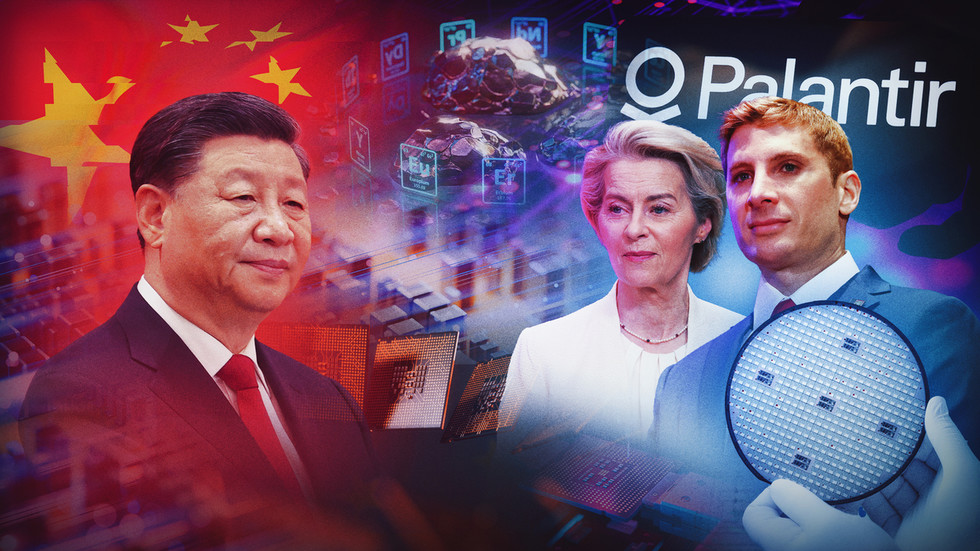
Conflicting Framing The primary news trigger for this card is an RT (Russian state media) editorial that frames the pact as "AI slavery disguised as strength," arguing it deepens EU dependence and benefits US defense-linked tech firms. RT notes that Jacob Helberg -- the initiative's architect -- previously worked at Palantir, which profits from defense and intelligence contracts. These are documented facts; whether the arrangement is dependency-deepening or supply-chain-stabilizing is disputed along predictable geopolitical lines. The Federal and Euronews report EU membership as an active choice to counter Chinese dominance, not a passive subordination.
Key Points
- 1Pax Silica expanded to 24 signatories at its second summit (June 27), with the EU, Germany, and Netherlands joining alongside six other new members.
- 2A Panama AI supply-chain credentialing pilot ('Pax Pass') will streamline vetted semiconductor and AI-infrastructure shipments using provenance tracking.
- 3The alliance shapes global compute-access geopolitics: organizations outside 'trusted partner' supply chains may face tighter hardware access and new compliance requirements.
Scoring Rationale
Second summit expanded a real 24-nation semiconductor and AI supply-chain security pact with concrete new outcomes (Panama supply-chain credentialing pilot, Stanford Foundry School), making it notable for AI/ML practitioners tracking hardware access and geopolitical compute dependencies. Downgraded from original 6.9: the sole original source was an RT editorial with heavy geopolitical framing; the verified factual story is policy-tier rather than transformative for practitioners, and the supply-chain implications are indirect and medium-term. Score 6.1 reflects a significant policy event -- 24-nation AI infrastructure alliance with new compliance layers -- without overstating immediate practitioner impact.
Sources
Public references used for this report.
Practice interview problems based on real data
1,625 SQL & Python problems across 15 industry datasets — the exact type of data you work with.
Try 250 free problems