Palantir and Nvidia Launch Nemotron Engine for Sovereign AI
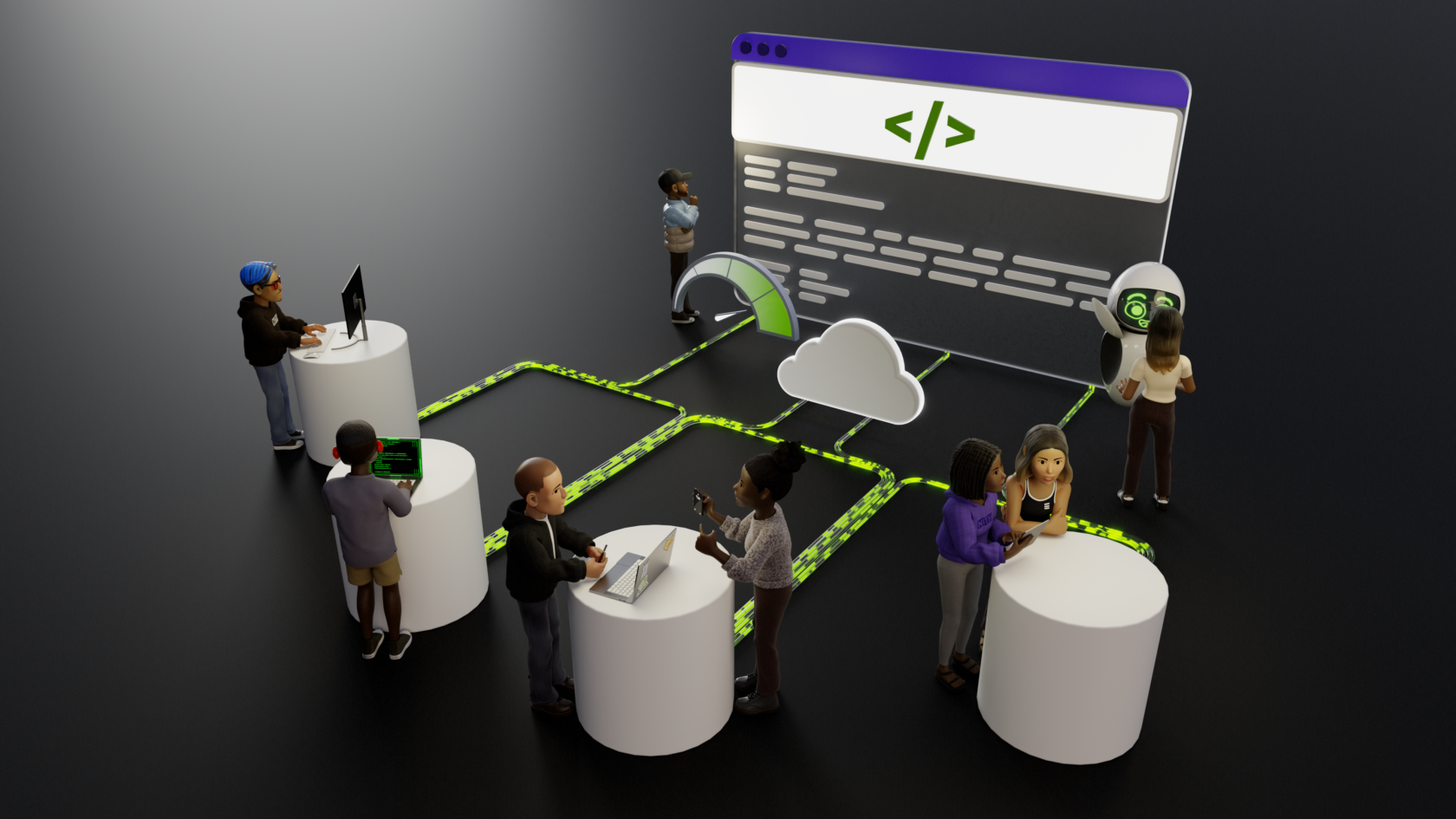
The strategic question for government and critical-infrastructure AI has shifted from which model is smartest to who owns the weights and where they run. Palantir and Nvidia answered on June 29, 2026, launching a joint engine that lets agencies train and deploy Nvidia Nemotron open models entirely inside sovereign, classified, and air-gapped environments. The offering pairs Nvidia compute and open weights with Palantir AIP, Ontology, Foundry, and Apollo, so a customer can fine-tune a model on its own data, keep full ownership of the result, and run it behind its own security perimeter. Palantir and Nvidia emphasize explicit data authorization, customer-specific isolation, data portability, a right to erasure, and full auditability, a control surface aimed squarely at agencies that have kept workloads on premises. Using open Nemotron weights rather than a closed API is pitched as cheaper and more controllable, with customers owning self-improving, mission-specific models. The move sharpens a sovereign-AI contest in which control and provenance, not raw benchmark scores, are becoming the deciding factors for public-sector buyers.
Why it matters
For practitioners selling AI into government, defense, and regulated industry, the binding constraint is rarely model quality; it is data residency, classification, and who controls the weights. By packaging open-weight Nemotron models with Palantir's deployment stack, the two companies are betting that ownership and isolation, not a closed frontier API, win the sovereign market.
What launched
Announced June 29, 2026, the joint engine combines Nvidia's compute, ecosystem, and open Nemotron models with Palantir's critical-infrastructure products: AIP, Ontology, Foundry, and Apollo. It is designed so that agencies can train AI on their own data, retain full ownership of the resulting models, and deploy them in classified and air-gapped environments. The stated focus is United States government agencies and US critical infrastructure.
The control surface
The companies highlight explicit data authorization, secure perimeter enforcement, architecturally enforced customer-specific isolation, data portability, a right to erasure, and full auditability. The pitch is that open Nemotron weights plus Palantir tooling deliver trust, accessibility, control, and lower cost, with customers owning self-improving models tuned to their mission rather than renting capability from a vendor API.
Practitioner read
Two things stand out. First, this is a concrete commercial validation of open-weight models as the default for high-assurance deployments, where black-box APIs are non-starters and the ability to inspect, fine-tune, and physically contain a model is the requirement. Second, it deepens Nvidia's move up the stack from silicon into models and reference architectures, while giving Palantir a differentiated answer to hyperscaler government clouds. Buyers should still scrutinize what self-improving means in an air-gapped setting, how model updates and evaluations are governed, and where accountability sits when a customer owns and retrains the weights.
The bigger picture
The launch lands amid an intensifying sovereign-AI push worldwide, and reframes competition around provenance and control rather than leaderboard position, a shift that favors open weights and on-premises deployment for the most sensitive workloads.
Key Points
- 1Palantir and Nvidia launched a joint engine to train and deploy Nemotron open models in sovereign, classified, and air-gapped environments.
- 2Agencies can fine-tune on their own data and keep full ownership, with isolation, auditability, and a right to erasure built in.
- 3The deal validates open-weight models for high-assurance government AI and extends Nvidia further up the software stack.
Scoring Rationale
A notable commercial validation of open-weight models for high-assurance government AI, with Palantir's deployment stack plus Nvidia Nemotron weights targeting classified and air-gapped US agency workloads. Significant for practitioners selling into sovereign or regulated environments; it is a platform and go-to-market move rather than a new model capability, which keeps it below the major tier.
Sources
Public references used for this report.
View 1 more source
Practice interview problems based on real data
1,625 SQL & Python problems across 15 industry datasets — the exact type of data you work with.
Try 250 free problems