Organoids Learn To Balance Virtual Cartpole
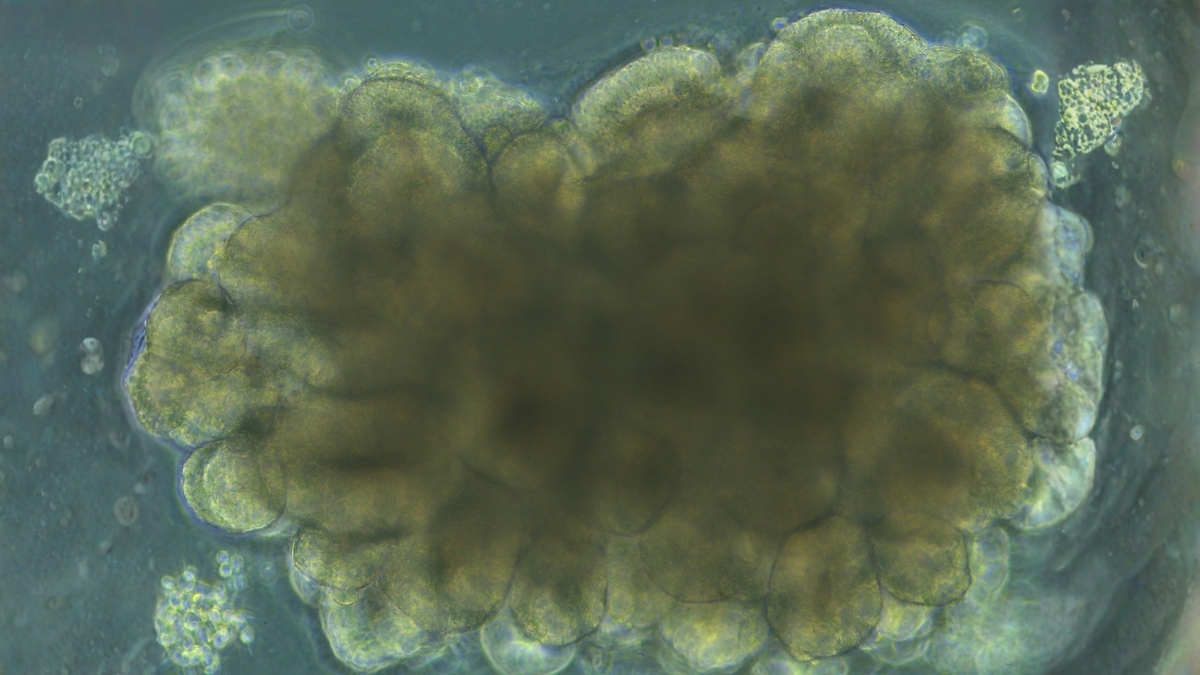
Researchers at UC Santa Cruz demonstrated that mouse-derived cortical organoids improved performance on a classic control benchmark, the virtual cartpole, using a closed-loop system delivering adaptive electrical feedback. Organoids receiving adaptive feedback reached proficiency in 46% of sessions versus 2.3% (no feedback) and 4.4% (random feedback), but retained gains only short-term, losing training within 45 minutes; authors frame it as a tool to study neural plasticity.
Key Points
- 1Demonstrate organoids solve cartpole via closed-loop adaptive electrical feedback, achieving proficiency in 46% sessions.
- 2Indicate that neural tissue plasticity can be adaptively shaped by performance-dependent electrical stimulation.
- 3Suggest researchers can use organoid closed-loop training to study disease-related learning deficits and plasticity mechanisms.
Scoring Rationale
Significant experimental novelty and peer-reviewed publication support impact, but scope is niche and short-term results limit applicability.
Practice interview problems based on real data
1,625 SQL & Python problems across 15 industry datasets — the exact type of data you work with.
Try 250 free problems