Oracle Expands Bloom Energy Partnership to Power AI Data Centers
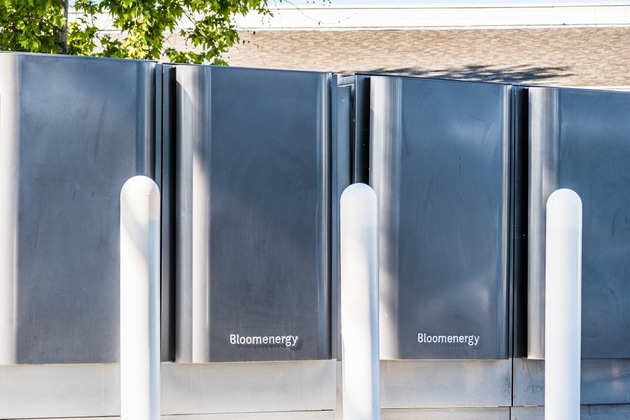
Oracle is expanding its agreement with Bloom Energy to procure up to 2.8 GW of Bloom's fuel cell systems to accelerate and de-risk its AI data center buildout. The deal positions Oracle to add on-site, dispatchable power capacity that can shorten time-to-power compared with long grid interconnection timelines and reduce exposure to utility constraints. The announcement drove a roughly 10% post-market pop in Bloom Energy shares. For ML infrastructure teams and data center operators, the deal signals a continued shift toward integrated on-site generation strategies to meet the heavy, predictable power needs of large-scale AI deployments.
What happened
Oracle has expanded its partnership with Bloom Energy to procure up to 2.8 GW of fuel cell systems to support its AI data center buildout. The expansion emphasizes faster time-to-power and lower deployment risk as Oracle scales capacity for energy-intensive AI workloads. Bloom Energy shares jumped about 10% in early post-market trading after the announcement.
Technical details
The agreement centers on Bloom's on-site fuel cell generation, which provides continuous, dispatchable power that can reduce dependence on new long-lead utility interconnections and mitigate local grid constraints. For practitioners, the relevant operational implications are:
- •faster deployment timelines compared with multi-year grid upgrades, enabling quicker capacity additions for training clusters and inference farms
- •improved power density per site through modular, containerized installations that can be sized to rack-level compute needs
- •operational resilience and potential lower long-run marginal risk by diversifying away from single-utility dependency
Bloom's systems typically integrate with existing data center power architectures, including UPS and switchgear, so integration work focuses on site civil, fuel logistics, control-system interlocks, and thermal management. Expect Oracle to combine procurement, site engineering, and standardized integration playbooks to scale rollout velocity while controlling commissioning risk.
Context and significance
AI infrastructure is driving power procurement innovation. Large cloud and enterprise builders increasingly deploy on-site generation, battery storage, and energy management platforms to meet the predictable, high-load profiles of generative AI training and high-throughput inference. This deal is not a technology breakthrough for ML models, but it materially affects capacity planning and economics for AI deployments. A 2.8 GW commitment is nontrivial at data center scale and signals Oracle's intent to compete on infrastructure availability and time-to-market for AI services. Vendors, colo operators, and enterprises should view this as evidence that energy strategy is now a core part of competitive positioning in AI services.
What to watch
Monitor contract structure and timelines Oracle publishes next, site-level integration patterns, and whether Oracle pairs fuel cells with storage or on-site hydrogen to reduce fuel logistics. Also watch for similar moves by hyperscalers and colo providers, which would accelerate demand for modular on-site generation and related supply-chain capacity.
Key Points
- 1Oracle will buy up to 2.8 GW of Bloom Energy fuel cells, fast-tracking power capacity for AI data centers and reducing grid-dependency.
- 2On-site fuel cells lower time-to-power and de-risk commissioning compared with utility interconnection, accelerating AI infrastructure rollout.
- 3The move signals infrastructure-level competition for AI, raising demand for modular generation, integration expertise, and energy supply chains.
Scoring Rationale
This is a notable infrastructure development with practical impact for data center and AI ops teams because it materially affects deployment timelines and operational risk. It does not change model capabilities or industry-wide AI paradigms, so its importance is below frontier-model or regulatory shocks.
Practice interview problems based on real data
1,625 SQL & Python problems across 15 industry datasets — the exact type of data you work with.
Try 250 free problems