Opinion Argues AI Cheapens Founders' Rhetoric
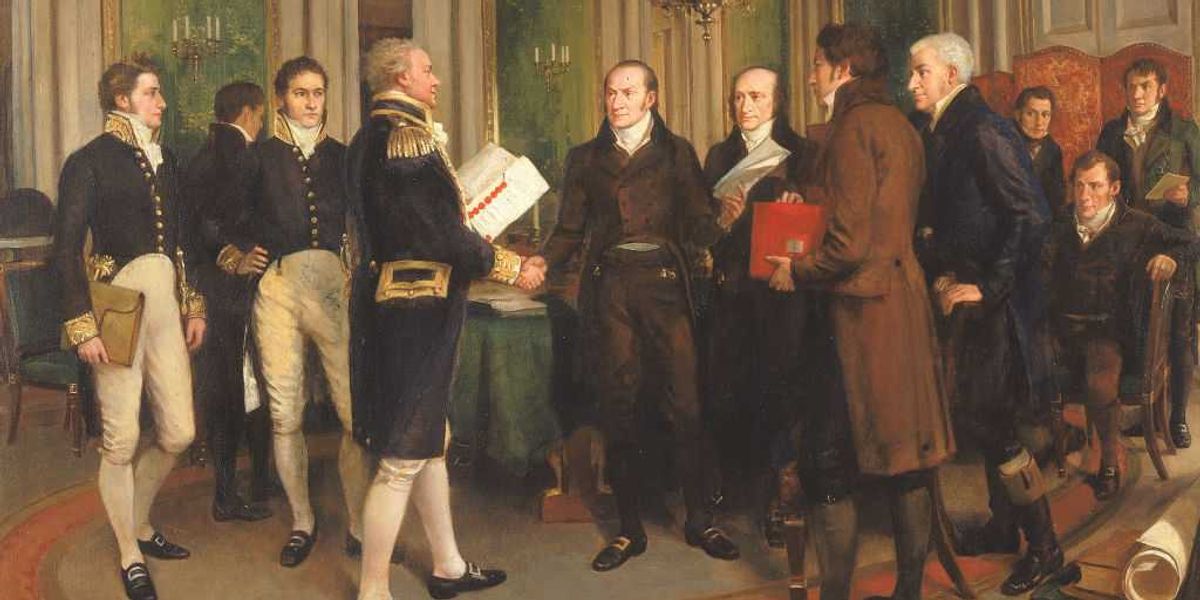
An opinion column in The Blaze, published June 27 2026, argues that modern politicians and their communications staffs rely on staff-drafted remarks and AI-generated text rather than the substantive oratory exemplified by John Quincy Adams, ahead of the United States' 250th anniversary. The piece uses Adams' long record of engagement with the Declaration of Independence as a benchmark and frames AI-assisted speechwriting as a decline in rhetorical quality and historical depth. The column is opinion and does not present primary research, data, or policy proposals.
What this piece argues
An opinion column in The Blaze titled "America's founders deserve better than AI slop" contends that many politicians will deliver AI-assisted or staff-drafted remarks for the country's 250th anniversary celebrations, at the expense of the kind of historically grounded, extended oratory practiced by John Quincy Adams. The column holds up Adams' close engagement with the Declaration of Independence as a standard that AI-generated text, which the author characterises as generic and historically imprecise, cannot match.
LDS context for practitioners
For those building or deploying language models in public-facing communication tasks, this column represents a data point in an ongoing debate about AI-generated content's fitness for high-stakes, historically sensitive contexts. The core concern - that LLM outputs can favour fluency over historical fidelity and specificity - is a real and documented failure mode in generation tasks that require precise attribution, accurate quotation, and knowledge of primary sources. Whether that limitation matters for a specific use case depends on the guardrails, retrieval pipelines, and post-editing processes in place.
Scope and limitations
This is a partisan opinion piece from The Blaze, a conservative media outlet. It does not cite research, surveys, or named public officials using AI in speechwriting. Its impact on AI policy, tooling, or practitioner practice is indirect at best. The AI-rhetoric debate is real, but this column is a cultural commentary, not a technical or regulatory development.
Key Points
- 1A Blaze opinion column argues AI-generated political speeches lack the historical depth and rhetorical authenticity of figures like John Quincy Adams, ahead of the US 250th anniversary.
- 2The practical concern for LLM practitioners - that generation outputs may favour fluency over historical precision and verbatim accuracy - is a known failure mode in high-stakes text generation.
- 3This is partisan cultural commentary, not a technical or policy development; it has limited direct impact on AI tooling or regulation.
Scoring Rationale
Single partisan opinion piece with no research, data, or policy proposals. Tangential AI angle: the concern about LLM fluency-vs-fidelity is real but this column does not advance the technical or policy conversation. Minimal direct impact on AI/DS/ML practitioners.
Sources
Public references used for this report.
Practice interview problems based on real data
1,625 SQL & Python problems across 15 industry datasets — the exact type of data you work with.
Try 250 free problems