OpenAI Deploys Workspace Agents to Automate Business Tasks
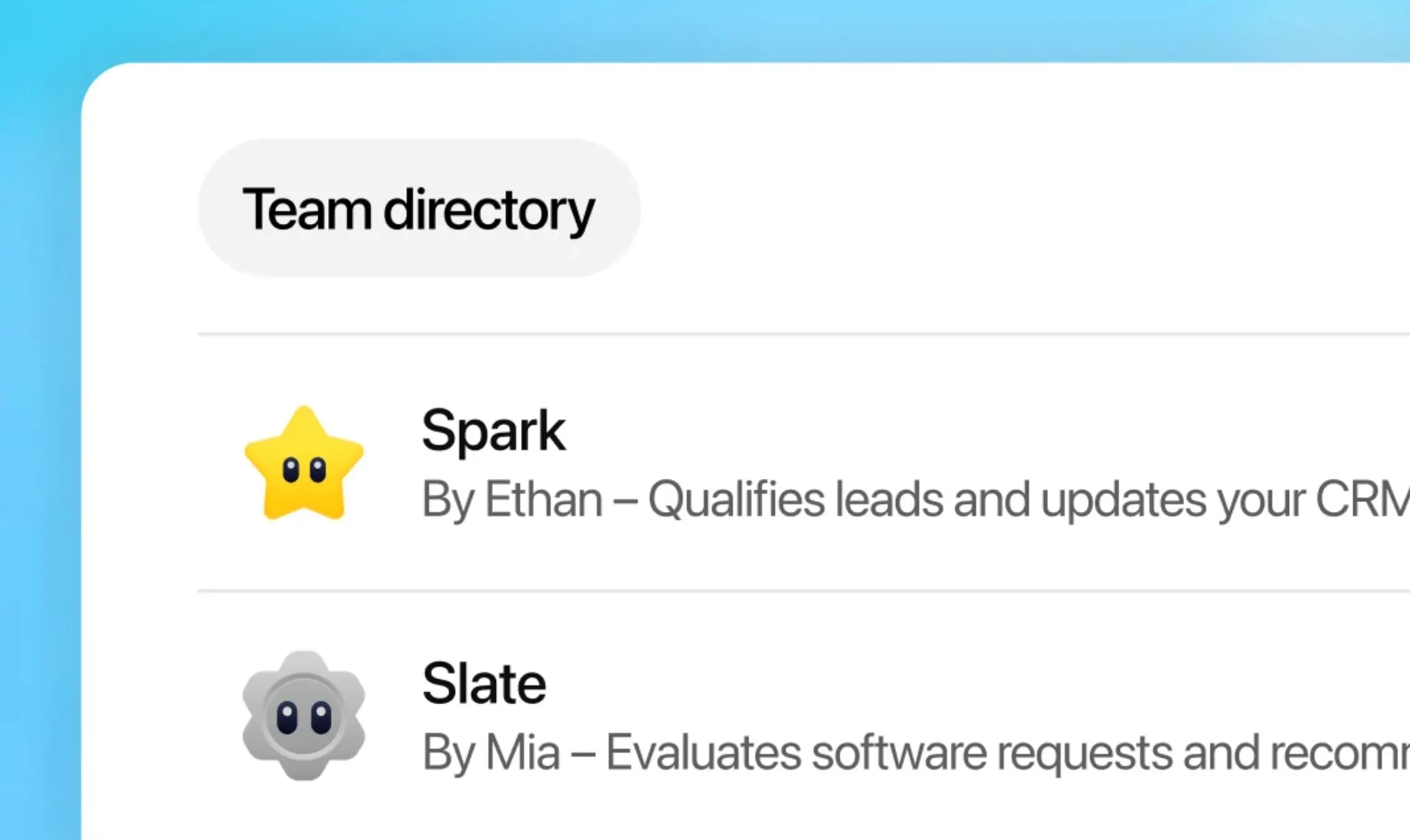
OpenAI launched cloud-based workspace agents inside ChatGPT that run continuously to automate multi-step business workflows. These persistent agents, codenamed Hermes in development, can interact with websites, third-party apps like Slack and Gmail, run code, edit spreadsheets, and use long-term memory to improve over time. Teams can build, share, and schedule agents from a dedicated workspace within ChatGPT; OpenAI positions this as the next evolution of GPTs with planned conversion tooling. The feature is available in preview for Business, Enterprise, Edu, and Teachers plans, free until May 6, 2026, then transitioning to a credit-based billing model. The release tightens OpenAI's competition with Anthropic and workspace players like Notion, while raising governance, security, and integration questions for enterprise adopters.
What happened
OpenAI released cloud-native workspace agents integrated into ChatGPT, enabling teams to create persistent, always-on assistants that automate end-to-end tasks across tools and platforms. The system surfaced inside ChatGPT's UI as an Agents area, and OpenAI says teams can build, share, schedule, and run agents that gather context, act across services, and learn from corrections. The company previewed availability for Business, Enterprise, Edu, and Teachers plans at no charge until May 6, 2026, after which usage moves to a credit-based model.
Technical details
The workspace agents are built as an agentic layer that unifies browsing and action capabilities with analysis and file handling. Sources identify the internal codename Hermes for persistent, always-on agents, and OpenAI references prior building blocks such as Operator and deep research as predecessors. Key capabilities include:
- •Visual browser automation to navigate and interact with websites and web forms
- •Code interpreter style execution to run data analysis and generate artifacts like slides and spreadsheets
- •Connectors to third-party apps (Slack, Gmail, document stores) for reading, summarizing, and posting
- •Task scheduling and recurring execution with long-running memory and incremental learning
- •Shared agent configurations so teams can reuse and refine agents across users
OpenAI emphasizes user control: agents request permission before consequential actions, and users can interrupt or take over an agent at any time. The Portuguese coverage notes the agents are powered by Codex for action-oriented capabilities; OpenAI materials frame the system as an evolution rather than a wholesale replacement of GPTs, with migration tooling promised.
Context and significance
This product move accelerates the industry trend from single-assistant interactions toward a platform of specialized, persistent agents that act on behalf of users. Notion and other workspace vendors have shipped custom agents and triggers; Anthropic and smaller players like OpenClaw have also pushed autonomous agent functionality. Embedding agents directly into ChatGPT gives OpenAI immediate scale across consumer and enterprise users and converts conversational intelligence into operational automation.
For practitioners, the change is practical
teams gain a low-code way to compose workflows that tie data extraction, analysis, and messaging together. For platform architects and security teams, it introduces new challenges: credential management for connectors, auditability of autonomous actions, rate and concurrency controls, and model behavior drift as agents learn from corrections.
What to watch
Monitor post-preview pricing and the credit model, the depth of connector and permission primitives (fine-grained roles, scoped credentials), and how OpenAI exposes developer APIs or exportable agent definitions. Also watch migration tooling for GPTs and any enterprise governance controls OpenAI adds to support secure deployments.
Key Points
- 1OpenAI rolled out cloud-native workspace agents that run continuously, enabling end-to-end automation across web, email, and messaging tools.
- 2Agents unify browsing, code execution, connectors, scheduling, and long-term memory, reducing glue-code for routine team workflows.
- 3Enterprise value depends on governance: secure connectors, audit logs, rate controls, and clear pricing will determine adoption pace.
Scoring Rationale
This is a significant product release that moves ChatGPT from a conversational assistant to a platform for persistent automation, increasing enterprise relevance. It is not a frontier model breakthrough, but it materially changes workflows and raises security and governance requirements. Freshness adjustment applied for a same-week launch.
Sources
Public references used for this report.
Practice with real SaaS & B2B data
90 SQL & Python problems · 15 industry datasets
250 free problems · No credit card
See all SaaS & B2B problems