OpenAI Co-founder Testifies Over $30 Billion Stake
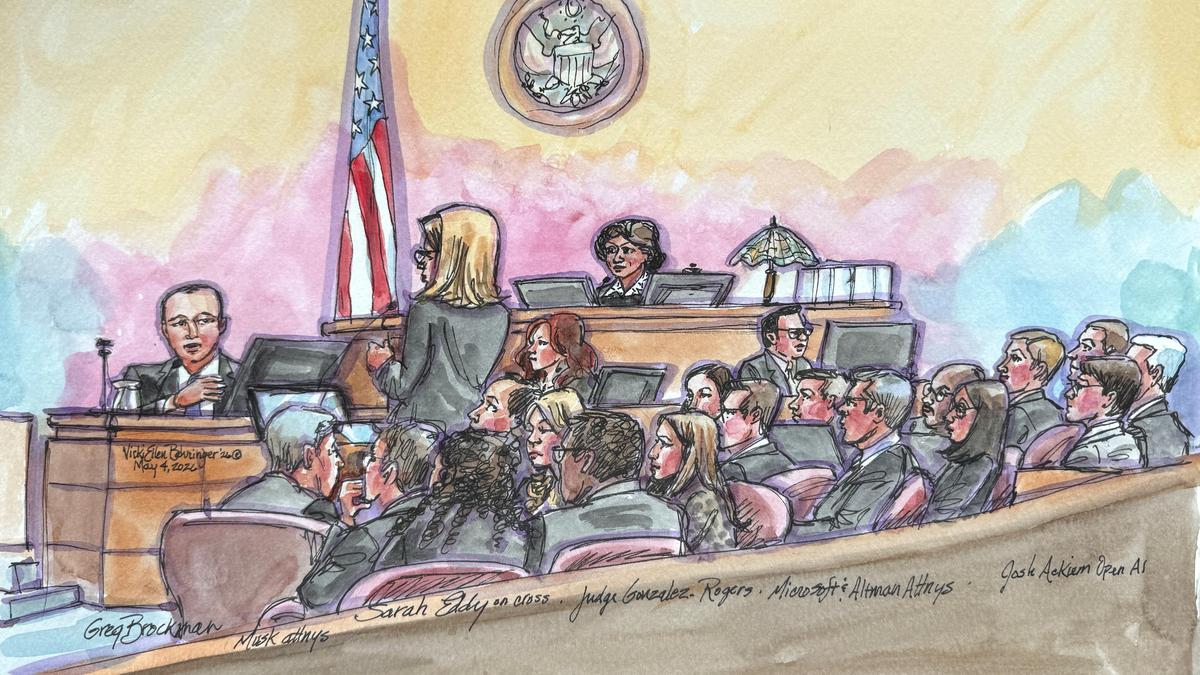
During the Musk v. Altman trial in U.S. District Court in Oakland, OpenAI co-founder and president Greg Brockman testified that his equity stake in OpenAI is worth nearly $30 billion, according to reporting from NBC News, AP, and ABC. Musk's lawsuit accuses co-founders of converting the original nonprofit into a for-profit entity, a central claim reported by AP and NBC. In court, Musk's lawyer asked Brockman, "You just happen to be $30 billion richer?" and Brockman replied, "Compensation was certainly secondary to the mission," as reported by NBC. Reporting by ABC and AP also cites a court filing that includes a text message from Elon Musk saying, "By the end of this week, you and Sam will be the most hated men in America." The judge declined to admit that text as evidence, according to ABC.
What happened
Greg Brockman, president and co-founder of OpenAI, testified in the Musk v. Altman civil trial in U.S. District Court in Oakland that his stake in OpenAI is worth nearly $30 billion, according to reporting from NBC News, The Associated Press, and ABC News.
The lawsuit, filed by Elon Musk, alleges that OpenAI's co-founders and leaders unlawfully converted the organization from its original nonprofit form into a structure that allows private equity stakes; that characterization of the complaint is reported by AP and NBC.
During cross-examination, Musk's attorney asked Brockman, "You just happen to be $30 billion richer?" and Brockman answered, "Compensation was certainly secondary to the mission," both lines appearing in NBC's coverage. According to a court filing cited by ABC and AP, Musk texted Brockman before the trial saying, "By the end of this week, you and Sam will be the most hated men in America." Judge Yvonne Gonzalez Rogers reportedly declined to admit that text as evidence, per ABC.
Editorial analysis - technical context
Companies that move from nonprofit governance toward investor-backed structures typically introduce formal equity interests and compensation mechanisms that change incentive dynamics across engineering, product, and research teams. Industry observers note those governance shifts can create tensions between open-science commitments and commercial product roadmaps, especially for teams working on frontier models where compute and data allocation decisions carry strategic weight.
Context and significance
High-profile litigation over governance at a leading AI lab raises questions about organizational forms used to fund large-scale model development. Reporting on this trial places OpenAI's founding choices, early donor relationships, and subsequent capital arrangements under public scrutiny, which industry participants and policymakers will watch for precedent when designing funding and oversight for ambitious AI projects.
For practitioners
Ongoing litigation could influence how companies document governance, equity, and mission commitments. Observers in research labs, startups, and procurement teams may reassess vendor risk models and contractual language around intellectual property, compute access, and data governance when dealing with organizations that have hybrid or capped-profit structures.
What to watch
- •Court rulings or a settlement that resolve whether specific governance actions violated nonprofit rules, as reported filings and court transcripts become public.
- •Additional testimony or exhibits revealing board decisions, capitalization documents, or investor agreements, which reporting indicates are central evidentiary threads.
- •Reactions from investors, partners, and customers regarding contractual assurances about model access, IP, and research openness, which industry reporting suggests could follow any major legal outcome.
Bottom line
This testimony makes the scale of individual equity stakes at major AI labs a focal point of legal and public debate. Reporting from multiple outlets documents the core facts presented in court; the broader implications for governance, funding models, and practitioner risk management are matters for industry observers and regulators to evaluate.
Key Points
- 1Greg Brockman testified his OpenAI stake is worth nearly $30 billion, a figure reported by AP, NBC, and ABC.
- 2Industry observers note governance shifts from nonprofit to investor-backed models often create incentives and transparency challenges for frontier-AI projects.
- 3Observers will watch court rulings, board documents, and partner reactions for precedent affecting funding, IP, and model-access agreements.
Scoring Rationale
The case involves governance and ownership at one of the most influential AI labs, making it notable for practitioners who build, procure, or partner with major model developers. Outcomes could influence funding structures and contractual risk assessments across the sector.
Sources
Public references used for this report.
View 5 more sources
- OpenAI president discloses his stake in the company is worth $30Babcnews.com
- OpenAI president discloses his stake in the company is worth $30Bapnews.com
- OpenAI President Greg Brockman grilled about his $30B personal stake and ‘duty to humanity’siliconangle.com
- OpenAI's Brockman:defends his $30b stake, says Elon Musk ... - KTVUktvu.com
- OpenAI president discloses his stake in the company is worth $30Bwftv.com
Practice interview problems based on real data
1,625 SQL & Python problems across 15 industry datasets — the exact type of data you work with.
Try 250 free problems